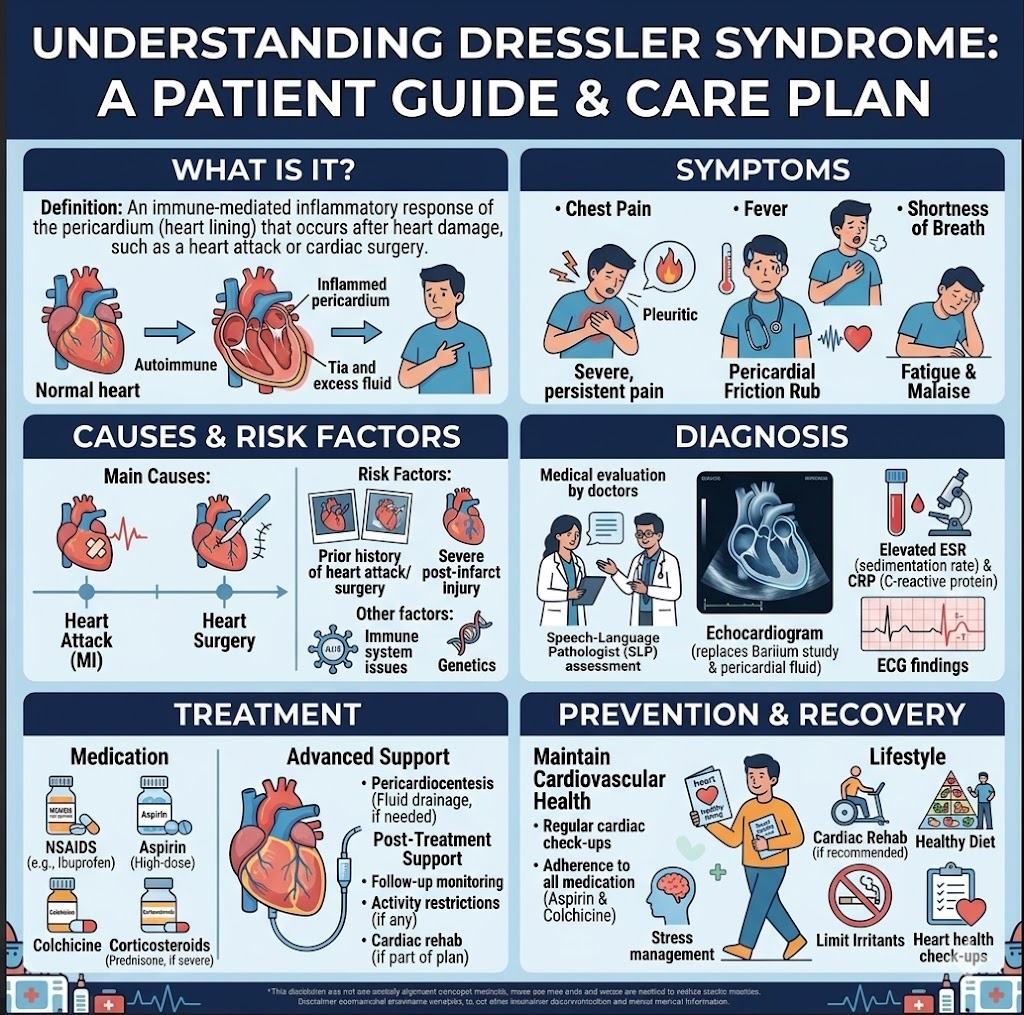
Dressler syndrome is a condition characterized by swelling and irritation of the protective sac surrounding the heart, known as the pericardium. This typically occurs after damage to the heart muscle, such as from a heart attack, heart surgery, or a severe chest injury. Experts believe it's triggered by the body's immune system reacting to the heart damage. It is also sometimes called post-cardiac injury syndrome, post-myocardial infarction syndrome, or post-pericardiotomy syndrome.
Understanding the Condition
Understanding the Condition
Common Symptoms
Chest Pain: This is a primary symptom, often described as similar to heart attack pain. It may worsen when taking deep breaths or lying flat.
Shortness of Breath: Difficulty breathing, especially during physical activity or when lying down.
Fever: Some individuals may experience a mild fever.
General Feeling of Illness: Feeling unwell or fatigued.
Consultation Guide
Which Specialist to Meet
If you experience symptoms of Dressler syndrome, particularly sudden or ongoing chest pain, you should seek immediate medical attention. For ongoing care, you will typically consult a cardiologist, a doctor specializing in heart conditions. A primary care physician can provide an initial assessment and referral.
Preparations Before Your Visit
Before your appointment, prepare a detailed list of your symptoms, including when they started and what makes them better or worse. Inform your doctor about any recent heart attacks, heart surgeries, or chest injuries. Bring a list of all medications you are currently taking, including over-the-counter drugs and supplements, and be ready to discuss your medical history and any questions you have.
Book a doctor visit near me
Anti-inflammatory Medications: These medications are used to reduce the swelling, pain, and inflammation in the sac around the heart. They help manage symptoms and promote healing. (Duration: Typically prescribed for several weeks to months, or as directed by your doctor, depending on the severity and response to treatment.)
Procedures for Complications
Fluid Removal (Pericardiocentesis): If significant fluid accumulates around the heart (a condition called cardiac tamponade), a procedure may be performed to drain the excess fluid using a needle inserted into the chest. (Duration: A single procedure, followed by monitoring.)
Regular Medical Check-ups: Ongoing follow-up with a cardiologist is crucial to monitor your heart health, detect any recurrence of symptoms, or identify potential complications early.
Diagnostic Procedures
Electrocardiogram (ECG or EKG)
An ECG is a quick, non-invasive test that records the electrical signals in your heart. It helps determine if your heart is beating too fast, too slow, or with an irregular rhythm, and can show signs of heart muscle damage.
What to Expect
You will lie down on an examination table. Small, sticky patches called electrodes will be placed on your chest, and sometimes on your arms and legs. Wires connect these patches to a machine that records your heart's electrical activity for a few minutes. The test is painless and takes only a few minutes to complete.
A chest X-ray uses a small amount of radiation to create images of your heart, lungs, blood vessels, airways, and the bones of your chest and spine. It can reveal fluid buildup around the heart or lungs, or other issues related to the heart or lungs.
What to Expect
You will typically stand or sit in front of an X-ray plate, and a technician will position you correctly. You may be asked to hold your breath briefly while the X-ray image is taken. You might need to remove any jewelry or clothing containing metal. The procedure is quick and generally takes only a few minutes.
An echocardiogram uses sound waves to create moving pictures of your heart. This allows your doctor to see how your heart chambers and valves are functioning, and how blood flows through your heart. It can detect inflammation or fluid buildup around the heart.
What to Expect
You will lie on an examination table, usually on your left side. A technician will apply a special gel to your chest and then press a small handheld device called a transducer against your skin, moving it around to capture different views of your heart. You might hear whooshing sounds as the blood flow is evaluated. The test is painless and typically lasts between 30 to 60 minutes.
Treatment Options
Dressler syndrome is a condition characterized by swelling and irritation of the protective sac surrounding the heart, known as the pericardium. This typically occurs after damage to the heart muscle, such as from a heart attack, heart surgery, or a severe chest injury. Experts believe it's triggered by the body's immune system reacting to the heart damage. It is also sometimes called post-cardiac injury syndrome, post-myocardial infarction syndrome, or post-pericardiotomy syndrome.
Medications
Pericardium Removal (Pericardiectomy): In very rare and severe cases where the sac around the heart becomes thick, scarred, or constricts the heart's pumping ability (constrictive pericarditis), surgery to remove part or all of the pericardium may be necessary. (Duration: A surgical procedure, followed by a recovery period that varies by individual.)
Post-Surgery Medication: For individuals undergoing certain heart surgeries, some studies suggest that specific anti-inflammatory medications prescribed shortly after the procedure may help reduce the risk of developing Dressler syndrome.
Manage Underlying Conditions: Effectively managing any pre-existing heart conditions, such as those that might have led to a heart attack or surgery, is important for overall heart health and to potentially reduce future risks.
Prevention & Long-Term Wellbeing
Prevention
Tags & Topics
Notice an error or need an update?
Help us keep medical information accurate. Report incorrect info or suggest an edit.


