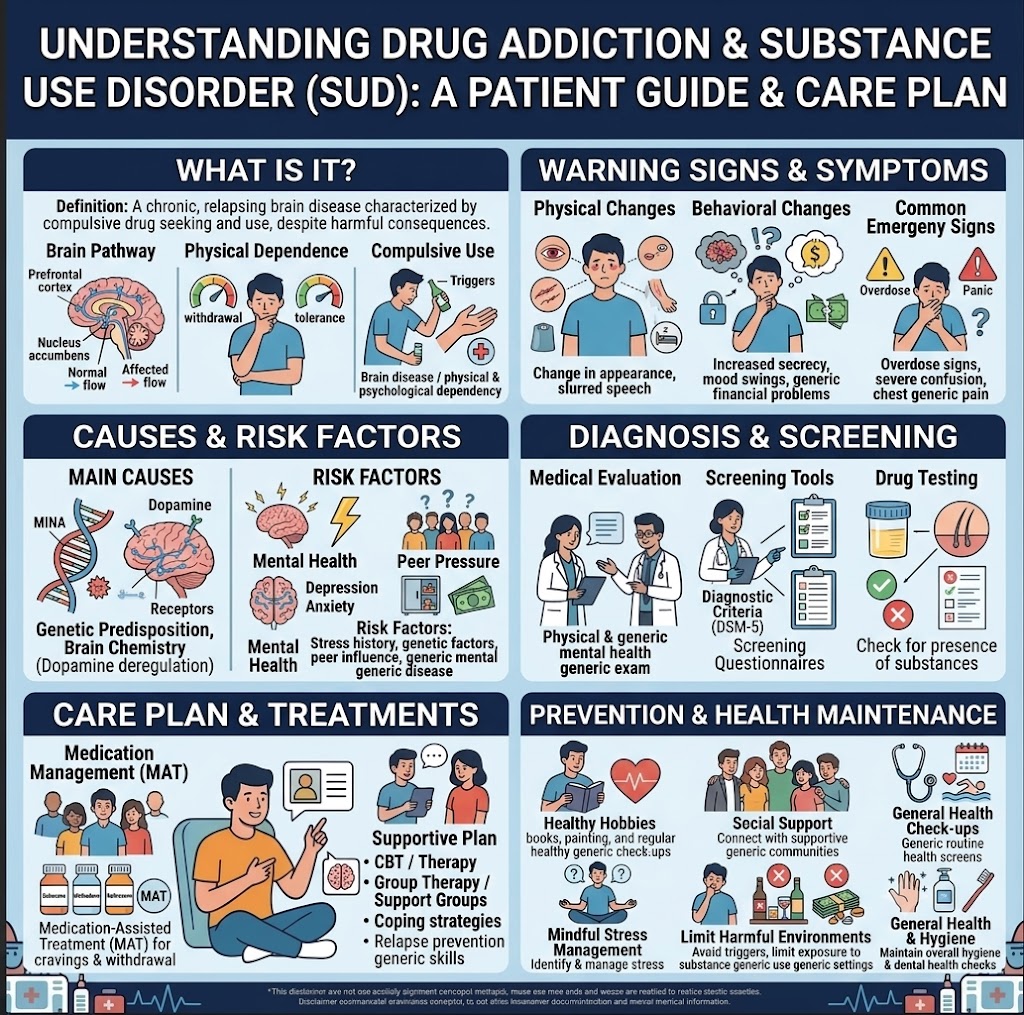
Drug addiction, also known as substance use disorder, is a complex brain disease that changes a person's brain and behavior. It leads to an intense, uncontrollable urge to use a substance, whether it's an illegal drug, a legal medicine, alcohol, marijuana, or nicotine. Even when the drug causes significant harm, individuals with addiction often struggle to stop using it. It can begin with casual use, but for some, especially with highly addictive substances like opioids, addiction can develop rapidly, sometimes even from prescribed medications. Over time, the body builds tolerance, requiring more of the substance to achieve the desired effect, or even just to feel normal. Trying to stop often results in intense cravings and unpleasant physical symptoms known as withdrawal. Support from healthcare professionals, loved ones, and treatment programs is crucial for recovery.
Understanding the Condition
Understanding Drug Addiction (Substance Use Disorder)
Understanding the Condition
Drug addiction, also known as substance use disorder, is a complex brain disease that changes a person's brain and behavior. It leads to an intense, uncontrollable urge to use a substance, whether it's an illegal drug, a legal medicine, alcohol, marijuana, or nicotine. Even when the drug causes significant harm, individuals with addiction often struggle to stop using it. It can begin with casual use, but for some, especially with highly addictive substances like opioids, addiction can develop rapidly, sometimes even from prescribed medications. Over time, the body builds tolerance, requiring more of the substance to achieve the desired effect, or even just to feel normal. Trying to stop often results in intense cravings and unpleasant physical symptoms known as withdrawal. Support from healthcare professionals, loved ones, and treatment programs is crucial for recovery.
Common Symptoms
Frequent Drug Use: Feeling a persistent need to use the substance regularly, sometimes daily or multiple times a day.
Intense Cravings: Having powerful urges for the substance that dominate thoughts and make it hard to focus on anything else.
Increased Tolerance: Needing larger amounts of the substance over time to get the same effect you once achieved with less.
Using More Than Intended: Taking more of the substance or using it for a longer period than you initially planned.
Prioritizing Drug Supply: Making sure you always have a supply of the substance readily available.
Financial Strain: Spending money on the substance even when you cannot afford it, leading to financial difficulties.
Withdrawal Symptoms: Experiencing unpleasant physical and mental symptoms (like nausea, shaking, anxiety, intense cravings) when you try to stop using the substance.
Consultation Guide
Which Specialist to Meet
Before your visit, prepare a list of your symptoms, including when they started and how they affect your daily life. Note any substances you use, how much, and how often. Be ready to discuss your personal and family medical history, any mental health conditions, and current medications. Also, write down any questions you have for the doctor.
Book a doctor visit near me
Withdrawal Management Medications: These medications help reduce the severe physical and mental discomfort experienced during withdrawal from certain substances. They can ease symptoms like nausea, muscle aches, anxiety, and insomnia, making the detoxification process safer and more tolerable. (Duration: Typically short-term, used for days to weeks during initial detoxification.)
Consultation Guide
Neglecting Responsibilities: Failing to meet obligations at work, school, or home, or reducing participation in social and recreational activities because of substance use.
Continuing Despite Harm: Using the substance even when you know it's causing physical, psychological, or relationship problems in your life.
Engaging in Risky Behaviors: Doing things you normally wouldn't, such as stealing to get the substance, or driving while under its influence.
Time Consumption: Spending a lot of time obtaining, using, or recovering from the effects of the substance.
Failed Attempts to Stop: Repeatedly trying to cut down or stop using the substance without success.
Address Underlying Issues: Continue to manage any co-occurring mental health disorders like depression or anxiety. Unaddressed mental health challenges can be a significant risk factor for relapse.
Diagnostic Procedures
For drug addiction, you should consult with a primary care physician, an addiction medicine specialist, a psychiatrist, or a psychologist. A primary care physician can offer initial guidance and referrals, while addiction specialists and mental health professionals provide specialized diagnosis and treatment.
Preparations Before Your Visit
Clinical Assessment and Interview
Diagnosis of substance use disorder relies primarily on a thorough evaluation by a healthcare professional. This involves discussing your patterns of substance use, associated behaviors, and the impact on your life, often guided by established diagnostic criteria. The goal is to understand the extent of the problem and identify any co-occurring mental health conditions.
What to Expect
During the assessment, a doctor or mental health professional will ask you detailed questions about your substance use, how it affects your daily life, your relationships, work, and overall health. They will also inquire about your mental health history and any family history of addiction. This conversation is confidential and aims to gather enough information to make an accurate diagnosis and develop a personalized treatment plan. A physical exam may also be performed to check for any physical effects of substance use.
These tests detect the presence of specific substances in the body. While they can confirm substance use, they do not diagnose addiction itself. They are often used to monitor treatment progress or confirm a history of use.
What to Expect
You may be asked to provide a urine, blood, saliva, or hair sample. For a urine test, you'll provide a sample in a private restroom. For blood tests, a healthcare professional will draw a small amount of blood from a vein, typically in your arm. These procedures are quick and relatively painless. Results can often be available within a short time, though some specialized tests may take longer.
Treatment Options
Medications
Anti-Craving and Relapse Prevention Medications: These medications can help reduce cravings for the substance, block its effects if used, or produce unpleasant effects if the substance is consumed. They support long-term recovery by making it easier to abstain. (Duration: Long-term, often for several months to a year or more, as part of a comprehensive recovery plan.)
Therapies
Cognitive Behavioral Therapy (CBT): CBT helps individuals identify and change negative thought patterns and behaviors that contribute to substance use. It teaches coping skills for managing triggers, stress, and cravings, and strategies for preventing relapse. (Duration: Typically involves structured sessions over several weeks to months (e.g., 12-20 sessions), with booster sessions as needed.)
Motivational Interviewing: This therapy helps individuals explore and resolve their ambivalence about changing their substance use behaviors, strengthening their motivation to enter and adhere to treatment. (Duration: Often integrated into initial treatment, lasting a few sessions, but can be ongoing as needed.)
Contingency Management: This approach uses positive reinforcement (like vouchers or small rewards) to encourage desired behaviors, such as abstinence from substances or adherence to treatment goals. (Duration: Typically used for a few months, with rewards phased out as positive behaviors become established.)
Family Therapy: Involves family members in the treatment process to address family dynamics that may contribute to substance use, improve communication, and rebuild trust. It also educates families on how to support their loved one's recovery. (Duration: Variable, depending on family needs, typically ranging from several weeks to months.)
Inpatient and Outpatient Treatment Programs: Inpatient programs offer intensive, structured care in a residential setting, while outpatient programs provide flexible treatment while allowing individuals to live at home. Both offer a combination of therapies, education, and support. (Duration: Inpatient programs typically last from a few weeks to several months. Outpatient programs can range from several weeks to over a year, depending on intensity and individual needs.)
Set a Positive Example: Avoid misusing alcohol or addictive medications yourself. Children often learn behaviors from their parents, and a parent's responsible choices can significantly reduce a child's risk of developing addiction.
Strengthen Family Bonds: Cultivate a strong, stable, and supportive relationship with children. A secure family environment and parental supervision can reduce the likelihood of substance use.
Responsible Medication Use: If prescribed a medication with addiction potential, follow dosage instructions carefully. Discuss any concerns or perceived need for increased dosage with your healthcare provider immediately to prevent dependency.
Adhere to Treatment Plan: Continue with therapy, counseling, and any prescribed medications as advised by your healthcare provider, even if you feel recovered. Consistency significantly increases your chances of staying substance-free.
Monitor Cravings and Triggers: Be aware of your cravings and identify situations, places, people, or emotions that trigger the urge to use. Developing strategies to cope with or avoid these triggers is vital.
Prevention & Long-Term Wellbeing
Peer Support Groups (e.g., 12-Step Programs): These groups provide a supportive community where individuals share experiences, strength, and hope, following a structured program to maintain abstinence and build a sober lifestyle. They offer mentorship and accountability. (Duration: Ongoing, often for a lifetime, providing continuous support for recovery.)
Prevention
Open Communication: Talk openly and honestly with children and teenagers about the risks of substance use and misuse. Create an environment where they feel comfortable discussing peer pressure and challenges.
Long-Term Wellbeing and Relapse Prevention
Avoid High-Risk Situations: Stay away from environments and individuals associated with past substance use. Creating new, healthy routines and social circles can support your recovery journey.
Seek Immediate Help for Relapse: If you experience a setback and begin using the substance again, do not hesitate to contact your healthcare provider, mental health professional, or support group immediately. Relapse is a common part of recovery, and prompt intervention is key to getting back on track.
Tags & Topics
Notice an error or need an update?
Help us keep medical information accurate. Report incorrect info or suggest an edit.


