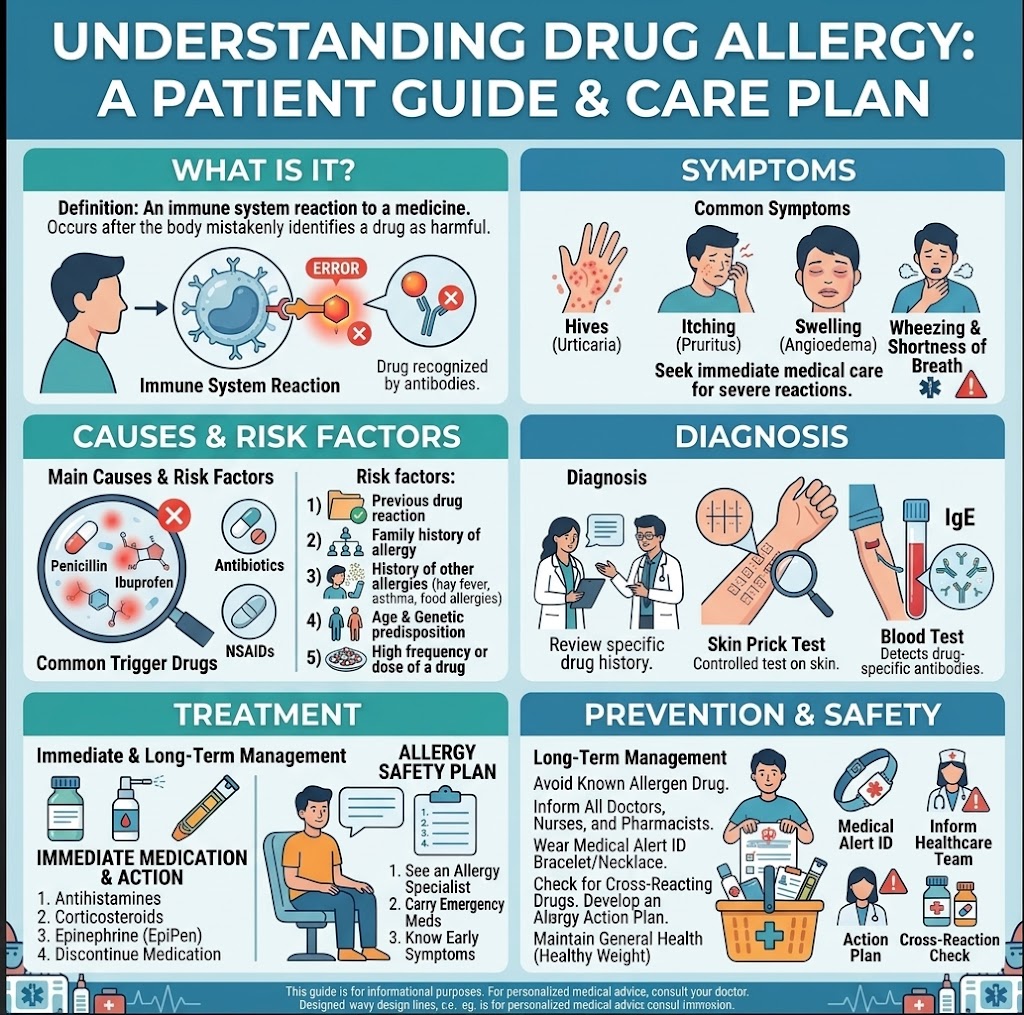
A drug allergy is when your immune system overreacts to a medicine, mistakenly seeing it as a threat. This can happen with any medication, from over-the-counter to prescription. Common signs include hives, rash, and fever, but reactions can be severe, even life-threatening like anaphylaxis. It's different from a medicine's side effect (a known possible reaction) or drug toxicity (from an overdose).
Understanding the Condition
Understanding Drug Allergies
Understanding the Condition
Common Symptoms
Mild to Moderate Reactions: These can appear within an hour, or sometimes hours, days, or weeks later.
Hives: Itchy, raised red bumps on the skin.
Skin Rash: Widespread redness or irritation.
Fever: Elevated body temperature.
Breathing Issues: Shortness of breath, runny nose, itchy/watery eyes.
Severe (Anaphylactic) Reactions: A rare, life-threatening emergency, typically occurring rapidly, affecting multiple body systems.
Airway Tightening: Swelling in the throat or airways causing severe trouble breathing.
Digestive Distress: Nausea, severe stomach cramps, vomiting, or diarrhea.
Circulatory Collapse: Dizziness, lightheadedness, weak/fast pulse, sharp drop in blood pressure, or loss of consciousness.
Consultation Guide
Which Specialist to Meet
Begin with your primary care doctor, who may refer you to an allergist/immunologist, a specialist in allergies and immune disorders.
Preparations Before Your Visit
Before your visit, list all medicines (including OTC, supplements, herbal) and past reactions (drug name, symptoms, timing, treatment). Note other allergies (food, hay fever) or conditions (asthma, HIV) and family history of drug allergies.
Book a doctor visit near me
Your doctor will thoroughly review your symptoms, medications, and health history as the first crucial step.
Detailed questions about your reaction (timing, symptoms, treatment) and a physical examination to check for allergy signs.
Antihistamines: Relieve mild symptoms like hives and itching by blocking histamine. (Duration: As needed, short-term.)
Corticosteroids: Reduce inflammation for more severe rashes or swelling. (Duration: Short courses, days to weeks.)
Epinephrine (Adrenaline): An immediate, life-saving injection for severe anaphylaxis, opening airways and boosting blood pressure. (Duration: Single injection, followed by medical observation.)
Drug Avoidance: Completely avoid the allergic medicine and similar drugs. Your doctor will list safe alternatives. (Duration: Lifelong.)
Drug Desensitization: For vital drugs with no alternatives, increasing doses are given under supervision to temporarily allow tolerance. This is a complex procedure. (Duration: Hours to days for the process; tolerance often lasts only as long as drug use continues.)
Diagnostic Procedures
Medical History and Physical Exam
What to Expect
For certain drugs like penicillin, small amounts are applied or injected into the skin to check for a local reaction.
What to Expect
A 'prick' test (surface prick) or 'intradermal' test (under-skin injection) involves a wait of 15-20 minutes for a red, itchy bump. A 'patch' test (applied for 48 hours) is for delayed reactions. Generally safe, with a small risk of a mild reaction.
Graded Oral Challenge (Drug Reintroduction)
If other tests are inconclusive and the risk is low, you may be given increasing, small doses of the suspected medicine under strict medical supervision.
What to Expect
Performed in a medical setting, you'll receive the drug in tiny, gradual amounts over hours. Medical staff will closely monitor for any allergic signs, ready for immediate intervention. This is a definitive test, only done when safe and necessary.
Less common and reliable for most drug allergies than skin or challenge tests, these measure specific immune antibodies for certain drugs.
What to Expect
A blood sample is drawn and sent for lab analysis, with results typically taking several days.
Treatment Options
A drug allergy is when your immune system overreacts to a medicine, mistakenly seeing it as a threat. This can happen with any medication, from over-the-counter to prescription. Common signs include hives, rash, and fever, but reactions can be severe, even life-threatening like anaphylaxis. It's different from a medicine's side effect (a known possible reaction) or drug toxicity (from an overdose).
Acute Reaction Treatment
Read Labels Carefully: Check all medication labels, including OTC drugs, for potential allergens or cross-reactive ingredients. Ask a pharmacist if unsure.
Understand Cross-Reactivity: Be aware that allergy to one drug (e.g., penicillin) might extend to others. Discuss avoidance of related drugs (e.g., NSAIDs for aspirin sensitivity) with your doctor.
Carry Epinephrine Auto-Injector: If prescribed for severe reactions, carry it always and teach others how to use it.
Regular Medical Consultations: Regularly review your allergy status with your doctor/allergist and discuss any new medications.
Stay Knowledgeable: Understand your specific drug sensitivities and potential hidden sources. Ask questions about new medicines.
Prevention & Long-Term Wellbeing
Prevention
Inform All Healthcare Providers: Always tell every doctor, dentist, nurse, and pharmacist about your drug allergy. Ensure it's clearly documented in your medical records.
Wear Medical Alert ID: Wear a bracelet or necklace stating your drug allergy, critical for emergencies.
Tags & Topics
Notice an error or need an update?
Help us keep medical information accurate. Report incorrect info or suggest an edit.


