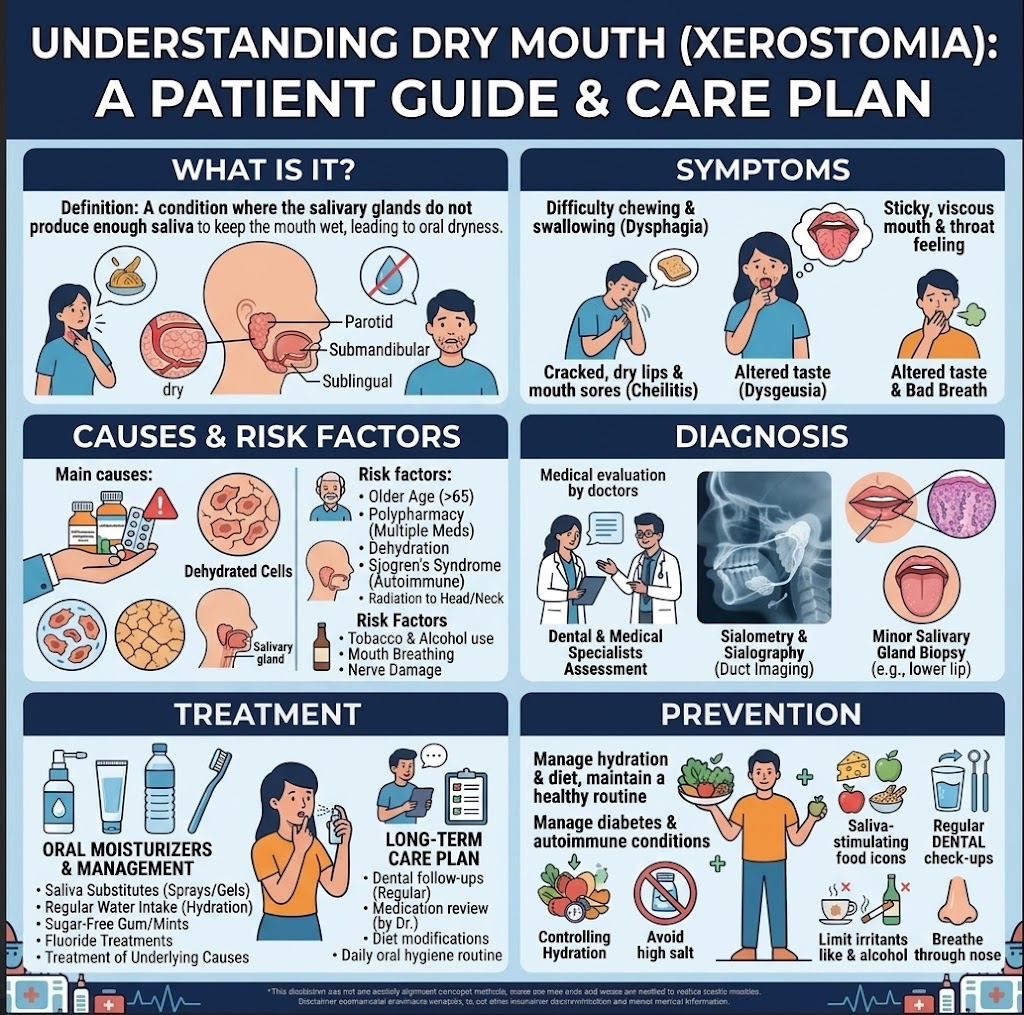
Dry mouth, medically known as xerostomia (zeer-o-STOE-me-uh), occurs when your salivary glands don't produce enough saliva to keep your mouth adequately moist. Saliva is crucial for maintaining oral health, aiding digestion, and comfortable speech. While sometimes a temporary nuisance due to thirst or anxiety, persistent dry mouth can significantly affect your overall health, dental well-being, ability to eat, and enjoyment of food. Common causes include certain medications, the aging process, cancer treatments, and other underlying health conditions. Effective treatment focuses on identifying and addressing the root cause.
Understanding the Condition
Dry Mouth (Xerostomia): Understanding and Management
Understanding the Condition
Common Symptoms
Dry or Sticky Mouth: A constant feeling of dryness or stickiness inside your mouth.
Thick, Stringy Saliva: Saliva that appears unusually thick or forms stringy textures.
Persistent Bad Breath: Unpleasant breath that doesn't go away.
Difficulty with Oral Functions: Trouble chewing, speaking clearly, or swallowing food.
Dry or Sore Throat: A sensation of dryness or soreness in the throat, often accompanied by hoarseness.
Dry or Grooved Tongue: A tongue that looks dry or has noticeable grooves or ridges.
Altered Sense of Taste: A change in how foods and drinks taste.
Problems with Dentures: Difficulty wearing or keeping dentures comfortably in place.
Lipstick Sticking to Teeth: For those who wear it, lipstick may transfer and stick to the teeth.
Consultation Guide
Which Specialist to Meet
Before your appointment, prepare by listing all prescription and over-the-counter medications, supplements, and herbal remedies you are currently taking. Note down all your symptoms, including when they started, what makes them better or worse, and how frequently they occur. Provide a comprehensive medical history, detailing any chronic health conditions. Finally, write down any specific questions or concerns you wish to discuss with your doctor.
Book a doctor visit near me
Your doctor or dentist will thoroughly discuss your symptoms, lifestyle, and medical history. They will then perform a visual inspection of your mouth, tongue, and salivary glands to look for signs of dryness, infection, or other related issues.
You will answer questions about your general health, habits, and specific dry mouth symptoms. The doctor will visually examine the inside of your mouth and may gently feel around your jaw and neck area to assess your salivary glands.
Avoid Irritants: Limit consumption of caffeine, alcohol, tobacco, and excessively sugary or acidic foods and drinks, as these can worsen dry mouth symptoms. (Duration: Ongoing)
Use a Humidifier: Place a humidifier in your bedroom to add moisture to the air, which can be particularly helpful at night. (Duration: Ongoing, especially in dry environments)
Breathe Through Your Nose: Consciously try to breathe primarily through your nose rather than your mouth to reduce moisture evaporation. (Duration: Ongoing)
Management of Health Conditions: Effectively treating and managing underlying health conditions such as diabetes, autoimmune diseases, or oral infections can alleviate dry mouth symptoms. (Duration: Ongoing management of the primary condition)
Enhanced Oral Hygiene: Maintain rigorous oral hygiene practices, including using fluoride toothpaste, daily flossing, and regular dental check-ups, to prevent complications like cavities and gum disease. (Duration: Daily and routine dental visits)
Avoid Tobacco and Excessive Alcohol: These substances are known to worsen dry mouth symptoms and should be avoided or significantly limited.
Limit Oral Irritants: Reduce your intake of sugary, acidic, salty, and spicy foods and drinks, which can further irritate a dry mouth.
Utilize a Bedroom Humidifier: Especially helpful in dry climates or during colder months, using a humidifier in your bedroom adds moisture to the air and can reduce overnight dryness.
Self-Assess Symptoms and Strategies: Regularly evaluate your dry mouth symptoms and the effectiveness of your relief strategies, adjusting your approach as needed with guidance from your healthcare provider.
Consultation Guide
Dry mouth, medically known as xerostomia (zeer-o-STOE-me-uh), occurs when your salivary glands don't produce enough saliva to keep your mouth adequately moist. Saliva is crucial for maintaining oral health, aiding digestion, and comfortable speech. While sometimes a temporary nuisance due to thirst or anxiety, persistent dry mouth can significantly affect your overall health, dental well-being, ability to eat, and enjoyment of food. Common causes include certain medications, the aging process, cancer treatments, and other underlying health conditions. Effective treatment focuses on identifying and addressing the root cause.
You should begin by consulting your primary care doctor or dentist. They can help identify potential causes and may refer you to specialists such as an ear, nose, and throat (ENT) doctor, a rheumatologist (if an autoimmune condition is suspected), or an oncologist (if related to cancer treatment).
Preparations Before Your Visit
For sialography, a small tube is carefully inserted into a salivary duct, a contrast dye is injected, and X-ray images are taken. Ultrasound involves placing a gel on your skin and using a handheld transducer. MRI requires you to lie still inside a scanner. These procedures are generally not painful, though sialography might cause minor, temporary discomfort.
Addressing Underlying Causes
Medication Adjustment: Your doctor may recommend adjusting the dosage of a medication known to cause dry mouth, or switching to an alternative if appropriate and safe. (Duration: Varies, dependent on the medication and the condition being treated)
Diagnostic Procedures
Medical History and Oral Examination
What to Expect
Salivary Flow Test (Sialometry)
This test objectively measures the amount of saliva your mouth produces over a specific period, typically to assess the function of your salivary glands.
What to Expect
You may be asked to chew on a piece of wax or paraffin for 5 to 15 minutes, and the saliva produced during this time will be collected and measured. Alternatively, a small device might be used to collect saliva directly from your salivary ducts. The procedure is generally simple and painless.
Blood samples may be taken to check for underlying health conditions known to be associated with dry mouth, such as diabetes or certain autoimmune diseases (like Sjogren's syndrome).
What to Expect
A healthcare professional will draw a small amount of blood, usually from a vein in your arm. You might experience a brief pinch or sting at the needle insertion site.
Imaging Studies (e.g., Sialography, Ultrasound, MRI)
In specific cases, imaging of the salivary glands may be recommended to identify blockages, tumors, or damage that could be causing reduced saliva production. Sialography uses a special dye to visualize the salivary ducts, while ultrasound and MRI provide detailed images of the gland structures.
What to Expect
Treatment Options
Medications
Saliva-Stimulating Medications: Prescription medications are available that can help stimulate your salivary glands to produce more saliva. (Duration: Daily, as prescribed by a doctor, often long-term if effective and well-tolerated)
Review Medications Regularly: Periodically discuss all your current medications with your doctor or pharmacist to identify any that may contribute to dry mouth and explore potential alternatives.
Monitor Oral Health Closely: Be vigilant for any early signs of tooth decay, gum inflammation, or oral infections (like thrush) and report them promptly to your dentist.
Manage Chronic Conditions: Ensure any underlying health conditions contributing to dry mouth, such as diabetes or autoimmune disorders, are consistently well-managed under medical supervision.
Prevention & Long-Term Wellbeing
Home Remedies & Lifestyle Adjustments
Sip Water Frequently: Regularly drink small amounts of water or sugar-free liquids throughout the day to keep your mouth moist. (Duration: Ongoing)
Stimulate Saliva Flow: Chew sugar-free gum or suck on sugar-free hard candies to encourage your salivary glands to produce more saliva. (Duration: As needed)
Use Saliva Substitutes: Utilize over-the-counter oral rinses, gels, sprays, or lozenges specifically designed to mimic natural saliva and moisten the mouth. (Duration: As needed)
Prevention
Maintain Consistent Hydration: Regularly drink water throughout the day, even before you feel thirsty, to help prevent dryness.
Regular Dental Check-ups: Visit your dentist frequently for professional cleanings and examinations, as dry mouth significantly increases the risk of tooth decay and gum disease.
Tags & Topics
Notice an error or need an update?
Help us keep medical information accurate. Report incorrect info or suggest an edit.


