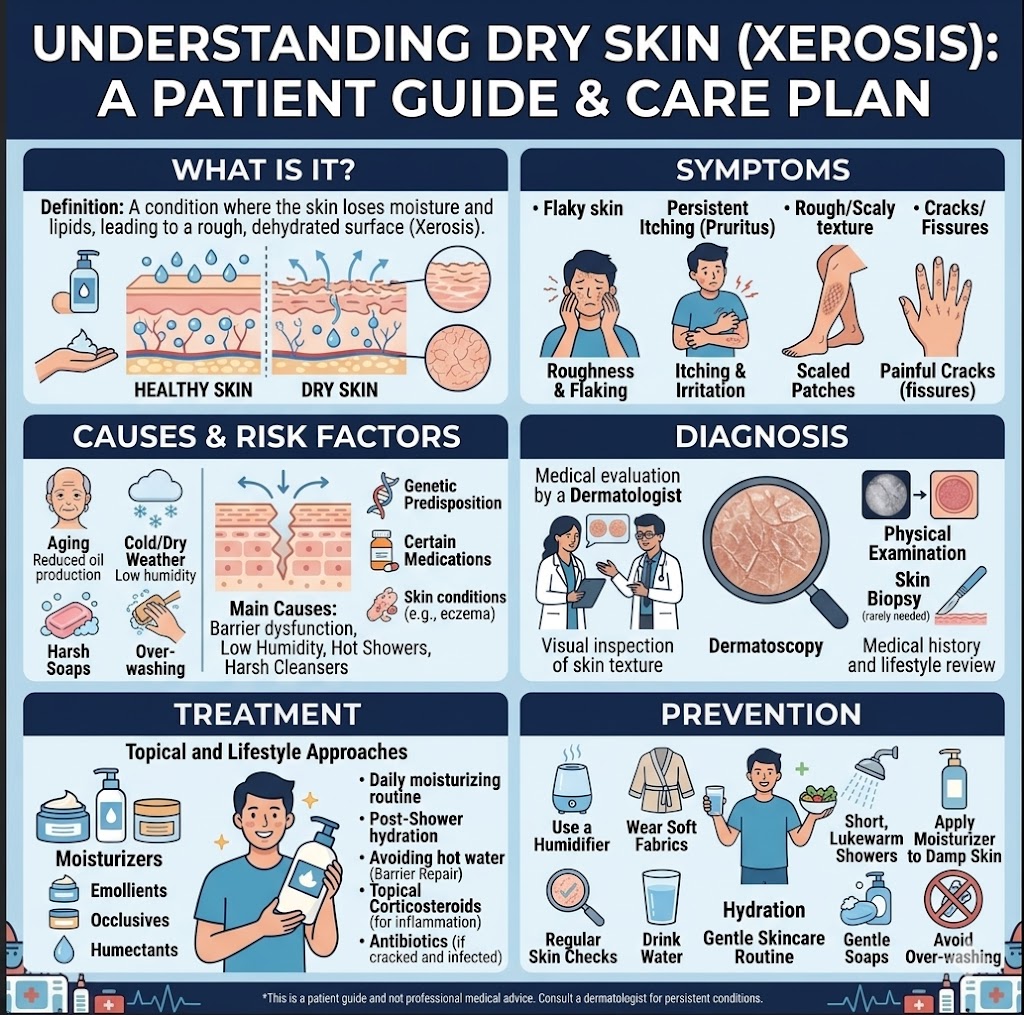
Dry skin, medically known as xerosis or xeroderma, is a common condition where the skin loses moisture, resulting in a rough, tight, itchy, flaky, or scaly texture. While often temporary or seasonal (like in winter), it can also be a persistent issue affecting people of all ages. Various factors contribute to dry skin, including cold or dry weather, sun exposure, harsh soaps, frequent bathing, and certain medical conditions or treatments. Although generally harmless, severely dry skin can lead to complications such as eczema or infections if left unaddressed. Simple yet consistent self-care, like regular moisturizing and sun protection, can significantly improve symptoms.
Understanding the Condition
Understanding Dry Skin (Xerosis)
Understanding the Condition
Dry skin, medically known as xerosis or xeroderma, is a common condition where the skin loses moisture, resulting in a rough, tight, itchy, flaky, or scaly texture. While often temporary or seasonal (like in winter), it can also be a persistent issue affecting people of all ages. Various factors contribute to dry skin, including cold or dry weather, sun exposure, harsh soaps, frequent bathing, and certain medical conditions or treatments. Although generally harmless, severely dry skin can lead to complications such as eczema or infections if left unaddressed. Simple yet consistent self-care, like regular moisturizing and sun protection, can significantly improve symptoms.
Common Symptoms
Skin Tightness: A feeling that the skin is stretched or constricted, especially after bathing or showering.
Rough Texture: Skin that feels coarse or bumpy to the touch.
Before your appointment, prepare a list of your symptoms, including when they started and what makes them better or worse. Note any skin care products you currently use (soaps, lotions, detergents), your bathing habits, and any medications or medical conditions you have. This information helps the doctor understand your unique situation.
Book a doctor visit near me
You will be asked about your symptoms, how long you've had dry skin, what triggers it, and what remedies you've tried. Questions may cover your bathing habits (frequency, water temperature), types of soaps and moisturizers used, occupation, climate you live in, existing medical conditions, and medications. Be prepared to share this information openly.
Topical Corticosteroids or Calcineurin Inhibitors: If dry skin is accompanied by severe inflammation, itching, or an underlying condition like eczema, a doctor might prescribe stronger anti-inflammatory creams to reduce symptoms. (Duration: As prescribed, typically for a few weeks)
Consultation Guide
Itchiness (Pruritus): An uncomfortable sensation that causes an urge to scratch, which can range from mild to intense.
Flaking or Ashy Appearance: Loose, dry skin cells that shed, creating a powdery or 'ashy' look, particularly noticeable on brown and black skin.
Scaling or Peeling: The detachment of larger pieces of dry skin, similar to peeling after a sunburn.
Fine Lines or Cracks: Small fissures or superficial lines appearing on the skin's surface, sometimes resembling a 'dry riverbed' pattern on legs.
Color Changes: Skin may appear reddish on lighter skin tones or grayish on brown and black skin.
Deep Cracks (Fissures): Severe cracks that can penetrate deeper into the skin, potentially causing pain and bleeding.
Consultation Guide
Which Specialist to Meet
For persistent or severe dry skin, or if you suspect an underlying condition, consult a dermatologist. A general practitioner can also provide initial assessment and guidance.
Preparations Before Your Visit
The doctor will ask detailed questions about your medical history, lifestyle, and daily routines to identify potential causes or contributing factors for your dry skin. This helps in understanding the root of the problem and tailoring appropriate advice.
Diagnostic Procedures
Clinical Skin Examination
Diagnosis of dry skin typically involves a thorough visual examination of your skin by a healthcare professional. They will assess the extent of dryness, presence of flaking, redness, cracks, or signs of associated conditions like eczema.
What to Expect
During the examination, you will be asked to expose the affected skin areas. The doctor will carefully look at your skin, noting its texture, color, and any visible signs of dryness or irritation. This is usually a quick and painless part of the visit.
What to Expect
Treatment Options
Home Remedies and Over-the-Counter Products
Regular Moisturizing: Apply a thick, fragrance-free moisturizer frequently throughout the day, especially after bathing and handwashing, to seal in moisture and strengthen the skin's protective barrier. (Duration: Ongoing, daily)
Gentle Cleansing: Use mild, non-soap cleansers or moisturizing shower gels that are fragrance-free and hypoallergenic. Avoid harsh soaps formulated to strip oil, as they can further dry the skin. (Duration: Ongoing, daily)
Modified Bathing Habits: Limit baths and showers to 5-10 minutes using warm, not hot, water. Avoid excessive scrubbing and bathe no more than once daily to preserve natural skin oils. Pat skin gently dry, then immediately apply moisturizer. (Duration: Ongoing, daily)
Careful Shaving: If shaving, use a lubricating agent, shave in the direction of hair growth (unless irritating), use a sharp blade, and apply moisturizer afterward to reduce dryness. (Duration: As needed with shaving)
Targeted Care for Cracked Heels: Soak feet in warm water for about 10 minutes, gently rub heels with a foot scrubber to remove dead skin, then apply a heavy, oil-based cream or petroleum jelly while skin is damp. Wear cotton socks overnight. (Duration: Daily, usually overnight, until healed (days to weeks))
Targeted Care for Cracked Thumb Tips: Seal cracks with a liquid bandage, apply moisturizing lotion several times daily (especially when hands are damp), and use a heavier, oil-based cream or petroleum jelly overnight, covering with gauze or cotton gloves. (Duration: Daily, until healed (days to weeks))
Prescription Treatments (for underlying conditions)
Prevention & Long-Term Wellbeing
Medical History and Lifestyle Review
Prevention and Long-Term Management
Consistent Moisturizing Routine: Make moisturizing a daily habit, applying cream or ointment throughout the day, particularly after washing hands or bathing, to maintain skin hydration.
Sun Protection: Apply a broad-spectrum sunscreen with an SPF of at least 30 year-round, even on cloudy days. Reapply every two hours or more often if swimming or sweating, as sun damage can worsen dry skin.
Environmental Protection: Cover as much skin as possible with scarves, hats, and gloves/mittens in cold or windy weather. Wear suitable gloves when gardening, using harsh cleansers, or working with substances like cement or soil.
Hydration from Within: Drink non-caffeinated beverages regularly throughout the day to help keep your entire body, including your skin, well hydrated.
Gentle Infant Skincare: For babies, use a gentle cleanser sparingly (every 1-2 weeks for bathing). Otherwise, bathe in just water. Clean the diaper area with each change and apply a thin layer of petroleum jelly while the skin is still damp.
Post-Swimming Care: Rinse off immediately after swimming, especially in chlorinated pools, and then apply moisturizer to prevent the drying effects of chlorine.
Consider a Humidifier: If living in a cold, dry, or low-humidity climate, or if using central heating, a wood-burning stove, or fireplace, a humidifier can add moisture back into the air.
Tags & Topics
Notice an error or need an update?
Help us keep medical information accurate. Report incorrect info or suggest an edit.


