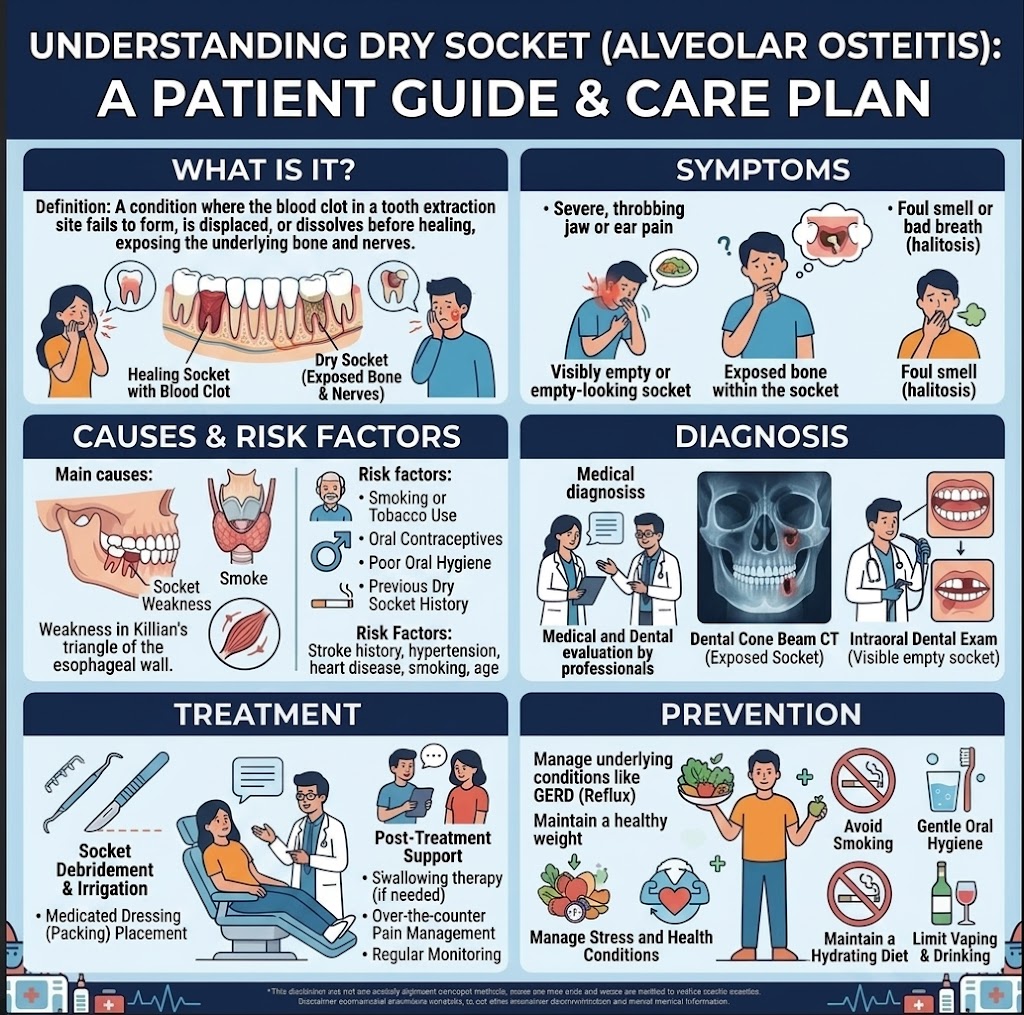
Dry socket, also known as alveolar osteitis, is a painful dental condition that can occur after a permanent tooth has been removed (extracted). Normally, a blood clot forms in the empty tooth socket, acting as a protective layer over the underlying bone and nerve endings. Dry socket happens when this blood clot either fails to form, becomes dislodged, or dissolves too soon, leaving the sensitive bone and nerves exposed. This exposure leads to intense pain that typically begins a few days after the tooth removal.
Understanding the Condition
Dry Socket: Understanding and Managing Post-Extraction Pain
Understanding the Condition
Dry socket, also known as alveolar osteitis, is a painful dental condition that can occur after a permanent tooth has been removed (extracted). Normally, a blood clot forms in the empty tooth socket, acting as a protective layer over the underlying bone and nerve endings. Dry socket happens when this blood clot either fails to form, becomes dislodged, or dissolves too soon, leaving the sensitive bone and nerves exposed. This exposure leads to intense pain that typically begins a few days after the tooth removal.
Common Symptoms
Before your visit, be prepared to describe your symptoms in detail, including when the pain started, its intensity, and if it radiates to other areas. Inform your dentist or oral surgeon about any prescription medications, over-the-counter drugs, herbal remedies, or supplements you are currently taking, as some can affect blood clotting. If you suspect dry socket, contact your dentist or oral surgeon immediately, especially if pain worsens or changes significantly after your tooth removal.
Book a doctor visit near me
A dental X-ray is a quick, painless imaging test that uses a small amount of radiation to create pictures of the structures inside your mouth, primarily your teeth and bones. For dry socket, an X-ray helps your dentist confirm the absence of the blood clot, rule out other potential complications like bone fragments left in the socket, or identify signs of infection that might be causing similar symptoms.
Socket Cleaning and Medicated Dressing: Your dentist or oral surgeon will gently clean the empty socket to remove any food particles or debris. Afterward, they will apply a special medicated dressing or paste directly into the socket. This dressing often contains pain-relieving agents and helps protect the exposed bone and nerves while promoting healing. (Duration: The dressing may need to be changed every 24 to 48 hours until your symptoms significantly improve, typically over a few days to a week.)
Prescription Rinse: You may be given a prescription antibacterial mouthwash to use at home. This helps to keep the extraction site clean and reduces the bacterial load, which can contribute to healing and prevent infection. (Duration: Typically used as directed for a few days to a week, or until the socket begins to heal.)
Monitor for Worsening Pain and Contact Your Dentist: Pay close attention to your pain levels in the days following extraction. If you develop new or worsening pain, or any other concerning symptoms, contact your dentist or oral surgeon without delay.
Consultation Guide
Practice Good Oral Hygiene: Maintain excellent oral care by brushing your teeth twice a day and flossing once daily leading up to your surgery. This helps reduce the amount of bacteria in your mouth, which can be a risk factor.
Quit Smoking and Tobacco Use: If you smoke or use other tobacco products, try to stop completely before your tooth is removed. Chemicals in tobacco can impair healing, and the sucking action can dislodge the protective blood clot. Seek support to quit permanently.
Diagnostic Procedures
You should consult with a general dentist or an oral surgeon. These dental professionals are best equipped to diagnose and treat dry socket, having specialized knowledge in tooth extractions and post-operative complications.
Preparations Before Your Visit
What to Expect
During a dental X-ray, you will typically sit in a dental chair. A lead apron will be placed over your chest and lap to protect you from radiation exposure. A small, plastic device will be positioned inside your mouth at different angles as the X-ray machine captures images. You will be asked to bite down gently on this device to keep it still. The process is usually very quick, with each image taking only a few seconds, and it is entirely painless. Your dentist will review the images immediately to assess your condition.
Treatment Options
Severe Pain: Intense pain within a few days following a tooth extraction. This pain is usually much worse than typical post-extraction discomfort and may not be relieved by regular pain medication.
Visible Empty Socket or Exposed Bone: Partially or completely missing blood clot at the extraction site, making the socket appear empty. You might even see bone in the socket.
Radiating Pain: Pain that spreads from the empty socket to your ear, eye, temple, or neck on the same side of your face as the extraction.
Unpleasant Odor or Taste: Persistent bad breath or a foul, unpleasant taste in your mouth.
Worsening Pain: While some pain is normal after a tooth extraction, new or worsening pain in the days following the procedure is a key indicator of dry socket.
Consultation Guide
Which Specialist to Meet
Professional Dental Care
Medications
Prescription Pain Relievers: Since over-the-counter pain medication is often insufficient for dry socket, your dentist may prescribe stronger pain medication to help manage the severe discomfort. (Duration: Taken as needed, usually for a few days, until the most intense pain subsides and healing progresses.)
Antibiotics: If there are signs of infection in the socket, or if your immune system is compromised, oral antibiotics may be prescribed to treat or prevent bacterial infection. (Duration: Typically a 5- to 7-day course, taken as prescribed by your dentist.)
Gentle Oral Hygiene: Follow your dentist's instructions for gently cleaning around the extraction site to prevent food from getting trapped, while being careful not to dislodge any healing tissue. (Duration: Ongoing until the socket is fully healed, usually several weeks.)
Disclose All Medications and Supplements: Inform your dentist or oral surgeon about all prescription medicines, over-the-counter drugs, herbal remedies, and supplements you are taking, as some can interfere with blood clotting.
Discuss Birth Control Pills: If you are taking birth control pills, discuss this with your dentist. High estrogen levels have been linked to an increased risk of dry socket, and your dentist may suggest alternative timing for your extraction.
Post-Extraction Care and Long-Term Wellbeing
Utilize Prescribed Protective Measures: Your dentist may recommend specific antibacterial mouthwashes or gels, or even apply antiseptic solutions directly to the wound immediately before and after surgery to help prevent dry socket and infection.
Prevention & Long-Term Wellbeing
Prevention Before Tooth Removal
Choose an Experienced Dental Professional: Select a dentist or oral surgeon with extensive experience in tooth extractions. Their expertise can minimize trauma during the procedure, potentially reducing the risk of dry socket.
Follow Post-Operative Instructions Carefully: Strictly adhere to all home-care instructions provided by your dentist, including dietary restrictions, activity levels, and proper cleaning techniques for the healing site.
Tags & Topics
Notice an error or need an update?
Help us keep medical information accurate. Report incorrect info or suggest an edit.


