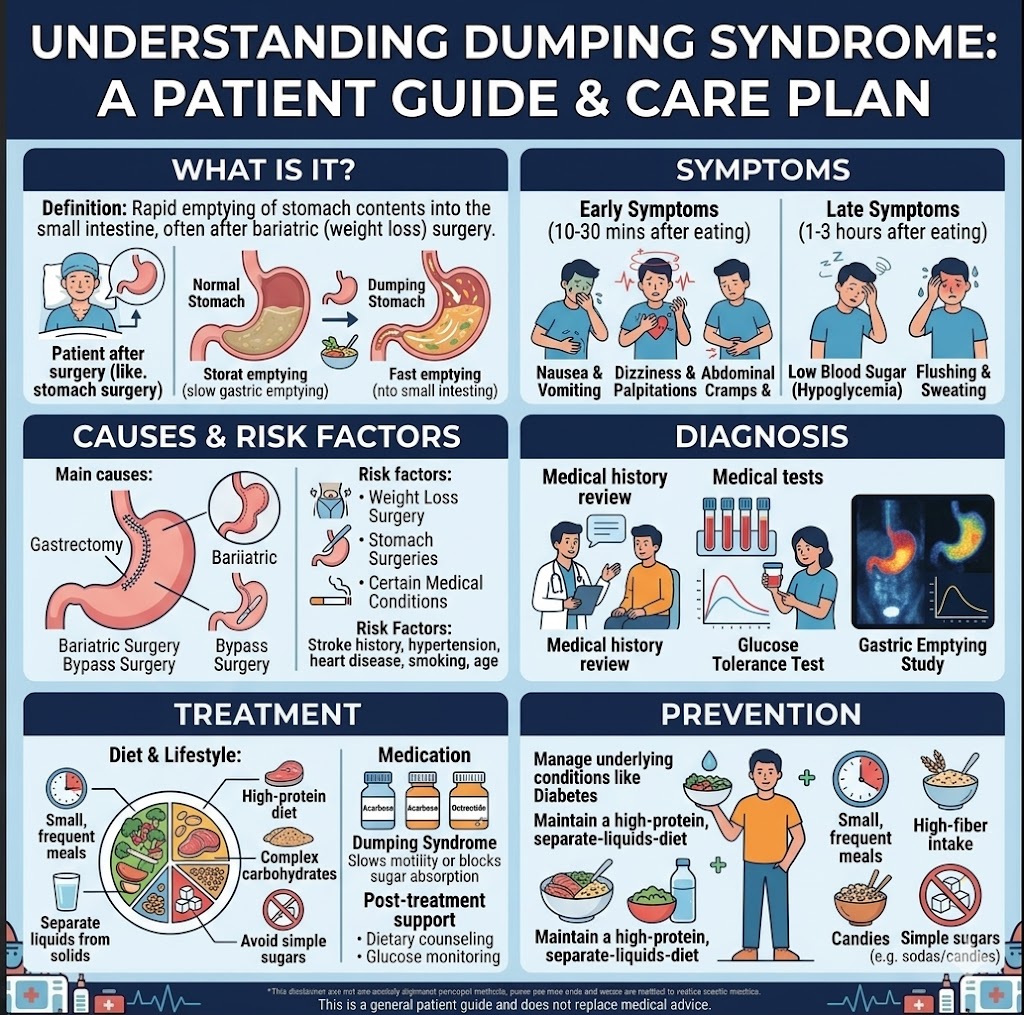
Dumping syndrome, also known as rapid gastric emptying, is a condition where food moves too quickly from your stomach into your small intestine. This often happens after surgeries involving the stomach or esophagus. Symptoms can occur shortly after eating (early dumping) or a few hours later (late dumping), and can significantly impact your daily life. Managing dumping syndrome typically involves dietary changes, but more serious cases may require medication or surgery.
Understanding the Condition
Dumping Syndrome: Understanding Rapid Gastric Emptying
Understanding the Condition
Dumping syndrome, also known as rapid gastric emptying, is a condition where food moves too quickly from your stomach into your small intestine. This often happens after surgeries involving the stomach or esophagus. Symptoms can occur shortly after eating (early dumping) or a few hours later (late dumping), and can significantly impact your daily life. Managing dumping syndrome typically involves dietary changes, but more serious cases may require medication or surgery.
Common Symptoms
Early Dumping Syndrome: These symptoms typically appear 10 to 30 minutes after eating, especially after meals rich in sugar. They occur because food rapidly floods the small intestine, drawing fluids from the bloodstream. Symptoms include stomach cramps, diarrhea, nausea, vomiting, dizziness, lightheadedness, rapid heart rate, sweating, flushing (reddening of the skin), and weakness.
Late Dumping Syndrome: These symptoms develop 1 to 3 hours after eating a high-sugar meal. This delay occurs because your body releases a large amount of insulin in response to the quick absorption of sugars, leading to a significant drop in blood sugar (hypoglycemia). Symptoms can include sweating, dizziness, lightheadedness, rapid heart rate, fatigue, confusion, and fainting. Some individuals may experience both early and late symptoms, and the condition can emerge years after surgery.
Consultation Guide
Which Specialist to Meet
Start by consulting your primary care doctor. They may refer you to a gastroenterologist (a doctor specializing in digestive health) for further evaluation and management, or a surgeon if your symptoms are related to a previous gastric or esophageal surgery.
Preparations Before Your Visit
Before your appointment, it's helpful to keep a detailed diary of your symptoms, noting what you ate, the timing and type of symptoms, and their severity. List all medications, supplements, and vitamins you are currently taking, and be prepared to discuss your complete medical history, including any past surgeries. Prepare a list of questions for your doctor to ensure all your concerns are addressed.
Book a doctor visit near me
Your doctor will conduct a thorough review of your medical history, focusing on any past stomach or esophageal surgeries, and ask detailed questions about your symptoms, including when they occur and what triggers them. A physical examination will also be performed.
During the visit, you will answer questions about your health, diet, and symptoms. The doctor will listen to your abdomen, check your vital signs, and assess your overall physical condition. This initial assessment helps determine the likelihood of dumping syndrome and guides further diagnostic steps.
Slowing Gastric Emptying Medications: Your doctor may prescribe medications that help slow the movement of food from your stomach into your small intestine. These can reduce the severity of symptoms. (Duration: As prescribed, typically for several weeks to months, or long-term for chronic cases.)
Other Symptom-Relieving Medications: Medications may also be used to alleviate specific symptoms like diarrhea or nausea. (Duration: As needed or as prescribed.)
Strict Adherence to Dietary Guidelines: Consistently follow the recommended dietary changes, including eating small, frequent meals, avoiding high-sugar foods, and separating liquids from solids. This is the cornerstone of managing and preventing symptoms.
Regular Monitoring and Symptom Tracking: Maintain a food and symptom diary to identify trigger foods and patterns. Regularly communicate with your healthcare team to adjust your management plan as needed and monitor for any changes in your condition.
Adequate Hydration: Ensure you stay well-hydrated by drinking water and other fluids between meals, but not during meals, to prevent dehydration and aid digestion.
Physical Activity (Moderate): Engage in moderate physical activity, but avoid strenuous exercise immediately after eating, as it can sometimes worsen symptoms for some individuals.
Consultation Guide
This test measures how your body processes sugar (glucose) over time. While primarily used to screen for diabetes, it can be valuable in evaluating late dumping syndrome because it directly assesses how your body's insulin response impacts blood sugar levels after consuming sugar.
Revisional Surgery: In severe cases of dumping syndrome that do not respond to dietary changes or medications, surgery may be considered to revise the original gastric or esophageal procedure that caused the syndrome, or to reconstruct parts of the digestive tract. (Duration: One-time procedure, followed by recovery and potential long-term management.)
Diagnostic Procedures
What to Expect
Glucose Tolerance Test
What to Expect
You will be asked to fast overnight (typically 8-12 hours) before the test. A blood sample will be taken to measure your baseline blood sugar. Then, you will drink a specific sugary liquid. Additional blood samples will be drawn at set intervals (e.g., 1 hour and 2 hours after drinking the liquid) to monitor how your blood sugar levels rise and fall in response to the sugar load. This helps your doctor understand your body's sugar metabolism.
Treatment Options
Medications
Prevention & Long-Term Wellbeing
Dietary and Lifestyle Changes (Home Remedies)
Smaller, More Frequent Meals: Eating five or six small meals a day instead of three large ones can help prevent your stomach from becoming overly full, slowing down food's movement. (Duration: Ongoing, long-term)
Limit High-Sugar Foods: Avoid or greatly reduce foods and drinks high in simple sugars, such as candies, sugary drinks, and desserts, as these are common triggers for dumping syndrome. (Duration: Ongoing, long-term)
Separate Liquids from Solids: Drink liquids between meals, rather than during meals, to prevent rapid emptying of stomach contents and to help you feel full without consuming too much at once. (Duration: Ongoing, long-term)
Increase Protein and Fiber: Incorporate lean protein and complex carbohydrates, along with soluble fiber, into your diet. These foods are digested more slowly, which can help stabilize blood sugar and slow gastric emptying. (Duration: Ongoing, long-term)
Chew Food Thoroughly and Eat Slowly: Taking your time to eat and chewing food completely aids digestion and allows your digestive system to process food more gradually. (Duration: Ongoing, long-term)
Prevention and Long-Term Management
Nutritional Support: Work with a dietitian to ensure you are meeting your nutritional needs, as dietary restrictions can sometimes lead to nutrient deficiencies. Supplements may be recommended.
Tags & Topics
Notice an error or need an update?
Help us keep medical information accurate. Report incorrect info or suggest an edit.


