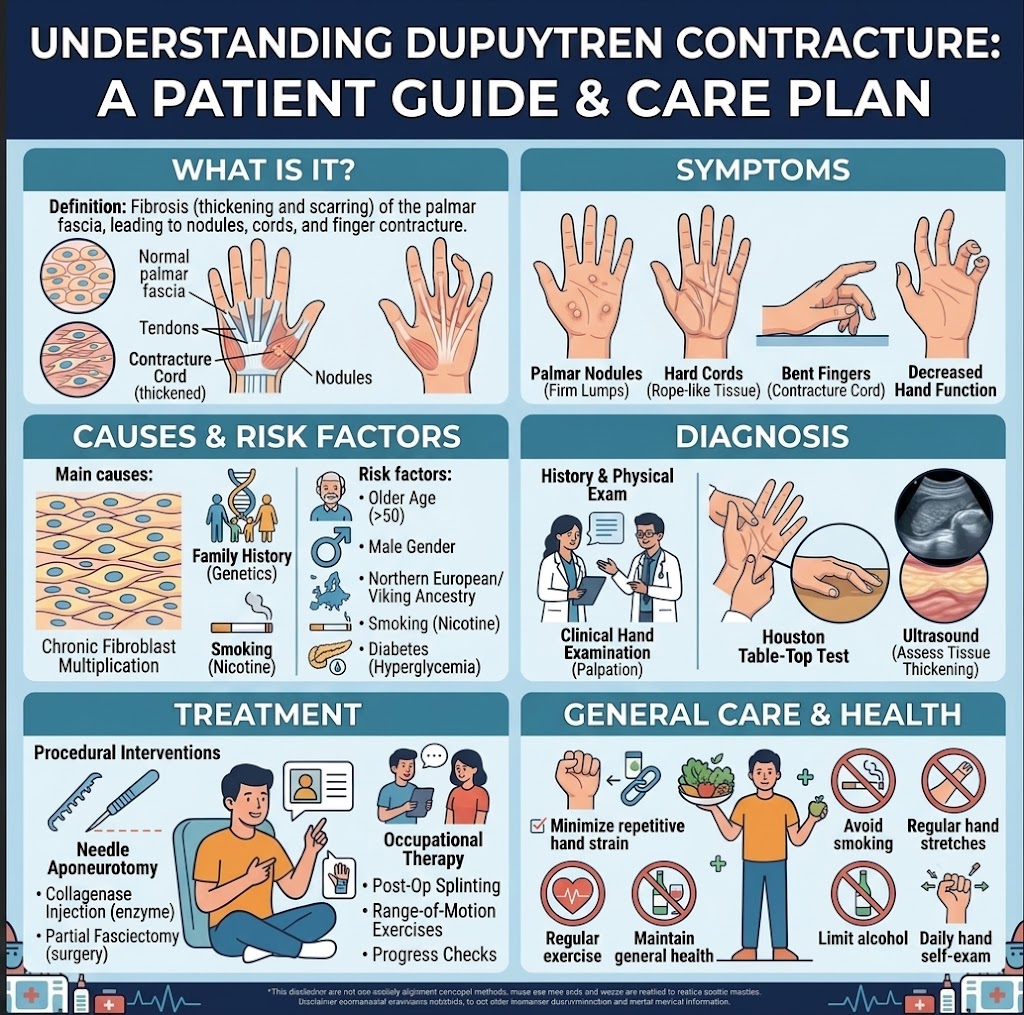
Dupuytren's contracture is a common condition that causes one or more fingers to permanently bend towards the palm of the hand. This happens because tough, fibrous tissue forms under the skin, creating knots and eventually thick cords that pull the fingers into a bent position. The affected fingers cannot straighten completely, which can make everyday tasks difficult. The condition usually worsens gradually over time and most often affects the little and ring fingers. While there is currently no cure, various treatments can help relieve symptoms and slow the progression of the condition.
Understanding the Condition
Understanding Dupuytren's Contracture: A Comprehensive Guide
Understanding the Condition
Dupuytren's contracture is a common condition that causes one or more fingers to permanently bend towards the palm of the hand. This happens because tough, fibrous tissue forms under the skin, creating knots and eventually thick cords that pull the fingers into a bent position. The affected fingers cannot straighten completely, which can make everyday tasks difficult. The condition usually worsens gradually over time and most often affects the little and ring fingers. While there is currently no cure, various treatments can help relieve symptoms and slow the progression of the condition.
Common Symptoms
Before your appointment, be prepared to discuss your symptoms, including when they started, how they affect your daily activities, and if you have any family history of the condition. Bring a list of any current medications you are taking and any allergies you have. Wear comfortable clothing that allows easy examination of your hands and arms.
Book a doctor visit near me
Ongoing Professional Monitoring: Dupuytren's contracture can recur even after successful treatment. Schedule regular follow-up appointments with your hand specialist to monitor for any return of symptoms or new contractures.
Consultation Guide
Palm Lumps: The condition often begins with one or more firm lumps in the palm of the hand. These lumps may or may not cause pain.
Thickening Cords: Over time, the lumps can extend into a hard cord or band of tissue under the skin, reaching from the palm up into the affected finger. This cord begins to tighten.
Bent Fingers (Contracture): As the cord tightens, it pulls the finger towards the palm, preventing it from straightening fully. This bending can become severe, impacting hand function.
Affected Fingers: Dupuytren's contracture most commonly affects the two fingers farthest from the thumb (the ring finger and little finger). It can occur in one or both hands.
Consultation Guide
Which Specialist to Meet
Diagnostic Procedures
You should consult with a hand surgeon, which is typically an orthopedic surgeon or a plastic surgeon who specializes in hand conditions. These specialists have expertise in diagnosing and treating Dupuytren's contracture.
Preparations Before Your Visit
Clinical Hand Examination
The diagnosis of Dupuytren's contracture is primarily made through a thorough physical examination of your hand. The doctor will visually inspect your palm and fingers for characteristic signs and feel for any hardened lumps, dimples, or fibrous cords under the skin.
What to Expect
During the examination, your doctor will observe the appearance of your hand and assess how much you can straighten your fingers. You will likely be asked to place your hand flat on a table, palm down. If you cannot flatten your hand completely due to a bent finger, this is a key indicator, often referred to as the 'tabletop test.' The doctor will also gently press and move your fingers to determine the extent of the contracture and identify any affected tissue.
Treatment Options
Non-Surgical Procedures
Fasciectomy (Open Surgery): This is a surgical operation where an incision is made in the palm to directly remove the thickened, diseased tissue and cords that are causing the contracture. It is often recommended for more severe cases to achieve a more complete correction. (Duration: Surgery typically takes 1-3 hours. Full recovery, including wound healing and extensive hand therapy, can take several months.)
Dermatofasciectomy: In some cases, especially when the skin is significantly affected or there's a high risk of recurrence, both the diseased skin and the underlying cords are removed. This procedure often requires a skin graft from another part of the body to cover the open wound. (Duration: Surgery typically takes 2-4 hours. Recovery, including skin graft healing and comprehensive hand therapy, can extend for several months.)
Therapies
Hand Therapy and Splinting: After any procedure, working with a hand therapist is crucial. They will guide you through exercises to improve flexibility, strength, and range of motion. Splints may be custom-made and used to help keep the finger extended during recovery, especially overnight. (Duration: Several weeks to months, depending on the severity of the contracture and the type of treatment received.)
Post-Treatment Hand Exercises: After any treatment, consistently perform the hand exercises recommended by your doctor or hand therapist. These exercises are vital for maintaining flexibility, strength, and preventing recurrence.
Prevention & Long-Term Wellbeing
Needle Aponeurotomy (Percutaneous Needle Fasciotomy): This procedure involves using a fine needle, inserted through the skin without an incision, to carefully break apart the tight cords of tissue that are pulling the finger down. It helps to release the contracture and allows the finger to straighten. (Duration: Typically a single outpatient session. Recovery involves several weeks of hand care, exercises, and sometimes splinting.)
Enzyme Injections: A specific enzyme is injected directly into the Dupuytren's cord. This enzyme works to soften and weaken the cord. The day after the injection, the doctor will manually manipulate and straighten the finger to break the weakened cord. (Duration: Single injection, followed by finger manipulation usually the next day. Recovery with hand exercises and splinting over several weeks to months.)
Prevention and Long-Term Care
Early Self-Monitoring: Regularly inspect your palms for any new lumps, small pits, or changes in how your fingers move. Early detection can lead to earlier intervention and potentially better outcomes.
Lifestyle Management: Manage underlying health conditions like diabetes effectively. If you smoke or consume alcohol excessively, considering reduction or cessation may help, as these factors are associated with an increased risk.
Hand Ergonomics: If your occupation involves prolonged use of vibrating tools, use anti-vibration gloves and take regular breaks to minimize potential strain on your hands.
Tags & Topics
Notice an error or need an update?
Help us keep medical information accurate. Report incorrect info or suggest an edit.


