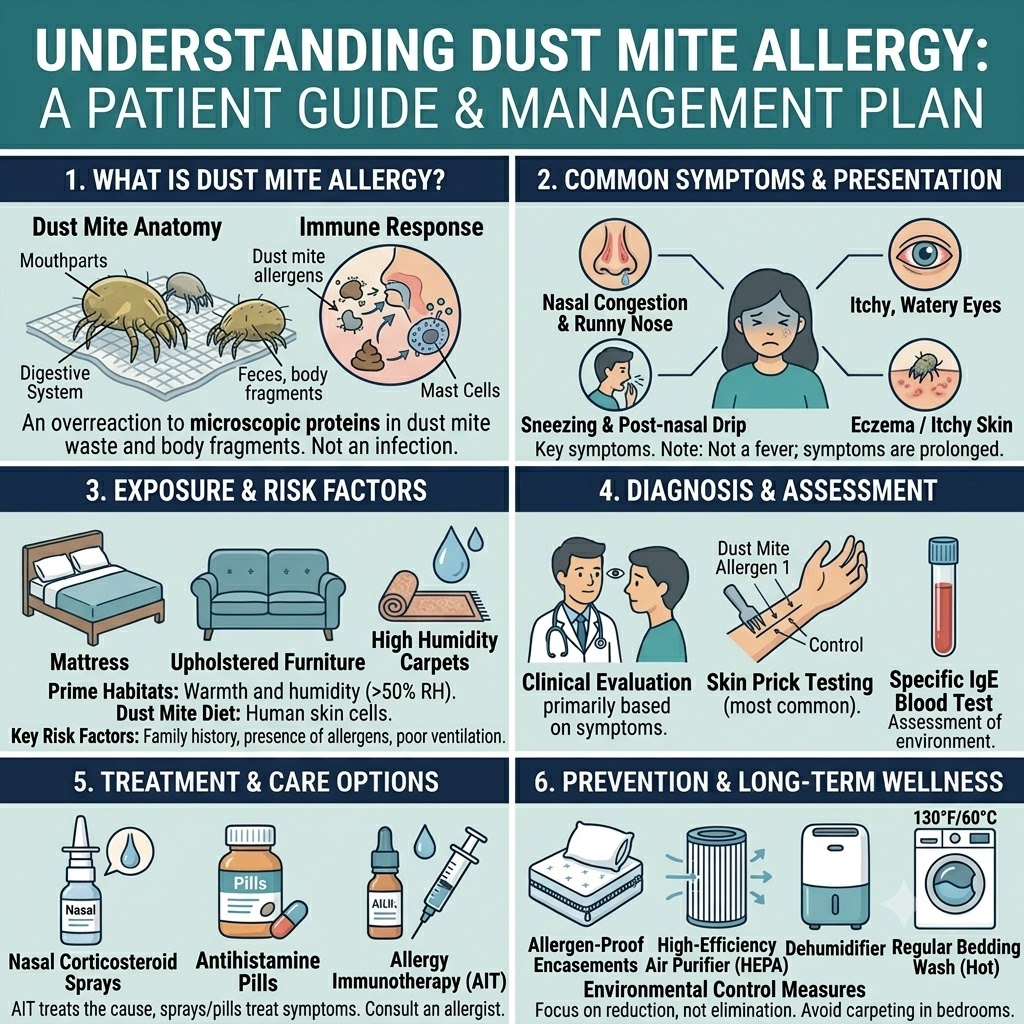
Dust mite allergy is an immune system reaction to tiny insects called dust mites, commonly found in house dust. These microscopic creatures are related to spiders and ticks and feed on shed human skin cells. Symptoms often resemble hay fever, including sneezing and a runny nose. Many individuals with dust mite allergy also experience asthma symptoms like wheezing and difficulty breathing. Dust mites thrive in warm, humid environments, making bedding, upholstered furniture, and carpets common habitats. Managing dust mite allergy involves reducing exposure to these allergens at home and, for some, using medications or other treatments to alleviate symptoms and control associated asthma.
Understanding the Condition
Dust mite allergy is an immune system reaction to tiny insects called dust mites, commonly found in house dust. These microscopic creatures are related to spiders and ticks and feed on shed human skin cells. Symptoms often resemble hay fever, including sneezing and a runny nose. Many individuals with dust mite allergy also experience asthma symptoms like wheezing and difficulty breathing. Dust mites thrive in warm, humid environments, making bedding, upholstered furniture, and carpets common habitats. Managing dust mite allergy involves reducing exposure to these allergens at home and, for some, using medications or other treatments to alleviate symptoms and control associated asthma.
Common Symptoms
Nasal and Respiratory Symptoms: Inflammation inside the nose can lead to a runny nose, stuffiness, frequent sneezing, and facial pressure. Itching in the nose, roof of the mouth, or throat is also common.
Asthma-Related Symptoms: For those with dust mite allergy and asthma, symptoms may include difficulty breathing, chest tightness or pain, and a noticeable whistling or wheezing sound when exhaling. These can disrupt sleep due to coughing or wheezing.
Skin Symptoms: An ongoing dust mite allergy can sometimes trigger a flare-up of dry, itchy skin, known as eczema.
Severity and Differentiation: Dust mite allergy ranges from mild (runny nose, watery eyes, sneezing) to severe, and can be chronic. Symptoms often worsen during activities like sleeping or cleaning, when dust mite allergens are more likely to be in the air. If symptoms persist for more than one week, differentiating them from a common cold, medical advice is recommended.
Consultation Guide
Which Specialist to Meet
To diagnose and manage dust mite allergy, you might see your primary care physician, who can then refer you to an allergist/immunologist. An allergist/immunologist specializes in diagnosing and treating allergies and asthma. If asthma symptoms are severe, a pulmonologist (lung specialist) might also be involved.
Preparations Before Your Visit
Before your visit, it is helpful to keep a diary of your symptoms, noting when they occur, what might trigger them, and how severe they are. Your doctor may ask you to stop taking certain medications, like antihistamines, for a few days before allergy testing, as these can interfere with test results. Always inform your healthcare provider about all medications, supplements, and herbal remedies you are currently taking.
Book a doctor visit near me
Nasal Corticosteroids: These nasal sprays reduce inflammation in the nasal passages, helping to relieve symptoms like stuffiness, sneezing, and runny nose. (Duration: Used daily as directed, often during allergy seasons or year-round for chronic allergies.)
Antihistamines: Available as oral tablets, liquids, or nasal sprays, antihistamines block histamine, a chemical released during an allergic reaction, to alleviate sneezing, runny nose, and itching. (Duration: Taken as needed for symptom relief or daily during allergy periods.)
Decongestants: Oral or nasal spray decongestants help shrink swollen nasal passages to relieve stuffiness. Nasal spray decongestants should only be used for a few days to avoid rebound congestion. (Duration: Short-term use only for nasal sprays; oral forms may be used for slightly longer periods as advised by a doctor.)
Leukotriene Modifiers: These oral medications block the action of leukotrienes, immune system chemicals that can cause allergy and asthma symptoms. (Duration: Taken daily.)
Regular Medical Follow-up: Schedule regular check-ups with your healthcare provider to monitor symptoms, adjust treatment plans as needed, and ensure effective management of any associated conditions like asthma.
Identify Other Triggers: Be mindful of other potential allergy triggers and discuss them with your doctor to develop a comprehensive management plan.
Asthma Action Plan: If you have asthma, work with your doctor to create and regularly review an asthma action plan, ensuring you know how to manage flare-ups and when to seek emergency care.
Diagnostic Procedures
Dust Mite Allergy: Understanding, Diagnosis, and Management
Understanding the Condition
Allergy Skin Tests (Prick or Scratch Tests)
This common and quick method determines if your immune system reacts to specific substances, called allergens, including dust mites. Small amounts of various allergen extracts are applied to the skin, typically on the forearm or back, and then the skin is gently pricked or scratched to allow the allergen to enter just beneath the surface. The test looks for a localized allergic reaction. It's generally safe for adults and children, but may not be recommended if you have a history of severe allergic reactions, take certain medications (e.g., antihistamines, some antidepressants, or heartburn drugs that can affect results), have widespread skin conditions (such as severe eczema or psoriasis) that would interfere with reading the results, are pregnant, or have severe uncontrolled asthma or heart conditions.
What to Expect
During the procedure, the skin on your forearm or back will be cleaned. A healthcare professional will then mark several spots and apply a drop of different allergen extracts, plus a control solution, to each spot. Using a sterile lancet, the skin surface under each drop will be gently pricked or scratched. This usually feels more like a light scratch than a painful sensation. After about 15-20 minutes, the healthcare professional will observe your skin for reactions. A positive reaction typically appears as a raised, red, itchy bump (a wheal) surrounded by a red area (a flare), similar to a mosquito bite. Mild itching and redness at the test sites usually subside within a few hours.
Blood Tests (Specific IgE Antibody Tests)
Also known as in vitro immunoglobulin E (IgE) antibody tests, these blood tests measure the amount of specific IgE antibodies in your blood that are produced in response to particular allergens, such as dust mites. These tests are useful alternatives for individuals who cannot undergo skin tests due to medical conditions, medications that interfere with skin test results, or for very young children. While highly effective for many allergies, blood tests are not typically used to diagnose penicillin allergy.
What to Expect
This procedure is similar to any standard blood draw. A healthcare professional will insert a needle, usually into a vein in your arm, to collect a small sample of blood. The blood sample is then sent to a laboratory for analysis. You do not need to make any special preparations for a blood test, such as stopping medications, unless specifically advised by your doctor. The results typically take a few days to a week to become available.
Treatment Options
Home Remedies and Environmental Control
Reducing Dust Mites in the Home: Encase mattresses, box springs, and pillows in allergen-proof covers. Wash all bedding, blankets, and plush toys weekly in hot water (at least 130°F or 54°C) to kill dust mites and remove allergens. Use a vacuum cleaner with a HEPA (high-efficiency particulate air) filter on carpets, rugs, and upholstery. Damp-dust surfaces and mop floors regularly to trap dust rather than scattering it. Minimize clutter, which can collect dust. Maintain indoor humidity levels below 50% using a dehumidifier or air conditioner, as dust mites thrive in humid environments. (Duration: Ongoing and consistent)
Medications
Cromolyn Sodium: Available as a nasal spray, this medication helps prevent the release of allergy-causing chemicals from immune cells. (Duration: Used several times a day, often before exposure to allergens.)
Immunotherapy (Allergy Shots or Sublingual Tablets): This treatment involves gradually exposing the body to increasing doses of the dust mite allergen over time. The goal is to desensitize your immune system, reducing the severity of your allergic reactions. Immunotherapy can be given as injections (allergy shots) or as tablets dissolved under the tongue (sublingual immunotherapy). (Duration: Allergy shots typically involve weekly injections for several months, followed by monthly maintenance shots for 3 to 5 years. Sublingual tablets are usually taken daily for several years.)
Prevention & Long-Term Wellbeing
Prevention and Long-Term Monitoring
Maintain a Low-Mite Environment: Continuously implement household strategies like using allergen-proof bedding covers, washing linens weekly in hot water, vacuuming with HEPA filters, and keeping indoor humidity below 50% to minimize dust mite populations.
Tags & Topics
Notice an error or need an update?
Help us keep medical information accurate. Report incorrect info or suggest an edit.


