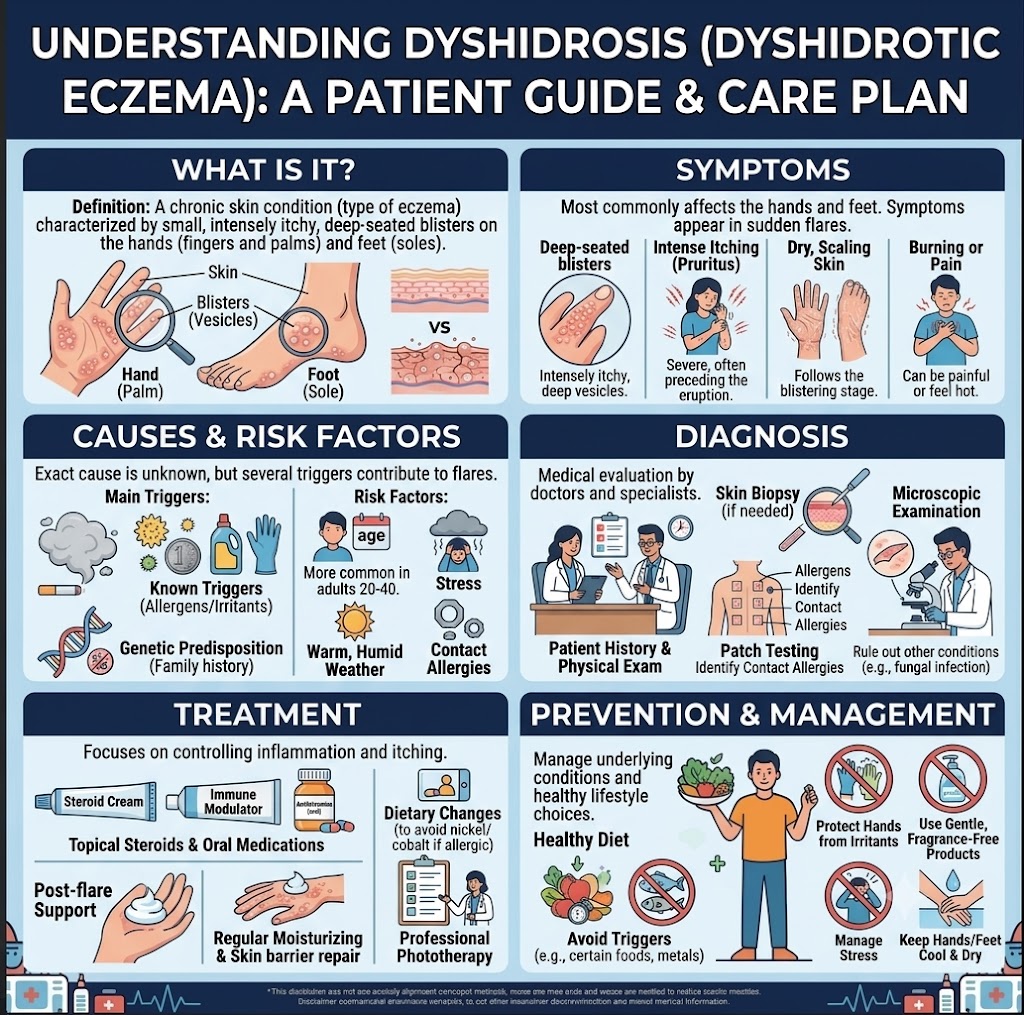
Dyshidrosis, also known as dyshidrotic eczema or pompholyx, is a common skin condition characterized by the sudden appearance of small, intensely itchy, fluid-filled blisters. These blisters typically form on the palms of the hands, the sides of the fingers, and sometimes the soles of the feet. The exact cause of dyshidrosis is not fully understood, but it frequently affects individuals with other skin conditions like atopic dermatitis (eczema) and allergies such as hay fever or contact allergies. It is important to note that dyshidrosis is not contagious. While the blisters usually resolve within a few weeks, they often recur regularly over months or even years.
Understanding the Condition
Dyshidrosis: Understanding Itchy Blisters on Hands and Feet
Understanding the Condition
Common Symptoms
Painful, Itchy Blisters: The primary symptom involves small, fluid-filled blisters that are intensely itchy and can be painful. These blisters often appear grouped in clusters, sometimes compared to the appearance of tapioca pearls. They are typically found on the sides of the fingers, the palms of the hands, and the bottoms of the feet. In severe cases, these small blisters can merge to form larger, more prominent blisters.
You should initially consult your general practitioner for persistent or severe rashes on your hands or feet. If symptoms are severe, don't improve with initial treatment, or spread beyond the hands and feet, your doctor may refer you to a dermatologist, a specialist in skin conditions.
Preparations Before Your Visit
Before your appointment, prepare a list of your symptoms, including when they started, how long they last, and any triggers you've noticed. Note down any medications you're currently taking, your medical history, and any questions you have for the doctor. This information helps your doctor make an accurate diagnosis and create a suitable treatment plan.
Book a doctor visit near me
A healthcare provider will examine your skin and ask about your symptoms and medical history. Often, the appearance of the rash is enough for a diagnosis.
Your doctor will visually inspect the affected areas of your skin on your hands and feet. They will ask you detailed questions about when your symptoms began, how often they occur, what makes them better or worse, and your overall health history, including any allergies or other skin conditions you may have. This physical examination and discussion are typically sufficient for diagnosing dyshidrosis.
In some cases, if an allergic trigger is suspected, allergy skin tests may be performed to identify specific substances that cause a reaction. This can help confirm if a particular substance you touch, breathe, or eat is contributing to your symptoms.
Topical Steroid Creams or Ointments: These are prescription-strength creams or ointments applied directly to the affected skin to reduce inflammation, itching, and aid healing. They are typically the first line of treatment. (Duration: Applied once or twice daily for several weeks, or as directed by your doctor, until symptoms improve.)
Oral or Injectable Medications: For more severe cases, your doctor may prescribe stronger anti-inflammatory medications taken by mouth (like corticosteroids) or immune-modulating drugs. These help control widespread or persistent symptoms. (Duration: Duration varies based on the specific medication and the severity of your condition, typically a short course of oral medication or ongoing as prescribed.)
Therapies and Procedures
Practice Gentle Skin Care: Wash your hands and feet with mild, non-soap cleansers and lukewarm water. Harsh soaps and hot water can irritate the skin and worsen symptoms.
Dry Hands Thoroughly: After washing, gently pat your hands and feet completely dry, paying close attention to the areas between the fingers and toes, as moisture can exacerbate the condition.
Regular Moisturizing: Apply a thick, fragrance-free moisturizer at least twice a day, especially after washing, to help maintain the skin's barrier and prevent dryness and cracking.
Seek Early Treatment for Flare-ups: Consult your doctor at the first sign of a dyshidrosis flare-up. Early intervention can help manage symptoms more effectively and prevent the condition from becoming severe or leading to complications like bacterial infections.
Consultation Guide
Dyshidrosis, also known as dyshidrotic eczema or pompholyx, is a common skin condition characterized by the sudden appearance of small, intensely itchy, fluid-filled blisters. These blisters typically form on the palms of the hands, the sides of the fingers, and sometimes the soles of the feet. The exact cause of dyshidrosis is not fully understood, but it frequently affects individuals with other skin conditions like atopic dermatitis (eczema) and allergies such as hay fever or contact allergies. It is important to note that dyshidrosis is not contagious. While the blisters usually resolve within a few weeks, they often recur regularly over months or even years.
Drying and Flaking Skin: After a few weeks, the blisters typically dry out, leading to cracking, scaling, and flaking of the skin in the affected areas. This healing phase can also cause discomfort.
Recurrent Episodes: Dyshidrosis has a tendency to come back regularly, with individuals experiencing flare-ups for months or even years.
Wear Protective Gloves: For wet activities or when handling potential irritants, wear cotton gloves. If standard waterproof gloves cause irritation, try wearing cotton gloves underneath them to create a barrier.
Identify and Avoid Triggers: Pay attention to what might trigger your flare-ups, such as specific foods, environmental allergens, chemicals, or periods of high stress, and try to minimize exposure to them.
Diagnostic Procedures
What to Expect
What to Expect
During an allergy skin test, a small amount of suspected allergy-causing substances (allergens) will be pricked or applied to your skin, usually on your forearm or back. You will then wait for about 15-20 minutes to see if any areas develop a reaction, such as a raised, red, itchy bump (a 'wheal'). You might feel a mild prick or slight discomfort during the application. Skin tests are generally safe but may not be recommended if you are pregnant, breastfeeding, have severe skin conditions, or are taking certain medications. In such cases, blood tests for allergies may be an alternative.
Treatment Options
Skin Color Changes: Following the healing of blisters, some individuals may notice temporary changes in skin color, appearing darker in the affected areas. This is known as post-inflammatory hyperpigmentation and is more common in individuals with brown or Black skin. It usually fades over time without needing specific treatment.
Consultation Guide
Which Specialist to Meet
Medications
Light Therapy (Phototherapy): This treatment involves exposing the affected skin to specific wavelengths of ultraviolet (UV) light under medical supervision. It helps reduce inflammation and itching. (Duration: Typically involves multiple sessions per week over several weeks to months, depending on your response.)
Botulinum Toxin Injections: In some instances, for severe dyshidrosis particularly if linked to excessive sweating, injections of a purified toxin can be used. This helps to block certain nerve signals that contribute to sweat production, which can exacerbate the condition. (Duration: The effects usually last for several months, requiring repeat injections as needed.)
Photodynamic Therapy: A two-stage treatment combining a special light-sensitizing medicine applied to the skin, which is then activated by specific light (often a laser). This activated medicine helps target and destroy abnormal cells and reduce inflammation. (Duration: This therapy usually involves multiple sessions, often spaced over several weeks, depending on the severity and response.)
Prevention & Long-Term Wellbeing
Prevention and Self-Care
Manage Stress: Since stress can trigger or worsen dyshidrosis, practicing stress-reduction techniques such as mindfulness, meditation, or regular exercise can be beneficial.
Avoid Metal Exposure: Limit direct skin contact with certain metals, such as cobalt and nickel, which are sometimes found in jewelry, tools, or industrial settings, as these can be triggers for some individuals.
Tags & Topics
Notice an error or need an update?
Help us keep medical information accurate. Report incorrect info or suggest an edit.


