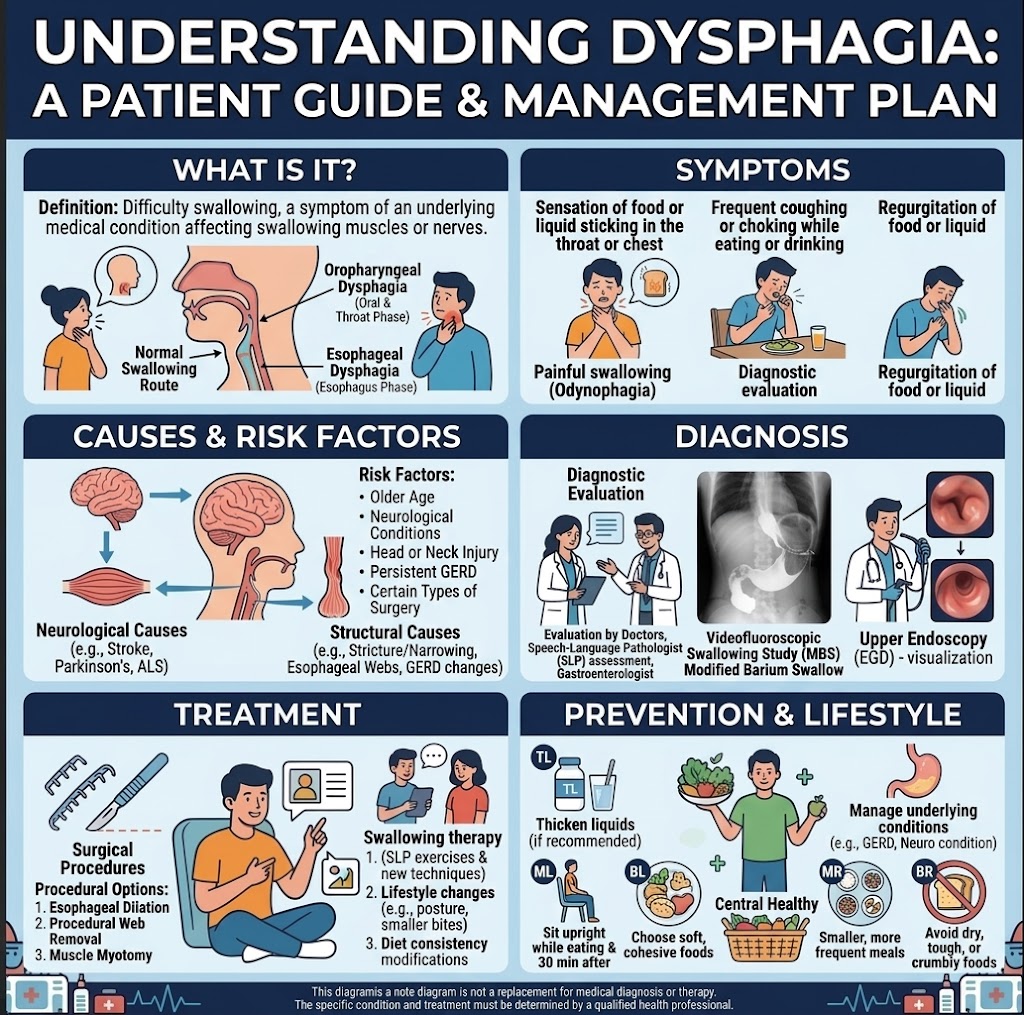
Dysphagia is the medical term for difficulty swallowing, ranging from mild discomfort to being unable to swallow. While occasional difficulty (e.g., from eating too fast) isn't usually serious, persistent dysphagia requires medical attention. It can affect anyone but is more common in older adults. Swallowing involves complex muscle and nerve coordination, and problems occur when these are weakened, damaged, or when the food pipe (esophagus) narrows. The esophagus is a muscular tube that moves food from your mouth to your stomach.
Understanding the Condition
Understanding Difficulty Swallowing (Dysphagia)
Understanding the Condition
Dysphagia is the medical term for difficulty swallowing, ranging from mild discomfort to being unable to swallow. While occasional difficulty (e.g., from eating too fast) isn't usually serious, persistent dysphagia requires medical attention. It can affect anyone but is more common in older adults. Swallowing involves complex muscle and nerve coordination, and problems occur when these are weakened, damaged, or when the food pipe (esophagus) narrows. The esophagus is a muscular tube that moves food from your mouth to your stomach.
Common Symptoms
Pain While Swallowing: Discomfort or pain when attempting to swallow.
Inability to Swallow: Complete blockage of food or liquid passage.
Food Feeling Stuck: Sensation that food is caught in your throat, chest, or behind the breastbone.
Hoarseness: A rough or raspy change in your voice.
Regurgitation: Food coming back up into your mouth after swallowing.
Frequent Heartburn: Burning sensation in the chest, often after eating.
Acid or Food Backing Up: Stomach acid or undigested food returning to the throat.
Unexplained Weight Loss: Unintended weight loss due to insufficient food intake.
Coughing or Gagging: Coughing or gagging during or immediately after swallowing.
Consultation Guide
Which Specialist to Meet
List all symptoms: when they began, frequency, triggers, and what helps or worsens them. Include a list of all medications, vitamins, and supplements you take. Prepare questions for your doctor. Keeping a food and symptom diary can also be helpful.
Book a doctor visit near me
Consistent Treatment Adherence: Consistently follow your prescribed medications, therapies, and dietary recommendations to manage symptoms and prevent complications.
Monitor for Complications: Be vigilant for symptoms that could indicate complications like aspiration pneumonia (coughing, fever after eating) or worsening swallowing difficulty, and report them promptly to your doctor.
Consultation Guide
Start with your primary care doctor, who may refer you to a specialist. Depending on the suspected cause, you might see a gastroenterologist (digestive system specialist), an ear, nose, and throat (ENT) specialist, a speech-language pathologist (for swallowing therapy), or a neurologist (nervous system specialist).
Preparations Before Your Visit
Food Texture Modification: Opt for soft, pureed, or liquid foods to ease swallowing, especially if certain textures cause issues. (Duration: As needed, potentially long-term)
Avoid Trigger Foods: Identify and avoid foods (e.g., dry, sticky, very solid items) that commonly exacerbate swallowing difficulty. (Duration: Ongoing)
Diagnostic Procedures
Barium Swallow X-ray (Swallowing Study)
This X-ray test specifically examines your swallowing process. It uses a special liquid called barium, which coats your throat and esophagus, making them visible. This helps doctors observe how food moves from your mouth to your stomach, identifying blockages or muscle issues.
What to Expect
You will drink various consistencies of barium liquid while X-ray images are taken. A radiologist or speech-language pathologist observes the liquid's movement to pinpoint where and why you might be having difficulty swallowing. The procedure typically lasts 30-60 minutes.
Esophageal manometry measures the strength and coordination of the muscle contractions in your esophagus. It also checks how well the two muscle rings (sphincters) at the top and bottom of your esophagus open and close. This test is crucial for diagnosing conditions affecting esophageal muscles and nerves.
What to Expect
A thin, flexible tube with pressure sensors will be gently passed through your nose, down your esophagus, and into your stomach. You'll swallow small sips of water, and the sensors in the tube will record the pressure and movement of your esophageal muscles. The test takes 15-30 minutes; you can generally resume normal activities afterward.
Upper Endoscopy (Esophagogastroduodenoscopy)
An upper endoscopy allows a doctor to visually examine the lining of your upper digestive system, including your esophagus, stomach, and the beginning of your small intestine. A long, flexible tube with a camera (endoscope) is used for this.
What to Expect
Treatment Options
You'll likely receive a sedative to help you relax and pain medication if needed. Your throat may also be numbed. The endoscope is gently guided down your throat, displaying live video to a screen. The doctor checks for abnormalities like inflammation, narrowing, tumors, or foreign objects. Small tissue samples (biopsies) may be taken. The procedure lasts 15-30 minutes; plan for a ride home due to sedation.
Medications
Acid Reducers: Medications that reduce stomach acid production can treat conditions like gastroesophageal reflux disease (GERD), which often contributes to swallowing difficulties by damaging the esophagus. (Duration: Short-term to long-term, depending on condition)
Muscle Relaxants: For conditions involving esophageal spasms, certain medications can help relax the muscles in the esophagus. (Duration: As needed or short-term course)
Anti-inflammatory Agents: In cases like eosinophilic esophagitis, medications to reduce inflammation in the esophagus can be prescribed. (Duration: Variable, often long-term management)
Therapies
Swallowing Therapy (Speech-Language Pathologist): A speech-language pathologist can teach you exercises to strengthen swallowing muscles, improve coordination, and learn techniques to swallow more safely and effectively. (Duration: Several weeks to months, or ongoing as needed)
Tumor Removal: If a tumor is causing the swallowing difficulty, surgical removal of the tumor may be necessary to alleviate the blockage. (Duration: One-time procedure, followed by recovery and potential ongoing cancer treatment)
Anti-Reflux Surgery (e.g., Fundoplication): For severe GERD that doesn't respond to medication, surgery can strengthen the lower esophageal sphincter to prevent stomach acid from flowing back into the esophagus. (Duration: Typically a one-time procedure, with recovery period)
Managing Underlying Conditions: Seek and adhere to treatment for conditions like GERD, neurological disorders, or immune system diseases, as these can contribute to or worsen dysphagia.
Oral Health Care: Maintain good dental hygiene and ensure dentures fit properly to facilitate chewing and prevent foreign bodies from getting stuck.
Long-Term Wellbeing & Monitoring
Regular Medical Check-ups: Attend all scheduled doctor's appointments to monitor your condition, adjust treatment as needed, and address any new concerns.
Prevention & Long-Term Wellbeing
Home Remedies & Lifestyle Changes
Mindful Eating: Eat slowly, take small bites, and chew food thoroughly to aid safe swallowing and prevent food from getting stuck. (Duration: Ongoing)
Dietary Counseling: Guidance on appropriate food textures, hydration strategies, and mealtime behaviors to ensure adequate nutrition while managing swallowing challenges. (Duration: Ongoing as part of lifestyle management)
Esophageal Dilation: For a narrowed esophagus (stricture), a balloon or dilator is used during endoscopy to gently stretch and widen the affected area, making swallowing easier. (Duration: Often a single procedure, may need repeat sessions over time)
Botox Injections: Injections of a muscle-relaxing agent into the esophageal muscles can help relieve spasms or improve relaxation of the lower esophageal sphincter in conditions like achalasia. (Duration: Temporary relief, typically lasts several months, may need repeat injections)
Myotomy: For conditions like achalasia, a surgeon may cut the muscle fibers of the lower esophageal sphincter to permanently relax it, allowing food to pass into the stomach more easily. (Duration: Typically a one-time procedure, with recovery period)
Prevention & Risk Reduction
Conscious Eating Habits: Always eat slowly, take small bites, and chew your food thoroughly to minimize the risk of occasional swallowing difficulties and choking.
Nutritional Maintenance: Work with healthcare professionals to ensure you maintain adequate hydration and nutrition, potentially through modified diets or nutritional supplements, to prevent malnutrition and weight loss.
Tags & Topics
Notice an error or need an update?
Help us keep medical information accurate. Report incorrect info or suggest an edit.


