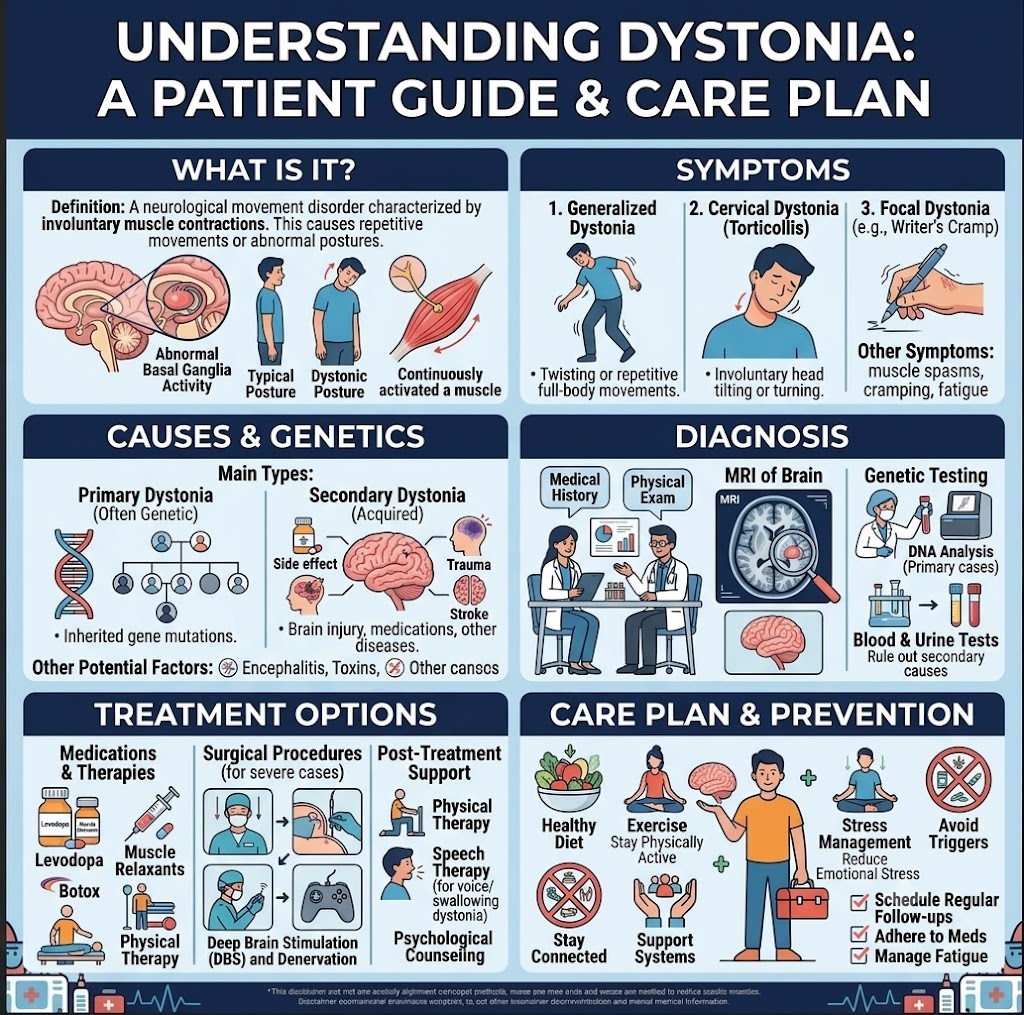
Dystonia is a movement disorder characterized by involuntary, sustained muscle contractions. These contractions lead to twisting, repetitive movements, or abnormal postures that a person cannot control. It can affect a single body part (focal dystonia), neighboring body areas (segmental dystonia), or be widespread throughout the body (generalized dystonia). The severity of muscle spasms varies, sometimes causing pain and significantly impacting daily activities. While there is currently no cure, various treatments, including medications, therapies, and surgical options, can effectively manage symptoms and improve quality of life.
Understanding the Condition
Understanding Dystonia: Causes, Symptoms, and Management
Understanding the Condition
Dystonia is a movement disorder characterized by involuntary, sustained muscle contractions. These contractions lead to twisting, repetitive movements, or abnormal postures that a person cannot control. It can affect a single body part (focal dystonia), neighboring body areas (segmental dystonia), or be widespread throughout the body (generalized dystonia). The severity of muscle spasms varies, sometimes causing pain and significantly impacting daily activities. While there is currently no cure, various treatments, including medications, therapies, and surgical options, can effectively manage symptoms and improve quality of life.
Common Symptoms
General Symptoms: Muscle spasms can begin in one area like a leg, neck, or arm, often starting in the neck, arm, or face after age 21. They might occur specifically during certain actions, such as writing. Symptoms frequently worsen with stress, fatigue, or anxiety and tend to become more noticeable over time.
Neck (Cervical Dystonia): Involves neck muscles, causing the head to twist, turn to one side, or pull forward or backward. This type can sometimes be painful.
Eyelids (Blepharospasm): Affects muscles controlling eye blinks, leading to rapid blinking or spasms that involuntarily close the eyes, making it difficult to see. These spasms are generally not painful but can increase in bright light, during reading, watching TV, or under stress. Eyes may also feel dry, gritty, or sensitive to light.
Jaw or Tongue (Oromandibular Dystonia): Impacts jaw and tongue muscles, resulting in slurred speech, drooling, and difficulty chewing or swallowing. This can be painful and often occurs alongside cervical dystonia or blepharospasm.
Hand and Forearm (Writer's/Musician's Dystonia): Certain types of dystonia emerge only during repetitive activities, such as writing (writer's dystonia) or playing a musical instrument (musician's dystonia). Symptoms typically subside when the affected limb is at rest.
Consultation Guide
Which Specialist to Meet
A neurologist, particularly one specializing in movement disorders, is the primary specialist to consult for dystonia. Other specialists might include physiatrists (rehabilitation medicine physicians), pain management specialists, and physical or occupational therapists.
Preparations Before Your Visit
Before your appointment, prepare a detailed list of your symptoms, including when they started, what makes them better or worse, and how they affect your daily life. Note down all medications, supplements, and vitamins you are currently taking. Also, be ready to discuss your personal and family medical history. Prepare a list of questions you have for the doctor. Bringing any relevant medical records or previous test results can also be helpful.
Book a doctor visit near me
A brain CT scan uses X-rays and computer processing to create cross-sectional images of the brain, bones, and blood vessels. It provides quick imaging and can identify issues like bleeding, swelling, or tumors that might be contributing to symptoms.
A urinalysis is a test of your urine's appearance, concentration, and content. It can help detect urinary tract infections, kidney disease, or other systemic disorders that might present with neurological symptoms or require consideration in your overall health assessment.
Oral Medications: Various oral medications, such as muscle relaxants, anticholinergic drugs, dopaminergic agents, and sedatives, can help reduce muscle spasms and related symptoms by affecting nerve signals in the brain. They aim to restore the balance of neurotransmitters. (Duration: Ongoing, often requiring adjustments over time based on symptom response and side effects.)
Botulinum Toxin Injections: A purified form of a neurotoxin is injected directly into the affected muscles. This temporarily blocks nerve signals, causing the muscles to relax and reducing involuntary contractions. (Duration: Effects typically last 3 to 4 months, requiring repeat injections for sustained relief.)
Physical, Occupational, and Speech Therapy: Physical therapy can improve flexibility, strength, and range of motion. Occupational therapy helps individuals adapt daily tasks to cope with dystonia. Speech therapy is beneficial for those experiencing voice or speech difficulties due to dystonia affecting the vocal cords or jaw/tongue. (Duration: Sessions vary in frequency and duration, often ongoing to maintain function and manage symptoms.)
Biofeedback: A mind-body technique where electronic sensors monitor involuntary body functions (like muscle tension, heart rate, or breathing). Real-time feedback helps individuals learn to gain conscious control over these functions, aiding in muscle relaxation and stress reduction. (Duration: Multiple sessions (e.g., 30-60 minutes each) are typically conducted over several weeks or months.)
Massage Therapy: Gentle manipulation of soft tissues (muscles, tendons, ligaments) can help reduce muscle tension, alleviate pain, and improve comfort in affected areas. (Duration: Variable, from occasional sessions for symptom relief to regular sessions for ongoing management.)
Meditation and Relaxation Techniques: Mind-body practices that train the mind to focus, helping to manage stress, anxiety, and fatigue, which can exacerbate dystonia symptoms. This includes mindfulness, deep breathing, and progressive muscle relaxation. (Duration: Daily practice is recommended for sustained benefits, typically for 10-30 minutes per session.)
Deep Brain Stimulation (DBS): Involves surgically implanting electrodes in specific areas of the brain. These electrodes are connected to a pacemaker-like device placed under the skin in the chest, which delivers controlled electrical impulses to regulate abnormal brain activity. (Duration: A permanent implant requiring ongoing programming adjustments. The battery typically needs replacement every few years.)
Selective Denervation: For severe focal dystonia, particularly in the neck, this surgical procedure involves selectively cutting or disabling nerves responsible for the involuntary muscle contractions to reduce spasms. (Duration: A permanent procedure, though effectiveness can vary and may require further evaluation.)
Adherence to Treatment Plan: Consistently following medication schedules, attending therapy sessions, and adhering to post-surgical care is crucial for managing symptoms effectively and maintaining quality of life.
Stress Management: Utilizing techniques like meditation, mindfulness, yoga, and adequate rest can help reduce stress and fatigue, which are known to worsen dystonia symptoms.
Regular Physical Activity: Engaging in appropriate, doctor-approved exercises can help maintain muscle flexibility, strength, and overall physical health, improving function and reducing secondary complications.
Support Groups and Mental Health Support: Connecting with others who have dystonia can provide emotional support and practical coping strategies. Addressing depression, anxiety, or social withdrawal with mental health professionals is also important.
Healthy Lifestyle: Maintaining a balanced diet, staying hydrated, and avoiding smoking and excessive alcohol consumption contribute to overall health and can help manage symptoms.
Consultation Guide
Voice Box and Vocal Cords (Laryngeal Dystonia): When these areas are affected, it can cause a strained or whispering voice.
A brain MRI provides detailed images of the brain using powerful magnets and radio waves, without using radiation. It helps detect structural changes, tumors, or other conditions that might cause or mimic dystonia.
Various blood tests may be conducted to rule out underlying conditions that can cause secondary dystonia, such as metabolic disorders (e.g., Wilson's disease), genetic conditions, infections, or exposure to certain toxins or heavy metals.
Diagnostic Procedures
Electromyography (EMG)
An EMG assesses the health of muscles and the nerves that control them (motor neurons). It measures the electrical activity produced by muscles and the speed and strength of nerve signals.
What to Expect
During a needle EMG, a tiny needle electrode is inserted directly into a muscle to record its electrical activity. For a nerve conduction study (often part of an EMG), sticker electrodes are placed on the skin to measure nerve signals. You may feel mild discomfort or electrical sensations. The procedure typically takes 30 to 90 minutes.
Brain Magnetic Resonance Imaging (MRI)
What to Expect
You will lie on a movable table that slides into a large, tube-shaped machine. The machine makes loud knocking or buzzing noises, so earplugs or headphones are usually provided. You must remain very still. In some cases, a special contrast dye may be injected into a vein to highlight certain areas. The scan usually takes 30 to 60 minutes.
Brain Computerized Tomography (CT) Scan
What to Expect
You will lie on a table that moves through a large, donut-shaped machine. The machine rotates around you as it takes X-ray images. You may be asked to hold your breath briefly. A contrast dye might be used to enhance image detail, administered intravenously. The scan is typically quick, lasting 5 to 10 minutes.
What to Expect
A healthcare professional will draw a blood sample, usually from a vein in your arm. You might feel a brief pinch or sting from the needle. The sample is then sent to a laboratory for analysis. This is a quick procedure, typically taking only a few minutes.
What to Expect
You will be asked to provide a urine sample, usually a 'clean-catch' midstream sample, in a sterile cup. The sample is then analyzed in a laboratory to check for abnormal substances or signs of infection. This is a non-invasive procedure.
Treatment Options
Medications
Avoidance of Triggers: If dystonia is linked to specific environmental factors or substances (e.g., certain medications, heavy metal exposure), avoiding these can help prevent its onset or worsening.
Long-Term Management and Wellbeing
Regular Specialist Follow-ups: Routine check-ups with your neurologist and other care providers are essential for monitoring your condition, adjusting treatments as needed, and addressing any new concerns.
Coping Strategies for Pain and Fatigue: Developing personal strategies to manage chronic pain and fatigue, potentially with the guidance of a pain specialist or therapist, can significantly improve daily functioning.
Prevention & Long-Term Wellbeing
Prevention
Genetic Counseling: For individuals with a family history of dystonia, genetic counseling can provide information about inheritance patterns and risks for future generations, although primary prevention for most forms is not known.
Tags & Topics
Notice an error or need an update?
Help us keep medical information accurate. Report incorrect info or suggest an edit.


