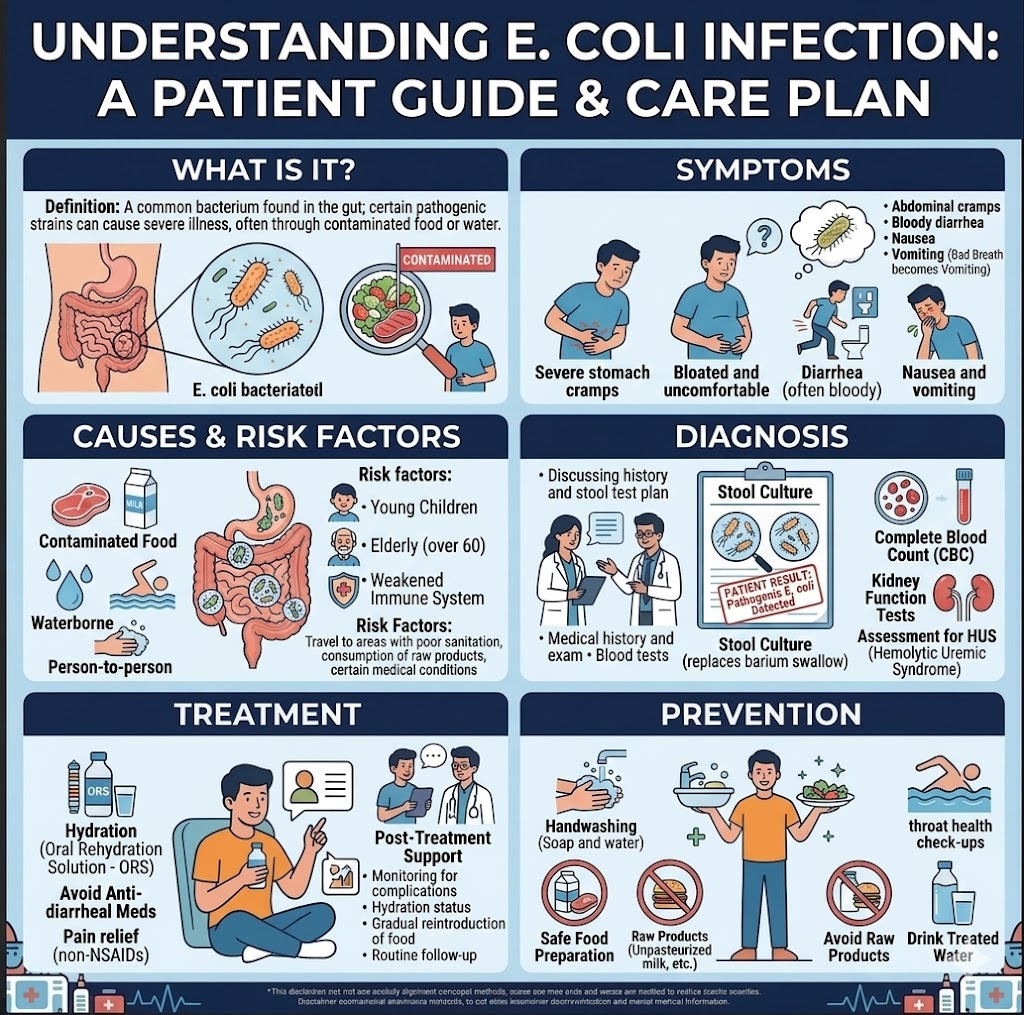
E. coli, short for Escherichia coli, is a type of bacteria commonly found in the intestines of healthy people and animals. While most strains are harmless or cause mild, short-lived diarrhea, some specific types can be very dangerous. One notable strain, E. coli O157:H7, produces a powerful toxin that can lead to severe stomach cramps, bloody diarrhea, and vomiting. Infection often occurs from consuming contaminated food or water, especially raw vegetables or undercooked ground beef. Healthy adults usually recover within about a week, but young children and older adults face a higher risk of developing a life-threatening form of kidney failure.
Understanding the Condition
Common Symptoms
Diarrhea: Can vary from mild and watery to severe and bloody. It is important to contact your doctor if your diarrhea is persistent, severe, or bloody.
Stomach Cramping, Pain, or Tenderness: Often intense, making movement or pressure uncomfortable.
Nausea and Vomiting: Occur in some individuals, contributing to discomfort and potential dehydration.
Consultation Guide
Which Specialist to Meet
For initial symptoms of E. coli, you should typically see a general practitioner or family doctor. If symptoms are severe, persistent, or if complications arise, they may refer you to a specialist such as a gastroenterologist (a doctor specializing in digestive issues) or a nephrologist (a kidney specialist), especially if there are signs of kidney problems.
Preparations Before Your Visit
Before your visit, be prepared to discuss: the exact timing and nature of your symptoms (e.g., when did diarrhea start, how often, what it looks like); recent foods you’ve eaten, particularly raw or undercooked meats, unpasteurized products, or raw produce; any recent travel, swimming in lakes or pools, or contact with farm animals or sick individuals; and a list of any medications you are currently taking.
Book a doctor visit near me
Rest and Hydration: Rest is important to help your body recover. The most critical aspect is staying well-hydrated to replace fluids lost through diarrhea and vomiting. This can involve drinking plenty of clear fluids, like water, broths, and oral rehydration solutions (special electrolyte drinks). Avoid sugary drinks, caffeine, and alcohol, as they can worsen dehydration. Gradually reintroduce bland foods as tolerated. (Duration: Typically, symptoms improve within about a week for healthy adults, with supportive care continued until full recovery.)
Symptom Management (Caution with Antibiotics/Anti-diarrheals): For E. coli O157:H7 infections, anti-diarrhea medications are generally NOT recommended. These medications can slow down the removal of toxins from your body, potentially making the illness worse or increasing the risk of severe complications. Similarly, antibiotics are usually NOT prescribed for E. coli O157:H7 because they can trigger the bacteria to release more toxins, which may increase the risk of developing life-threatening kidney failure. Pain relievers may be used to manage stomach cramps, but consult your doctor for appropriate choices, especially if diarrhea is bloody. In cases of severe dehydration, intravenous (IV) fluids may be administered in a hospital setting. (Duration: Medication use is guided by your doctor, usually for the duration of severe symptoms or hospitalization if required.)
Consultation Guide
E. coli, short for Escherichia coli, is a type of bacteria commonly found in the intestines of healthy people and animals. While most strains are harmless or cause mild, short-lived diarrhea, some specific types can be very dangerous. One notable strain, E. coli O157:H7, produces a powerful toxin that can lead to severe stomach cramps, bloody diarrhea, and vomiting. Infection often occurs from consuming contaminated food or water, especially raw vegetables or undercooked ground beef. Healthy adults usually recover within about a week, but young children and older adults face a higher risk of developing a life-threatening form of kidney failure.
This test involves analyzing a small sample of your stool in a laboratory. The lab technicians will look for the presence of E. coli bacteria and identify if it's a dangerous strain like O157:H7. Identifying the specific strain is crucial because it helps determine the best course of action, as certain E. coli strains require different management than others.
Diagnostic Procedures
Stool Test (Stool Culture)
What to Expect
You will typically be given a sterile container and specific instructions on how to collect a stool sample at home. It's important to collect the sample cleanly, avoiding contamination with urine or toilet water. After collection, you'll seal the container and return it to your doctor's office or a designated laboratory as instructed. This is a non-invasive procedure, but careful collection ensures accurate results.
Safe Water Practices: Avoid swallowing water when swimming in lakes, rivers, or pools. If you rely on a private well for water, consider having it tested regularly and ensure proper disinfection.
Follow-up for Complications: Individuals, particularly young children and older adults, who experience severe E. coli O157:H7 infection and develop complications like hemolytic uremic syndrome (HUS), will require long-term follow-up with medical specialists, such as a nephrologist, to monitor kidney function and overall health.
Treatment Options
Home Remedies and Supportive Care
Treatment for Complications
Management of Hemolytic Uremic Syndrome (HUS): If kidney failure (HUS) develops, intensive medical care in a hospital is necessary. This can include continuous IV fluids, blood transfusions, and potentially kidney dialysis (a procedure to filter waste from your blood when your kidneys cannot). (Duration: Treatment for HUS is highly variable, ranging from days to weeks or longer, depending on the severity of kidney damage and the patient's response.)
Prevention & Long-Term Wellbeing
E. coli Infection: Understanding, Prevention, and Care
- Understanding the Condition
Prevention
Thorough Handwashing: Wash your hands frequently and thoroughly with soap and water for at least 20 seconds, especially after using the bathroom, changing diapers, before and after preparing food, and after contact with animals (e.g., at petting zoos).
Cook Meats Properly: Ensure all ground beef is cooked to an internal temperature of at least 160°F (71°C). Use a meat thermometer, as color alone is not a reliable indicator of doneness. Avoid any pink in the middle of ground beef.
Avoid Unpasteurized Products: Do not consume raw (unpasteurized) milk, juices (like apple juice or cider), or soft cheeses made from raw milk. Check labels carefully.
Wash Fresh Produce: Rinse all raw fruits and vegetables thoroughly under running water, especially leafy greens. While washing may not remove all bacteria, it can significantly reduce contamination.
Prevent Cross-Contamination: Keep raw meats separate from other foods. Use separate cutting boards, plates, and utensils for raw meat and fresh produce. Never place cooked food on a surface that previously held raw meat.
Tags & Topics
Notice an error or need an update?
Help us keep medical information accurate. Report incorrect info or suggest an edit.


