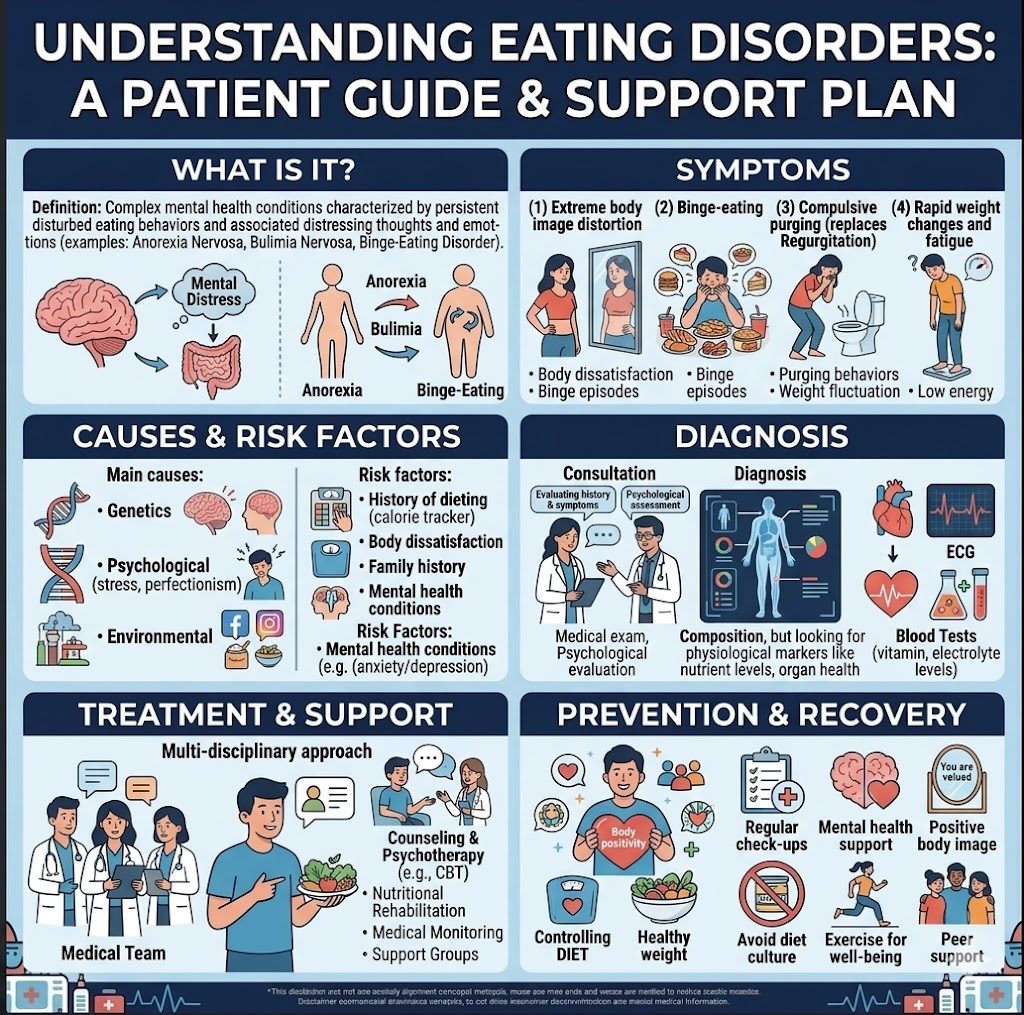
Eating disorders are serious mental and physical health conditions distorting thoughts and behaviors around food, weight, and body shape. They gravely impact health, emotions, and daily life. Untreated, they can be chronic and life-threatening. Common types include anorexia nervosa, bulimia nervosa, and binge-eating disorder. They damage heart, digestion, bones, and are often linked with depression and anxiety. Effective treatment leads to recovery and healthier habits.
Understanding the Condition
Common Symptoms
Anorexia Nervosa: Life-threatening. Characterized by dangerously low body weight, intense fear of weight gain, and distorted body image. Involves extreme weight control efforts: severe calorie restriction, excessive exercise, misuse of laxatives/diuretics, or self-induced vomiting. Severely impacts health.
Bulimia Nervosa: Serious, sometimes life-threatening. Marked by recurrent binge-eating (large food intake with loss of control) followed by compensatory purging behaviors (vomiting, excessive exercise, fasting, laxative misuse, or dangerous insulin alterations). Strong preoccupation with body weight and shape.
Binge-Eating Disorder: Recurrent binge-eating episodes without purging. Involves rapid eating, consuming more than planned, or eating until uncomfortably full, even when not hungry, feeling a loss of control. Often leads to guilt, shame, and attempts at restriction, perpetuating the cycle. Typically occurs at least weekly.
Be open about eating habits, thoughts on food/body, and physical symptoms. Prepare questions, list medications, and provide medical history. Honesty aids accurate diagnosis and effective treatment.
Book a doctor visit near me
A doctor reviews eating patterns, weight history, exercise, family medical history, and physical symptoms. A physical exam assesses overall health, including vital signs, height, and weight.
A mental health professional evaluates thoughts, feelings, and behaviors about food, body image, and self-esteem using questionnaires and interviews. Assesses co-occurring conditions and symptom severity.
Prescription Medications: Manages co-occurring depression, anxiety, or physical symptoms. (Duration: As prescribed, potentially long-term)
Medical Care and Monitoring
Consultation Guide
Avoidant/Restrictive Food Intake Disorder (ARFID): Limited or selective food intake leading to inadequate nutrition, growth issues, or daily impairment. Distinctly, no body image or weight gain concerns. Avoidance stems from lack of interest, sensory aversions (texture, smell), or fear of adverse consequences (choking, vomiting). More common in children; causes major health problems due to malnutrition.
Consultation Guide
Which Specialist to Meet
Diagnostic Procedures
Medical History and Physical Examination
What to Expect
Discussion of health concerns, followed by a standard physical exam involving listening to heart/lungs, abdomen check, reflexes, and visual inspection for deficiencies.
Psychological Evaluation
What to Expect
Blood and urine tests check for physical complications: electrolyte balance, organ function (kidney/liver), blood sugar, and nutritional status.
What to Expect
Blood draw from arm, possibly a urine sample. Quick, minimal discomfort. Samples sent for lab analysis.
Other Diagnostic Tests (as needed)
Additional tests, like an electrocardiogram (ECG) for heart health or DEXA scan for bone density, may be ordered if specific organ damage is suspected.
What to Expect
ECG involves sticky sensors on chest/limbs for heart activity. DEXA scan requires lying on a table for bone scanning. Non-invasive and painless.
Treatment Options
Eating Disorders: Understanding, Treatment, and Wellbeing
Understanding the Condition
Eating disorders are serious mental and physical health conditions distorting thoughts and behaviors around food, weight, and body shape. They gravely impact health, emotions, and daily life. Untreated, they can be chronic and life-threatening. Common types include anorexia nervosa, bulimia nervosa, and binge-eating disorder. They damage heart, digestion, bones, and are often linked with depression and anxiety. Effective treatment leads to recovery and healthier habits.
Confidential conversation about emotional well-being, body perceptions, eating patterns, and struggles to understand your situation for tailored treatment.
Therapies
Cognitive Behavioral Therapy (CBT): Changes unhealthy thoughts/behaviors around food/body. (Duration: Months to years)
Medications
Regular Medical Monitoring: Oversees physical health and manages complications. (Duration: Throughout treatment)
Hospitalization/Residential Treatment: Intensive care for severe cases or medical instability. (Duration: Weeks to months)
Prevention & Long-Term Wellbeing
Begin with a primary care provider. They will refer you to a specialized team including mental health professionals (psychologist, psychiatrist), an eating disorder registered dietitian, and other medical specialists if needed (e.g., cardiologist).
Preparations Before Your Visit
Family-Based Therapy (FBT): Engages family to support adolescent recovery. (Duration: Months to one year)
Dialectical Behavior Therapy (DBT): Teaches emotional regulation and coping skills. (Duration: Months to years)
Nutritional Counseling: Dietitian guidance for healthy eating patterns. (Duration: Ongoing, several months)
Prevention Strategies
Healthy Eating Habits: Balanced diet; avoid extreme dieting.
Mindful Physical Activity: Enjoyable activity for health, not just weight.
Positive Body Image: Foster self-acceptance; avoid body shaming.
Early Mental Health Support: Seek help for anxiety, depression, low self-esteem.
Role Model Healthy Behaviors: Avoid dieting talk; promote balanced family meals.
Open Communication: Discuss unhealthy eating risks and media influences.
Encourage Self-Esteem: Promote healthy body image, focus on health.
Regular Pediatric Check-ups: Monitor growth; discuss eating habits with providers.
Long-Term Management
Continued Support: Maintain therapy/support for lasting recovery.
Stress Coping Skills: Develop healthy ways to manage stress.
Strong Social Network: Cultivate supportive relationships.
Ongoing Health Monitoring: Regular check-ups for overall health.
Tags & Topics
Notice an error or need an update?
Help us keep medical information accurate. Report incorrect info or suggest an edit.


