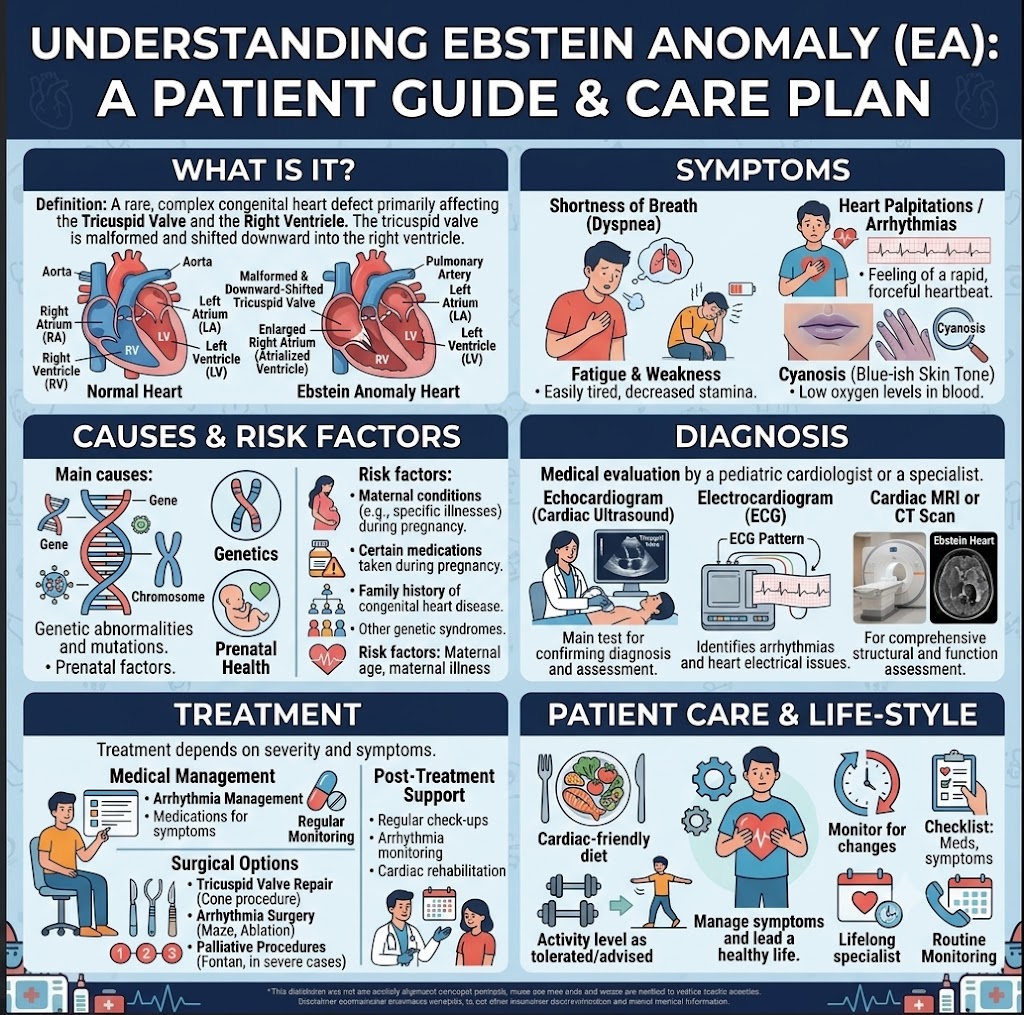
Ebstein anomaly is a rare and unique heart condition that a person is born with. It's classified as a congenital heart defect. In this condition, the tricuspid valve, which is located between the two right-sided chambers of the heart, does not form correctly. This valve usually opens and closes to ensure blood flows in one direction, from the top right chamber (atrium) to the bottom right chamber (ventricle). With Ebstein anomaly, the valve is set lower than usual and its flaps are malformed. This can cause the valve to leak, allowing blood to flow backward into the top right chamber. As a result, the heart has to work harder, which can lead to the heart enlarging and, over time, potentially developing heart failure. The exact cause of Ebstein anomaly is not fully understood, but it is believed to involve a combination of genetic and environmental factors during fetal development.
Understanding the Condition
Ebstein Anomaly: Understanding a Rare Heart Condition
Understanding the Condition
Common Symptoms
If you or your baby experience symptoms that could indicate a heart condition, you should consult a doctor. You will likely be referred to a heart specialist, known as a cardiologist. For children, a pediatric cardiologist specializes in heart conditions in babies and children. Depending on the severity, a cardiac surgeon may also be part of the care team.
Preparations Before Your Visit
Before your appointment, gather any relevant medical records, make a list of all symptoms, including when they started and how often they occur. Be prepared to discuss your personal and family medical history. List any medications you are currently taking and write down any questions you have for the doctor.
Book a doctor visit near me
Electrodes will be placed on your chest and connected to a small, battery-operated recording device that you can wear on a belt or in a pocket. You'll carry on your usual daily activities, and you might be asked to keep a diary of any symptoms you experience while wearing the monitor.
A chest X-ray uses a small amount of radiation to create images of your heart, lungs, and blood vessels. It can show if your heart is enlarged or if there's fluid in your lungs, which can be signs of heart problems.
Regular Health Check-ups: For individuals with mild Ebstein anomaly and few or no symptoms, ongoing monitoring by a heart specialist is often sufficient to track the condition's progression. (Duration: Ongoing, typically yearly or as advised by your doctor)
Heart Failure Medications: Medications may be used to manage symptoms of heart failure, such as fluid retention or high blood pressure, thereby easing the heart's workload. (Duration: Ongoing, typically daily for long-term management)
Early Diagnosis and Monitoring: Awareness of symptoms and early medical consultation, especially if a baby shows signs of a heart condition, can lead to timely diagnosis and management.
Long-Term Monitoring and Management
Adherence to Treatment Plans: Follow your doctor's recommendations for medications and lifestyle changes to effectively manage symptoms and prevent complications like heart failure or serious irregular heartbeats.
Awareness of Complications: Be aware of potential complications such as worsening irregular heartbeats, heart failure symptoms, or very rarely, sudden cardiac arrest, and seek immediate medical attention if these occur.
Consultation Guide
Ebstein anomaly is a rare and unique heart condition that a person is born with. It's classified as a congenital heart defect. In this condition, the tricuspid valve, which is located between the two right-sided chambers of the heart, does not form correctly. This valve usually opens and closes to ensure blood flows in one direction, from the top right chamber (atrium) to the bottom right chamber (ventricle). With Ebstein anomaly, the valve is set lower than usual and its flaps are malformed. This can cause the valve to leak, allowing blood to flow backward into the top right chamber. As a result, the heart has to work harder, which can lead to the heart enlarging and, over time, potentially developing heart failure. The exact cause of Ebstein anomaly is not fully understood, but it is believed to involve a combination of genetic and environmental factors during fetal development.
Skin and Nail Discoloration: Lips or fingernails may appear blue or gray, especially during activity. This occurs because the blood may not be carrying enough oxygen throughout the body. The visibility of these color changes can vary with skin tone.
Irregular Heartbeats: A sensation of a pounding, racing, or fluttering heart, or a heartbeat that feels irregular. These are known as arrhythmias.
Shortness of Breath: Feeling breathless, particularly during physical activity, as the heart struggles to pump blood effectively.
Easy Tiredness: Feeling unusually tired or fatigued, even with minimal activity, due to the heart's reduced efficiency.
Consultation Guide
Which Specialist to Meet
Cardiac Ablation: This procedure uses heat or cold energy delivered through thin tubes (catheters) to create tiny scars in the heart. These scars block faulty electrical signals that cause irregular heartbeats. (Duration: Single procedure, but may require repeat sessions if irregular rhythms recur)
Diagnostic Procedures
Electrocardiogram (ECG or EKG)
An ECG is a quick, non-invasive test that records the electrical signals of your heart. It shows how fast or slow your heart is beating and can detect irregular heart rhythms (arrhythmias) or signs of heart strain.
What to Expect
Small, sticky patches called electrodes will be placed on your chest, and sometimes on your arms or legs. Wires connect these patches to a machine that records your heart's electrical activity. The test is painless and typically takes only a few minutes. You will be asked to lie still during the recording.
An echocardiogram uses sound waves to create moving pictures of your heart. It allows doctors to see the heart's structure, how well it's pumping, and how blood flows through the chambers and valves, including the tricuspid valve, and to detect any leaks or abnormalities.
What to Expect
You will lie on an examination table. A special gel will be applied to your chest, and a handheld device called a transducer will be gently moved across your chest. This device sends out sound waves that bounce off your heart, creating images on a screen. The test is generally painless, though you might feel slight pressure from the transducer.
A Holter monitor is a small, portable ECG device that continuously records your heart's electrical activity over 24 to 48 hours, or sometimes longer. It's used to capture irregular heartbeats that might not occur during a standard, short ECG.
What to Expect
What to Expect
You will be asked to stand or sit in front of an X-ray plate, and a technician will position you. You'll need to hold your breath for a few seconds while the image is taken. The procedure is quick, painless, and involves minimal radiation exposure.
Cardiac Catheterization
Cardiac catheterization is a procedure where a thin, flexible tube (catheter) is inserted into a blood vessel and guided to the heart. It can be used for both diagnosis and treatment. Diagnostically, it can measure pressures within the heart, take tissue samples, and assess the severity of heart defects.
What to Expect
You will lie on an X-ray table. An area, usually in your groin or wrist, will be numbed with local anesthetic. A catheter is then inserted into a blood vessel and carefully advanced to your heart, guided by X-ray images. You may receive mild sedation to help you relax. You might feel some pressure but generally no sharp pain. The procedure can take several hours, and you will be monitored closely.
Cardiac Catheterization (Therapeutic): Beyond diagnosis, catheters can be used to perform minor repairs, such as closing small holes in the heart (like an atrial septal defect or patent foramen ovale), using specialized devices. (Duration: Single procedure)
Treatment Options
Medications
Heart Rhythm Medications: Medicines can be prescribed to control irregular heartbeats (arrhythmias), helping the heart beat more effectively. (Duration: Ongoing, typically daily for long-term management)
Tricuspid Valve Repair or Replacement: Surgery can be performed to repair the malformed tricuspid valve, improving its function and reducing leakage. In some cases, the valve may need to be replaced with a prosthetic valve. (Duration: Single major surgery)
Heart Transplant: In severe cases where the heart is extensively damaged or other treatments have not been successful, a heart transplant may be considered to replace the failing heart with a healthy donor heart. (Duration: Single major surgery, followed by lifelong medication and monitoring)
Medication Review During Pregnancy: Discuss all medications with your doctor if you are pregnant or planning to become pregnant, as certain medicines (e.g., lithium) may potentially increase the risk of heart defects in the baby.
Regular Follow-ups with a Heart Specialist: Consistent appointments with a cardiologist are essential to monitor heart health, detect any changes, and adjust treatment plans as needed throughout life.
Prevention & Long-Term Wellbeing
Monitoring and Lifestyle
Prevention
Pre-conception Counseling: Women with Ebstein anomaly who are considering pregnancy should discuss potential risks and necessary specialized care with their healthcare team before conception. Pregnancy places extra strain on the heart.
Healthy Lifestyle Choices: Maintain a heart-healthy diet, engage in appropriate physical activity as recommended by your doctor, avoid smoking, and manage stress to support overall cardiovascular health.
Tags & Topics
Notice an error or need an update?
Help us keep medical information accurate. Report incorrect info or suggest an edit.


