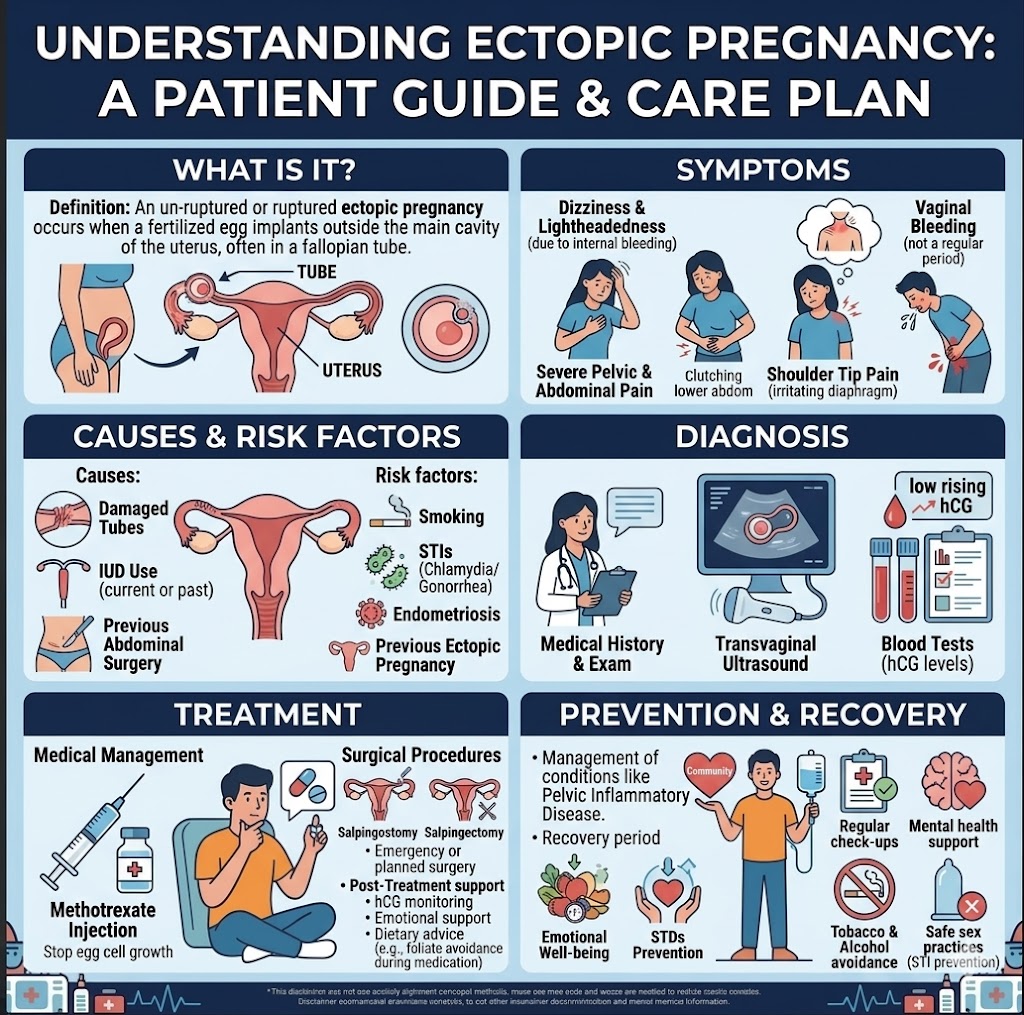
A pregnancy begins when a fertilized egg implants itself. In a typical pregnancy, this egg attaches to the protective inner lining of the uterus. An ectopic pregnancy occurs when the fertilized egg implants and starts to grow outside the main uterine cavity. Most commonly, this happens inside a fallopian tube (known as a tubal pregnancy), which connects the ovaries to the uterus. It can also occur in an ovary, the cervix, or the abdominal cavity. Because tissues outside the uterus cannot support a growing embryo, the pregnancy cannot proceed normally. If left untreated, the growing tissue can cause life-threatening internal bleeding.
Understanding the Condition
Understanding Ectopic Pregnancy: Symptoms, Diagnosis, and Treatment
Understanding the Condition
Common Symptoms
Before your visit, note down the date of your last menstrual period, any fertility treatments you have undergone, and a timeline of your symptoms. Wear comfortable, loose-fitting clothing that is easy to remove for physical or ultrasound exams.
Book a doctor visit near me
Consultation Guide
A pregnancy begins when a fertilized egg implants itself. In a typical pregnancy, this egg attaches to the protective inner lining of the uterus. An ectopic pregnancy occurs when the fertilized egg implants and starts to grow outside the main uterine cavity. Most commonly, this happens inside a fallopian tube (known as a tubal pregnancy), which connects the ovaries to the uterus. It can also occur in an ovary, the cervix, or the abdominal cavity. Because tissues outside the uterus cannot support a growing embryo, the pregnancy cannot proceed normally. If left untreated, the growing tissue can cause life-threatening internal bleeding.
Signs of rupture and shock: If the fallopian tube tears or ruptures due to the growing pregnancy, it causes severe, sudden abdominal pain, extreme lightheadedness, fainting, and pale, clammy skin. This is a life-threatening medical emergency.
Consultation Guide
Which Specialist to Meet
Emergency Open Surgery (Laparotomy): If the fallopian tube has ruptured and caused severe internal bleeding, an emergency open surgery is required. The surgeon makes a larger abdominal incision to quickly stop the bleeding and remove the damaged fallopian tube. (Duration: The emergency surgery takes 1 to 3 hours. It requires a hospital stay of 2 to 4 days, with a full physical recovery period of 4 to 6 weeks.)
Prevent Sexually Transmitted Infections (STIs): Consistently use barrier methods like condoms to reduce the risk of contracting STIs like chlamydia and gonorrhea, which can cause Pelvic Inflammatory Disease (PID) and scar the fallopian tubes.
Smoking Cessation: Avoid smoking tobacco. Cigarette smoking impairs the normal function of the fallopian tubes, increasing the likelihood of an ectopic implantation.
Emotional and Psychological Support: Experiencing a pregnancy loss can be emotionally devastating. Seek professional counseling, join pregnancy loss support groups, or talk to a therapist to process grief and anxiety.
Early Monitoring in Future Pregnancies: Because a history of ectopic pregnancy increases your risk of recurrence, notify your doctor immediately upon getting a positive pregnancy test to schedule early blood tests and ultrasounds.
Diagnostic Procedures
Early pregnancy signs: At first, an ectopic pregnancy might feel like a normal pregnancy. You may experience a missed period, breast tenderness, and mild nausea. A home pregnancy test will yield a positive result.
Pelvic pain and vaginal bleeding: Often the first warning signs, you may experience light, abnormal vaginal bleeding accompanied by sharp, persistent, or dull pain in the pelvis or abdomen, frequently concentrated on one side.
Shoulder tip pain: If blood leaks from the fallopian tube, it can pool in the pelvis and irritate the phrenic nerve. This irritation is felt as a sharp pain at the very tip of your shoulder.
Urge to have a bowel movement: Blood pooling in the pelvic cavity can put pressure on the rectum, causing a sudden, strong urge to have a bowel movement or a feeling of gastrointestinal discomfort.
You should consult an Obstetrician-Gynecologist (OB/GYN) for diagnosis and ongoing care. In case of sudden, severe abdominal pain or fainting, immediately visit an Emergency Medicine Physician.
Preparations Before Your Visit
Transvaginal Ultrasound
This imaging test uses high-frequency sound waves to create detailed pictures of your reproductive organs. It allows the physician to see the exact location of the gestational sac and determine if the uterus is empty.
What to Expect
You will lie on an exam table with your feet in stirrups. A slender, lubricated, sterile wand (transducer) is gently inserted into your vagina. You may feel mild pressure, but the procedure is generally painless and takes about 15 to 30 minutes.
This test measures the precise amount of human chorionic gonadotropin (hCG), a hormone produced during pregnancy. In a typical pregnancy, hCG levels double every two days. Slowly rising or stagnant levels often indicate an ectopic pregnancy.
What to Expect
A healthcare provider will draw a small sample of blood from a vein in your arm using a small needle. You will feel a brief pinch. The test is often repeated 48 hours later to compare hormone level trends.
Treatment Options
Medical and Surgical Procedures
Systemic Injection Therapy: For early-stage ectopic pregnancies that have not ruptured, an injection of a specialized medication is administered. This medication stops the growth of rapidly dividing cells, allowing the body to naturally absorb the pregnancy tissue over time. (Duration: A single or double injection is given, followed by weekly blood monitoring for 2 to 4 weeks until pregnancy hormone levels drop to zero.)
Laparoscopic Surgery: A minimally invasive surgical procedure performed under general anesthesia. The surgeon makes small incisions in the abdomen to insert a tiny camera and specialized tools to remove the ectopic pregnancy tissue while either repairing or removing the affected fallopian tube. (Duration: The surgery takes 1 to 2 hours. Hospital discharge usually occurs the same day, with full recovery taking 1 to 2 weeks.)
Prevention & Long-Term Wellbeing
Prevention and Long-Term Recovery
Tags & Topics
Notice an error or need an update?
Help us keep medical information accurate. Report incorrect info or suggest an edit.


