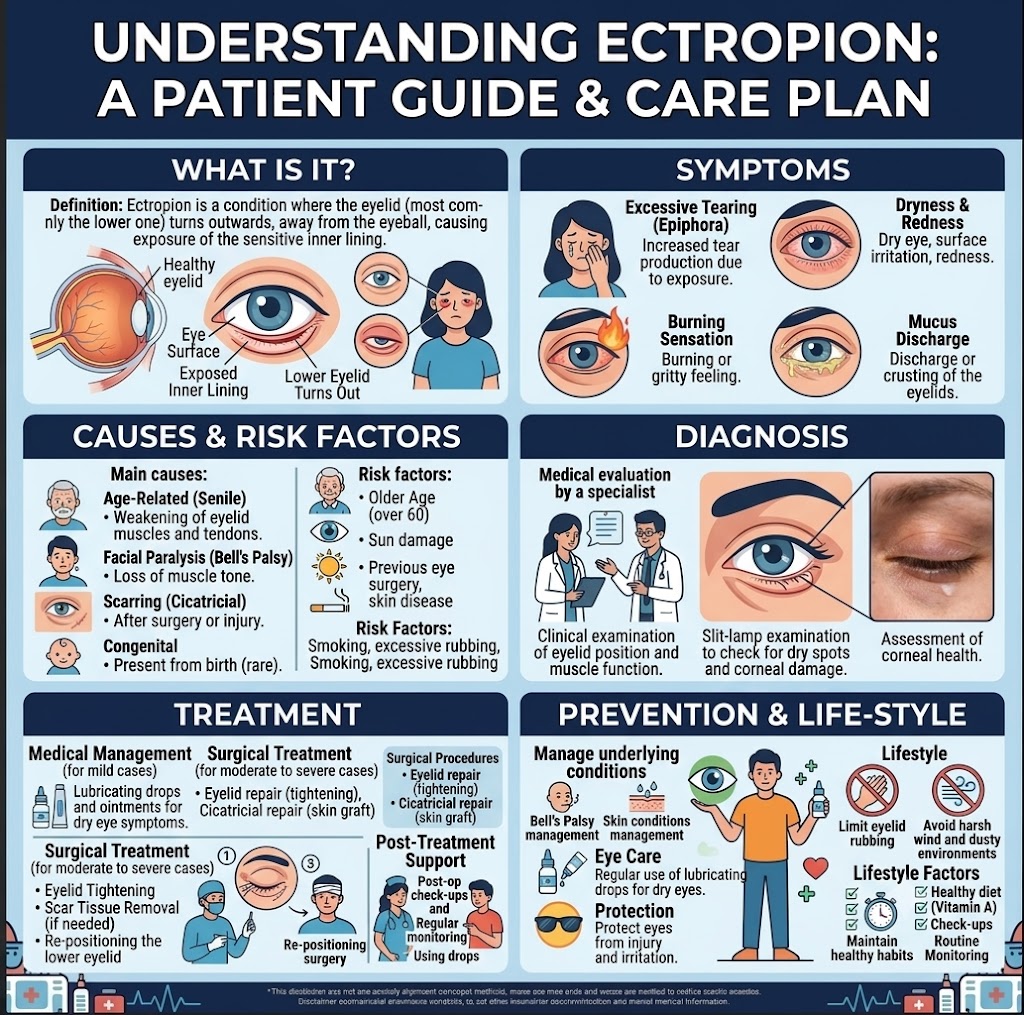
Ectropion (pronounced ek-TROH-pee-on) is a condition where your eyelid, most often the lower one, turns outwards, away from the eye. This leaves the sensitive inner surface of the eyelid exposed, making the eye prone to irritation, dryness, and excessive watering. While it primarily affects older adults due to muscle weakening, it can also be caused by facial paralysis, scars, growths, or, rarely, present from birth. Mild cases might involve just a segment of the eyelid sagging, while severe cases see the entire lid turned out. Though artificial tears can provide temporary relief, surgery is usually required to fully correct ectropion and protect the eye.
Understanding the Condition
Ectropion: When Your Eyelid Turns Outward
Understanding the Condition
Common Symptoms
Before your visit, prepare a list of your symptoms, including when they started and how often they occur. Bring a list of all medications, vitamins, and supplements you are taking, along with any significant medical history and previous eye surgeries or injuries. Be ready to discuss your medical history and any questions you have for the doctor.
Book a doctor visit near me
Artificial Tears and Lubricating Ointments: Over-the-counter eye drops (artificial tears) can help keep your eyes moist and reduce irritation throughout the day. Thicker lubricating ointments can be used at night for longer-lasting relief. These provide temporary relief from symptoms but do not correct the underlying cause. (Duration: Ongoing as needed for symptom relief)
Continued Symptom Management: Even after surgery, some individuals may benefit from continued use of artificial tears, especially if they have underlying dry eye conditions. Discuss ongoing symptom management with your eye doctor.
Consultation Guide
Ectropion (pronounced ek-TROH-pee-on) is a condition where your eyelid, most often the lower one, turns outwards, away from the eye. This leaves the sensitive inner surface of the eyelid exposed, making the eye prone to irritation, dryness, and excessive watering. While it primarily affects older adults due to muscle weakening, it can also be caused by facial paralysis, scars, growths, or, rarely, present from birth. Mild cases might involve just a segment of the eyelid sagging, while severe cases see the entire lid turned out. Though artificial tears can provide temporary relief, surgery is usually required to fully correct ectropion and protect the eye.
Watery Eyes (Excessive Tearing): Because tears can't drain properly, they may pool and constantly spill over your eyelid onto your cheek.
Excessive Dryness: Paradoxically, despite watery eyes, the exposed surface of the eye can dry out quickly, leading to a gritty, sandy sensation.
Irritation: Both stagnant tears and excessive dryness can irritate your eyes, causing a burning feeling, redness in the eyelids, and bloodshot eyes.
Sensitivity to Light: Irritation to the clear front surface of the eye (cornea) due to dryness or poor tear film can make your eyes highly sensitive to light.
Consultation Guide
Which Specialist to Meet
Scar Revision Surgery: For ectropion caused by scars from previous injuries, burns, or surgeries, the surgeon may need to release the scar tissue and use a skin graft (taking a small piece of skin from another part of your body) or a flap (moving nearby skin) to help the eyelid lie flat against the eye again. (Duration: Recovery can take several weeks to months, especially with skin grafts.)
Corneal Health Checks: If ectropion caused significant corneal irritation or damage, regular checks of corneal health may be recommended to prevent further complications and preserve vision.
Diagnostic Procedures
Normal Eyelid Function vs. Ectropion: Normally, when you blink, your eyelids spread tears evenly across the eye's surface, keeping it moist. These tears then drain into small openings (puncta) located in the inner corner of your eyelids. With ectropion, your lower lid pulls away, preventing proper tear drainage and distribution, leading to the following issues. Consult a doctor if your eyes are persistently watery or irritated, or if your eyelid appears to be sagging or drooping. Seek immediate medical attention if you have been diagnosed with ectropion and experience rapidly worsening eye redness, increased light sensitivity, or a decrease in your vision, as these could indicate a serious complication.
Your doctor will conduct a thorough eye examination to visually inspect your eyelids and eyes. They will observe how your eyelids rest against your eye, check for any sagging or outward turning, and assess the overall health of your eye surface.
What to Expect
During the procedure, you will sit comfortably while the doctor visually examines your eyes. They may ask you to blink, close your eyes gently, or look in different directions to assess the eyelid's position and muscle tone. The doctor might also gently pull on your eyelid to check its elasticity. This examination is usually painless and takes only a few minutes. If there are signs of irritation or potential damage to the clear front part of your eye (cornea), a specialized microscope called a slit lamp might be used to get a magnified view.
Treatment Options
You should consult an ophthalmologist, who is an eye doctor, or more specifically, an oculoplastic surgeon, a specialist in reconstructive and cosmetic surgery of the eyelids and areas around the eye.
Preparations Before Your Visit
Eyelid Tightening and Repositioning Surgery: This is the most common surgical approach for age-related ectropion. The surgeon tightens the muscles and tendons that support the eyelid, helping it to turn inwards and rest properly against the eye. Small stitches are used to hold the eyelid in its correct position. (Duration: Typically a few weeks for initial recovery, with full healing taking several months. The correction is generally long-lasting.)
Surgery to Remove Growths: If a benign or cancerous growth is causing the ectropion, the growth will be carefully removed, and the eyelid tissue may be reconstructed to restore its normal position and function. (Duration: Recovery time varies depending on the size and location of the growth, generally several weeks.)
Prompt Treatment of Facial Conditions: Seek timely medical care for facial paralysis or conditions that might affect eyelid function to minimize long-term impact.
Regular Eye Check-ups: Routine eye examinations can help detect early signs of eyelid changes or other eye conditions, allowing for prompt intervention.
Follow-up Appointments: Attend all scheduled post-surgery follow-up appointments to ensure proper healing and monitor the eyelid's position. The doctor will check for any complications and assess the long-term success of the surgery.
Prevention & Long-Term Wellbeing
Prevention
Eye Protection: Protect your eyes from trauma and burns by wearing appropriate safety eyewear during hazardous activities or sports. Shield your face from excessive sun exposure, which can contribute to skin damage around the eyes.
Tags & Topics
Notice an error or need an update?
Help us keep medical information accurate. Report incorrect info or suggest an edit.


