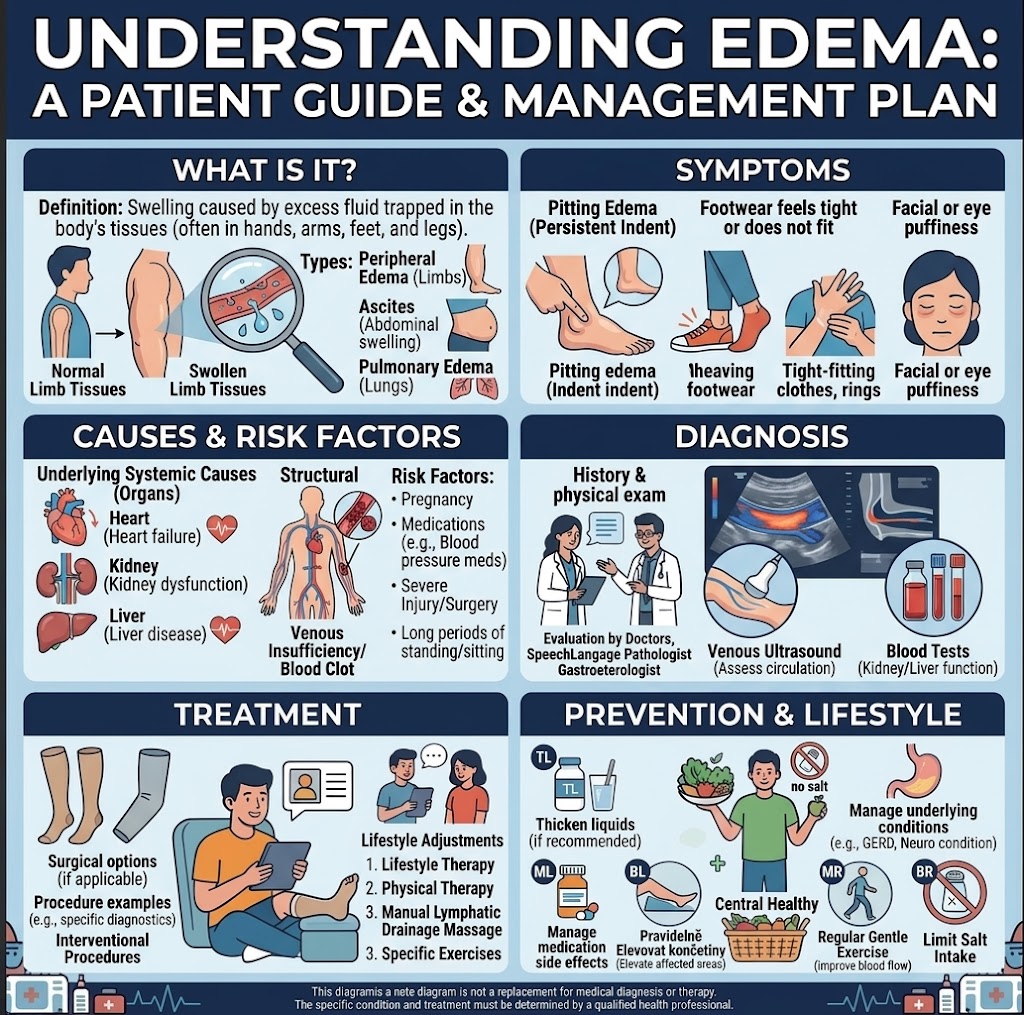
Edema is swelling caused by excess fluid trapped in the body's tissues, often seen in legs and feet. It can result from medications, pregnancy, or underlying conditions like heart, kidney, or liver disease. Mild cases may improve with compression or reduced salt intake. For disease-related edema, treating the root cause is essential for relief.
Understanding the Condition
Edema: Understanding Swelling in Your Body
Understanding the Condition
Common Symptoms
Swelling or puffiness: Noticeable under the skin, especially in legs and arms.
Stretched or shiny skin: The skin over the swollen area may appear tight or reflective.
Skin that "pits": A temporary dimple or indentation remains after pressing on the swollen area.
Belly swelling: Your abdomen might look larger than usual.
Leg heaviness: A feeling of fullness or weight in the legs. Seek urgent medical care if swelling is accompanied by shortness of breath, an irregular heartbeat, or chest pain.
Consultation Guide
Which Specialist to Meet
You should initially consult your primary care doctor. Depending on their findings, they may refer you to a specialist such as a cardiologist (heart specialist), nephrologist (kidney specialist), hepatologist (liver specialist), or a vascular specialist (specialist in blood vessels).
Preparations Before Your Visit
To help your doctor make an accurate diagnosis, prepare by: documenting your symptoms (when they started, frequency, what helps/worsens them), listing all current medications (including supplements), mentioning past medical conditions or surgeries, and preparing questions for your doctor.
Book a doctor visit near me
A hands-on, usually painless examination involving observation and touch, following questions about your symptoms and medical history.
Consultation Guide
Edema is swelling caused by excess fluid trapped in the body's tissues, often seen in legs and feet. It can result from medications, pregnancy, or underlying conditions like heart, kidney, or liver disease. Mild cases may improve with compression or reduced salt intake. For disease-related edema, treating the root cause is essential for relief.
Your doctor will visually assess swollen areas, check for "pitting" by pressing your skin, and examine other parts of your body, such as listening to your heart and lungs, for clues about the cause of the swelling.
Medications for Underlying Conditions: Treating the root cause (e.g., heart, kidney, or liver disease) with specific medications is crucial for resolving associated edema. (Duration: Long-term management of the chronic disease)
Procedures & Therapies
Manage Underlying Health Conditions: Work with your doctor to manage chronic diseases (heart, kidney, liver, diabetes) that cause edema.
Use Compression Garments when at Risk: Wear compression stockings for long flights or prolonged standing if prone to swelling, as advised.
Stay Hydrated: Drink adequate water; proper hydration supports body function and can help prevent fluid retention.
Long-Term Monitoring & Management
Diagnostic Procedures
What to Expect
These tests involve analyzing a sample of your blood to check kidney and liver function, electrolyte levels (like sodium), and sometimes thyroid health.
What to Expect
A small amount of blood will be drawn from a vein in your arm using a needle. You might feel a brief sting or pinch.
Urine Test (Urinalysis)
A sample of your urine is examined for abnormalities like protein, which can indicate potential kidney problems.
What to Expect
You will be given a sterile container and instructions to provide a "clean-catch" urine sample in a private restroom.
This is an ultrasound of your heart that creates images of its structure and how well it is pumping blood. It helps detect conditions like heart failure.
What to Expect
You will lie on an examination table. A gel will be applied to your chest, and a handheld transducer (a small device) will be moved over the area. It is generally painless.
This special type of ultrasound uses sound waves to check blood flow in your veins, particularly in your legs, to identify issues like deep vein thrombosis (blood clots) or venous insufficiency (where veins have trouble sending blood back to the heart).
What to Expect
You will lie down, and a gel will be applied to the skin over the area to be examined (e.g., your leg). A handheld device will be pressed against your skin and moved around to visualize blood vessels. This test is typically painless.
Treatment Options
Medications
Diuretics (Water Pills): These drugs help your kidneys remove excess fluid and salt through urine, reducing swelling. (Duration: Ongoing, as prescribed for chronic conditions)
Addressing Venous Insufficiency: Treatments for faulty leg veins may include lifestyle changes, compression, or sometimes procedures to improve blood flow. (Duration: Varies; lifestyle changes are ongoing, procedures are typically limited sessions)
Therapy for Lymphatic Issues: For swelling linked to lymph node issues, specialized physical therapy (e.g., manual lymphatic drainage, exercises) can improve fluid movement. (Duration: Ongoing therapy sessions and home exercises as advised)
Regular Medical Check-ups: Attend follow-up appointments for chronic conditions to monitor edema and adjust treatments.
Monitor Swelling Changes: Note any increases in pain, new swelling, or skin changes, and report them to your healthcare provider.
Adhere to Prescribed Treatments: Consistently follow medication and home remedy guidelines to control edema.
Practice Good Skin and Foot Care: Keep swollen skin clean and moisturized to prevent cracking and infection; inspect feet daily.
Prevention & Long-Term Wellbeing
Home Remedies & Lifestyle Adjustments
Elevate Affected Limbs: Raise the swollen body part above heart level for 15-30 minutes, several times daily, to aid fluid drainage. (Duration: As needed, multiple times daily)
Regular Movement: Gentle exercise and movement of swollen muscles help return fluid. Avoid prolonged sitting or standing. (Duration: Daily, as part of your routine)
Reduce Salt Intake: Lowering sodium intake helps your body retain less fluid. (Duration: Long-term dietary change)
Compression Garments: Special stockings, sleeves, or gloves apply gentle pressure to prevent fluid buildup. (Duration: Daily, as prescribed)
Prevention
Limit Prolonged Inactivity: Take breaks to move, stretch, and elevate legs if sitting or standing for long periods.
Maintain a Low-Sodium Diet: Reduce intake of high-salt processed foods to minimize fluid retention.
Regular Physical Activity: Engage in light exercise (e.g., walking) to boost circulation and prevent fluid pooling.
Tags & Topics
Notice an error or need an update?
Help us keep medical information accurate. Report incorrect info or suggest an edit.


