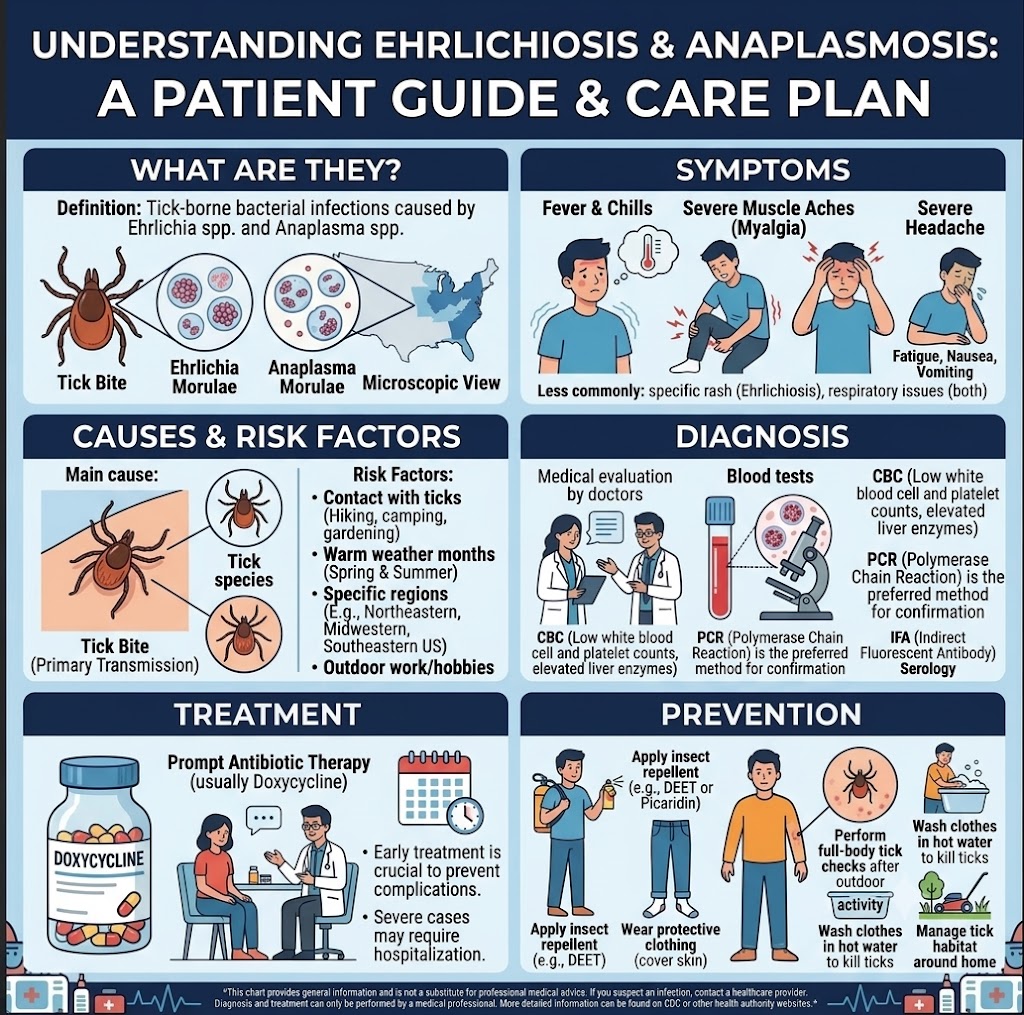
Ehrlichiosis and anaplasmosis are two distinct but similar infections transmitted to humans through the bites of infected ticks. These conditions are caused by specific bacteria that can lead to flu-like symptoms such as fever, muscle aches, and headache. While symptoms typically appear within 5 to 14 days after a tick bite, some individuals may show no symptoms at all. Early detection and prompt treatment with antibiotics are crucial, as untreated cases can progress to serious, and potentially life-threatening, complications affecting organs like the kidneys, lungs, and heart, especially in individuals with weakened immune systems. The most effective way to prevent these illnesses is to avoid tick bites by taking precautions when spending time in tick-prone areas.
Understanding the Condition
Ehrlichiosis and Anaplasmosis: Understanding Tick-Borne Illnesses
Understanding the Condition
Ehrlichiosis and anaplasmosis are two distinct but similar infections transmitted to humans through the bites of infected ticks. These conditions are caused by specific bacteria that can lead to flu-like symptoms such as fever, muscle aches, and headache. While symptoms typically appear within 5 to 14 days after a tick bite, some individuals may show no symptoms at all. Early detection and prompt treatment with antibiotics are crucial, as untreated cases can progress to serious, and potentially life-threatening, complications affecting organs like the kidneys, lungs, and heart, especially in individuals with weakened immune systems. The most effective way to prevent these illnesses is to avoid tick bites by taking precautions when spending time in tick-prone areas.
Common Symptoms
Flu-like Symptoms: Common signs include a moderate fever, body or muscle aches, headache, and a general feeling of being unwell. Some people may also experience a loss of appetite. While symptoms can vary from person to person, ehrlichiosis often presents with more severe symptoms than anaplasmosis.
Mental Changes (Ehrlichiosis): In some cases of ehrlichiosis, individuals may experience confusion or other changes in their mental state. This symptom is rarely associated with anaplasmosis.
Asymptomatic Cases: It is possible to be infected with the bacteria causing ehrlichiosis or anaplasmosis and not develop any noticeable symptoms.
Consultation Guide
Which Specialist to Meet
Before your visit, be prepared to provide details about when and where you may have been exposed to ticks, if you found a tick bite, and a complete list of your symptoms along with their onset. Also, inform your doctor about any recent travel and all medications, supplements, or over-the-counter drugs you are currently taking.
Book a doctor visit near me
Pain and Fever Management: Over-the-counter medications can help relieve symptoms such as muscle aches and reduce fever. Always follow the recommended dosage instructions. (Duration: As needed for symptom relief.)
Monitor Symptoms Post-Bite: Even if a tick is removed properly, continue to monitor yourself for any developing flu-like symptoms or unusual changes for several weeks. Seek medical attention immediately if any symptoms appear.
Consultation Guide
A CBC is a common blood test that provides information about the different types and numbers of cells in your blood, including red blood cells, white blood cells, and platelets. Infections like ehrlichiosis and anaplasmosis can cause specific changes in these counts, which can support the diagnostic process.
Diagnostic Procedures
Blood Tests for Bacterial DNA (PCR)
These tests are designed to find the genetic material (DNA) of the specific bacteria causing ehrlichiosis or anaplasmosis directly in your blood sample. A positive result confirms an active infection.
What to Expect
A healthcare professional will draw a small sample of blood, typically from a vein in your arm, using a needle. You might feel a brief pinch or sting. The blood sample is then sent to a specialized laboratory for analysis.
These tests measure the level of antibodies your body produces in response to the bacterial infection. Antibodies take time to develop, so these tests might be more useful a few weeks into the illness or to confirm a past infection.
What to Expect
Similar to other blood tests, a blood sample will be taken from your arm. Sometimes, repeat tests are performed over several weeks to observe changes in antibody levels, which can help confirm an active infection.
Complete Blood Count (CBC)
What to Expect
A small blood sample will be drawn from your arm, a routine procedure with minimal discomfort.
These blood tests check the health and function of your liver by measuring the levels of specific enzymes and proteins. Tick-borne illnesses can sometimes affect the liver, and abnormal results can indicate liver damage or disease.
What to Expect
As with other blood analyses, a small blood sample will be taken from a vein in your arm. This is a quick process, and the sample is then sent for laboratory analysis.
Treatment Options
You should initially consult your primary care physician. If the infection is severe, complex, or not responding to initial treatment, you may be referred to an infectious disease specialist.
Preparations Before Your Visit
Medications
Antibiotic Therapy: A specific class of broad-spectrum antibiotics is highly effective in treating both ehrlichiosis and anaplasmosis. Treatment should be initiated as soon as a tick-borne illness is suspected, ideally before laboratory confirmation, to prevent serious complications. (Duration: Typically 7-10 days, but may be extended based on the severity of the illness and the patient's response to treatment.)
Prevention & Long-Term Wellbeing
Rest and Hydration: Adequate rest supports the body's recovery process, and maintaining good hydration by drinking plenty of fluids is essential, especially when experiencing fever. (Duration: Throughout the illness and recovery period, as needed.)
Prevention
Avoid Tick Habitats: Ticks are commonly found in tall grass, brushy areas, and woodlands. When outdoors, try to stay on marked trails and avoid walking through dense vegetation, particularly during warmer months when ticks are most active.
Wear Protective Clothing: Opt for light-colored clothing to make ticks more visible. Wear long-sleeved shirts tucked into your pants and long pants tucked into your socks or boots to minimize exposed skin. Avoid open-toed shoes or sandals in tick-prone environments.
Use Tick Repellents: Apply EPA-registered insect repellents containing ingredients like DEET or picaridin to exposed skin, avoiding your face. For clothing, shoes, tents, and other gear, use products containing 0.5% permethrin. Some outdoor clothing comes pre-treated.
Perform Thorough Tick Checks: After spending time outdoors, shower as soon as possible and conduct a full-body check using a mirror. Pay close attention to hidden areas like underarms, hair, hairline, ears, waist, between legs, behind knees, and inside the belly button. Remember to check children, pets, and gear. Tumble dry clothes on high heat for at least 10 minutes to kill any lingering ticks before washing.
Proper Tick Removal: If you find a tick attached to your skin, remove it promptly using fine-tipped tweezers. Grasp the tick as close to the skin surface as possible and pull upward with steady, even pressure. Avoid twisting or jerking the tick. After removal, clean the bite area with rubbing alcohol or soap and water.
Long-Term Monitoring
Tags & Topics
Notice an error or need an update?
Help us keep medical information accurate. Report incorrect info or suggest an edit.


