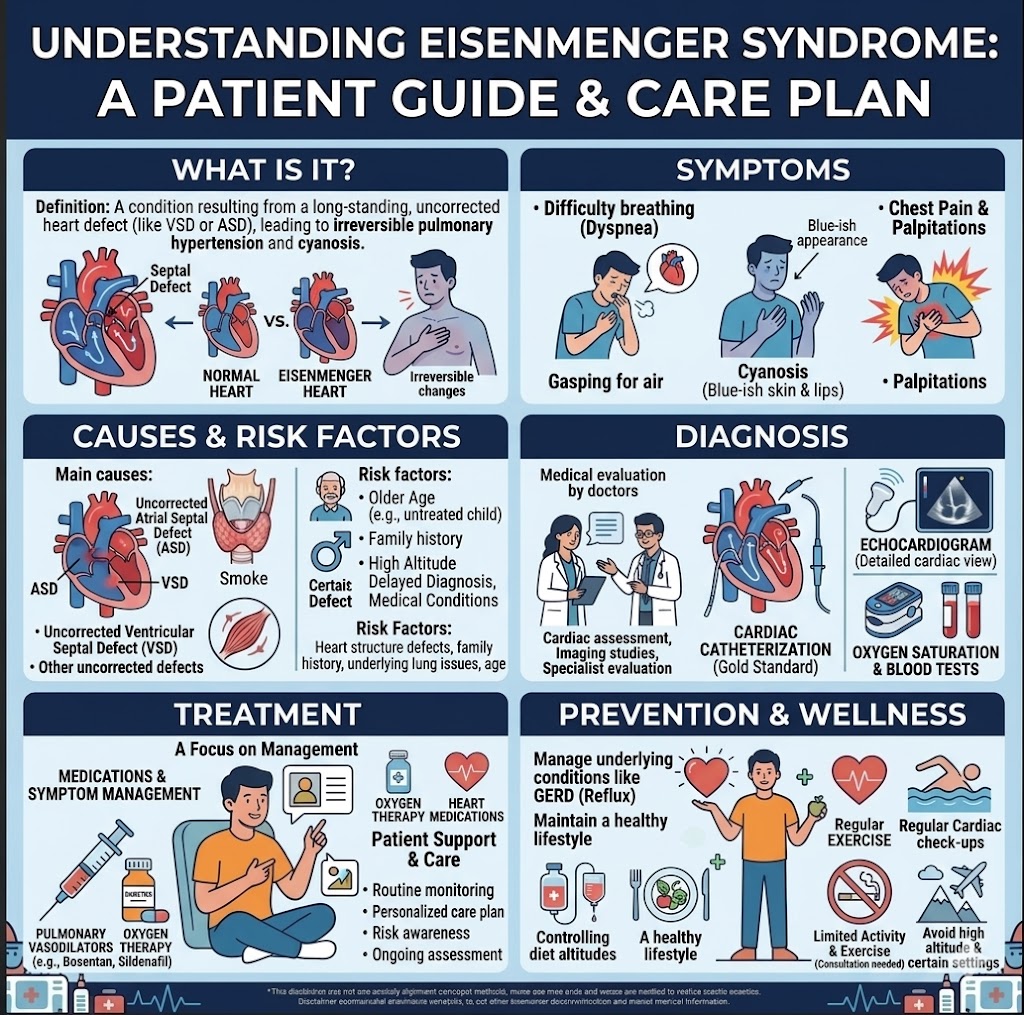
Eisenmenger syndrome (pronounced I-sun-meng-ur) is a serious, long-term complication that develops when a heart problem present at birth, known as a congenital heart defect, isn't fixed. These defects, such as a hole between heart chambers or major blood vessels, cause blood to flow abnormally. Initially, oxygen-rich blood might be pushed into the lung arteries, leading to increased pressure. Over time, this high pressure permanently damages and stiffens the blood vessels in the lungs. This damage then reverses the blood flow, causing oxygen-poor blood to mix with oxygen-rich blood, leading to dangerously low oxygen levels throughout the body. It is a life-threatening condition that, if diagnosed and treated early, can often be prevented.
Understanding the Condition
Eisenmenger Syndrome: Understanding a Complex Heart and Lung Condition
Understanding the Condition
Common Symptoms
Blue or Gray Skin (Cyanosis): Skin, lips, or fingernails may appear bluish or grayish due to low blood oxygen. This can be more or less visible depending on skin tone.
Chest Pain or Tightness: Discomfort or a feeling of pressure in the chest area.
Coughing Up Blood: Blood may be present when coughing.
Dizziness or Fainting: Feeling lightheaded or losing consciousness temporarily.
Easy Tiring and Shortness of Breath with Activity: Becoming unusually tired or out of breath during physical effort.
Clubbing of Fingers or Toes: Fingernails or toenails become unusually large and rounded, often curving downward.
Numbness or Tingling in Fingers or Toes: A sensation of pins and needles or loss of feeling in the extremities.
Shortness of Breath While at Rest: Difficulty breathing even when not engaging in physical activity.
Skipped or Racing Heartbeats: Feeling your heart beat irregularly, too fast, or fluttering.
Consultation Guide
Which Specialist to Meet
You should consult with a cardiologist, especially one specializing in adult congenital heart disease or pulmonary hypertension. They are experts in heart conditions and high blood pressure in the lungs.
Preparations Before Your Visit
Before your visit, gather your full medical history, including any known heart problems since birth. Make a list of all your symptoms, when they started, and how often they occur. List all medications, vitamins, and supplements you currently take. Prepare questions you have for the doctor, such as treatment options, lifestyle changes, and what to expect during diagnosis and treatment.
Book a doctor visit near me
Medications to Relax Lung Blood Vessels: These drugs help widen the narrowed blood vessels in the lungs, which can lower blood pressure in the lungs and improve blood flow. This can help reduce symptoms like shortness of breath and improve exercise capacity. (Duration: Typically lifelong.)
Oxygen Therapy: Supplying supplemental oxygen through nasal prongs or a mask to help increase the oxygen levels in the blood, which can alleviate symptoms like breathlessness. (Duration: Often daily, as prescribed, for varying durations or continuously.)
Avoid High Altitudes: High altitudes have lower oxygen levels, which can worsen symptoms and place extra strain on your heart and lungs. Avoid traveling to or living in high-altitude areas.
Manage Infections Promptly: Lung infections can be very dangerous. Seek medical attention immediately for any signs of infection, such as fever, cough, or increased shortness of breath.
Consultation Guide
Eisenmenger syndrome (pronounced I-sun-meng-ur) is a serious, long-term complication that develops when a heart problem present at birth, known as a congenital heart defect, isn't fixed. These defects, such as a hole between heart chambers or major blood vessels, cause blood to flow abnormally. Initially, oxygen-rich blood might be pushed into the lung arteries, leading to increased pressure. Over time, this high pressure permanently damages and stiffens the blood vessels in the lungs. This damage then reverses the blood flow, causing oxygen-poor blood to mix with oxygen-rich blood, leading to dangerously low oxygen levels throughout the body. It is a life-threatening condition that, if diagnosed and treated early, can often be prevented.
Diagnostic Procedures
Electrocardiogram (ECG or EKG)
A quick and painless test that records the electrical signals of your heart to check its rhythm and speed. It can detect abnormal heartbeats or signs of heart strain.
What to Expect
Small, sticky patches called electrodes will be placed on your chest and sometimes your arms or legs. Wires connect these patches to a machine that records your heart's electrical activity. You'll lie still for a few minutes while the test is performed.
This test uses sound waves to create moving pictures of your heart. It shows how blood flows through the heart chambers and valves, helping to identify structural problems and assess heart function.
What to Expect
You will lie on an examination table. A technician will apply a special gel to your chest and then move a handheld device (transducer) across your chest. You might feel slight pressure from the device. Images of your heart will appear on a screen.
An imaging test that uses a small amount of radiation to create pictures of your heart, lungs, blood vessels, airways, and bones in the chest. It can reveal problems with lung congestion or an enlarged heart.
What to Expect
You will stand or lie against a flat surface, and the X-ray machine will take images. You may be asked to hold your breath briefly. The process is quick and painless.
CT Scan (Computerized Tomography Scan)
A detailed imaging technique that uses X-rays from multiple angles to create cross-sectional, 'slice-like' images of your bones, blood vessels, and soft tissues. It provides more detail than a standard X-ray.
What to Expect
You will lie on a motorized table that slides into a large, doughnut-shaped machine. You'll need to remain very still during the scan, which may take several minutes. You might hear humming or clicking noises from the machine. Sometimes, a contrast dye is injected to help highlight certain areas.
Cardiac Catheterization
A procedure where a thin, flexible tube (catheter) is guided through a blood vessel to your heart. It allows doctors to directly measure pressures in the heart and lungs, assess blood flow, and identify structural problems.
What to Expect
Phlebotomy: A procedure to remove small amounts of blood. In Eisenmenger syndrome, the body sometimes produces too many red blood cells to compensate for low oxygen, making the blood thicker. Removing some blood can reduce this thickness and lower the risk of clots. (Duration: Periodically, as needed, determined by blood tests.)
Early Diagnosis and Repair of Heart Defects: The most effective way to prevent Eisenmenger syndrome is to detect and surgically repair congenital heart defects early in life, before significant damage to the lung blood vessels occurs. If you have a family history of congenital heart defects, discuss screening for other family members with your doctor.
Treatment Options
Medications
Diuretics: Also known as water pills, these medications help your body get rid of excess fluid and salt, reducing swelling and easing the heart's workload. (Duration: Ongoing as needed, potentially lifelong.)
Blood Thinners (Anticoagulants): These medicines help prevent blood clots, which are a higher risk in people with Eisenmenger syndrome due to changes in blood flow and low oxygen levels. Clots can lead to serious complications like stroke. (Duration: Typically lifelong.)
Heart Rhythm Medications: Used to regulate irregular heartbeats (arrhythmias) that can occur due to the heart's strain. (Duration: Ongoing as needed.)
Procedures and Therapies
Heart-Lung Transplant: A major surgery involving the replacement of both the diseased heart and lungs with healthy donor organs. This is considered for severe cases when other treatments are no longer effective. (Duration: One-time procedure, followed by lifelong anti-rejection medications and monitoring.)
Lung Transplant with Heart Repair: In some cases, only the lungs are replaced, and the original heart defect is repaired during the same surgery. (Duration: One-time procedure, followed by lifelong anti-rejection medications and monitoring.)
Regular Medical Check-ups: Consistent monitoring by a heart specialist is crucial to manage the condition, adjust treatments, and detect complications early.
Avoid Certain Medications: Discuss all over-the-counter and prescription medications with your doctor, as some can worsen your condition or interact with existing treatments.
Prevention & Long-Term Wellbeing
You will receive a local anesthetic to numb the area (usually in the groin or arm) where the catheter will be inserted. You might feel some pressure but generally no pain. The doctor guides the catheter using X-ray imaging. The procedure can take from 30 minutes to several hours, and you will need to lie still. Afterward, pressure will be applied to the insertion site to stop bleeding, and you'll typically need to lie flat for several hours during recovery.
Prevention
Lifestyle Management
Maintain a Healthy Lifestyle: Follow a balanced diet, engage in gentle, doctor-approved exercise, manage stress, and avoid smoking or exposure to secondhand smoke to support overall heart and lung health.
Special Considerations
Pregnancy Risks: Pregnancy significantly increases the workload on the heart and lungs, posing a very high risk of serious complications or death for both the pregnant person and the baby. If you have Eisenmenger syndrome, it is vital to discuss family planning and specific pregnancy risks with your healthcare professional.
Tags & Topics
Notice an error or need an update?
Help us keep medical information accurate. Report incorrect info or suggest an edit.


