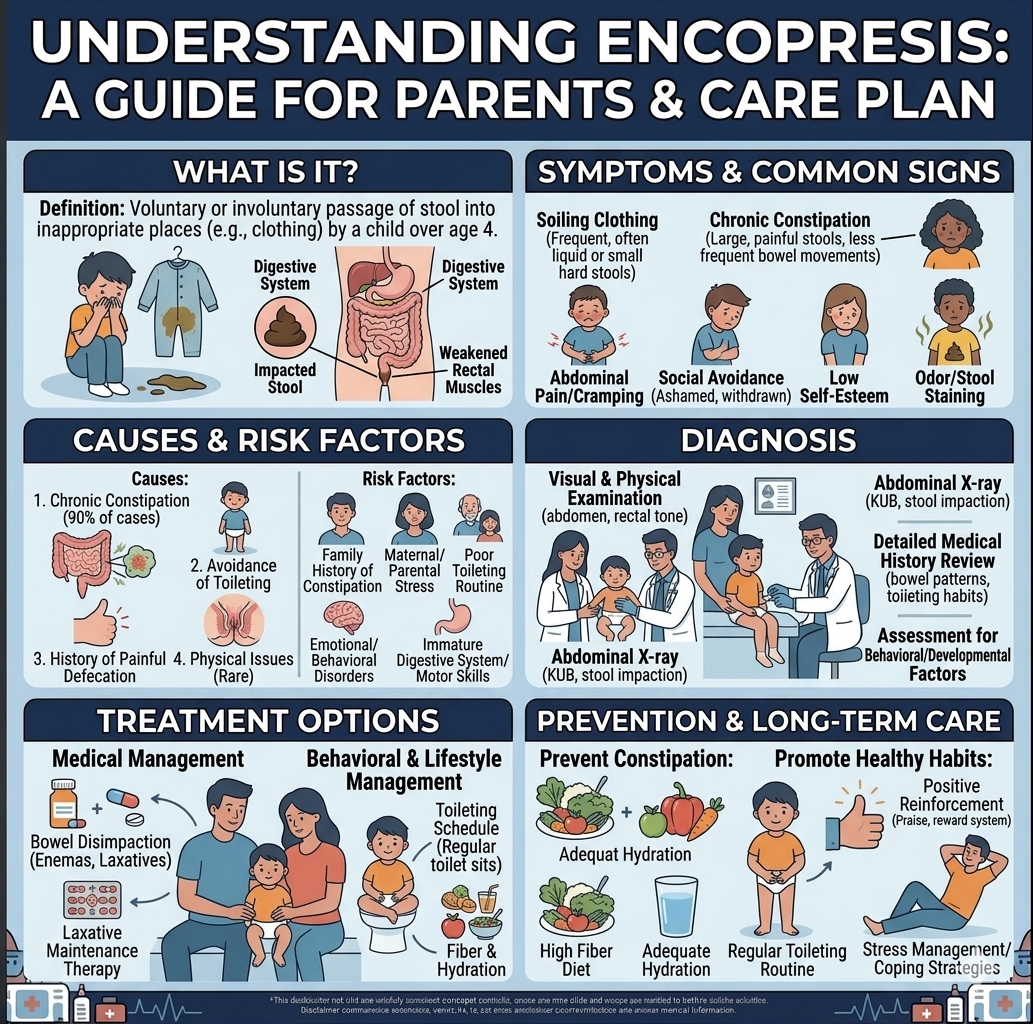
Encopresis is when a child, usually over age 4 and already toilet trained, repeatedly passes stool (poop) into their underwear without meaning to. This often happens because of long-term constipation, where hard, dry stool builds up in the colon. When the colon becomes too full, softer or liquid stool can leak around the blockage, leading to 'accidents.' This can also cause the bowel to stretch, reducing the child's ability to feel when they need to go. Sometimes, emotional stress can also contribute. It's tough for both children, who might feel embarrassed, and parents, but it's a treatable condition with patience and support.
Understanding the Condition
Encopresis: Understanding and Managing Childhood Soiling
Understanding the Condition
Common Symptoms
Abdominal (belly) pain: Discomfort or pain in the stomach area.
Loose, watery stool stains in underwear: Evidence of runny stool leaking around impacted waste.
Large, hard, and dry stools: Stools that are difficult to pass due to their size and consistency.
Avoiding bowel movements: The child may try to hold stool in or resist going to the toilet.
Infrequent bowel movements: Going days between poops, indicating constipation.
Poor appetite: A reduced desire to eat, potentially due to abdominal discomfort.
Passing very large stools: Stool large enough to clog the toilet, a sign of chronic retention.
Unpleasant smell around the child: An odor that the child may try to hide, indicating soiling.
Consultation Guide
Which Specialist to Meet
Before your visit, keep a detailed record of your child's symptoms. This includes: when accidents happen, how often, consistency and size of stools, dietary habits (fluid and fiber intake), and any recent stressful events or changes in their life. Write down any questions you have for the doctor to ensure all your concerns are addressed.
Book a doctor visit near me
Regular Bowel Tracking: Even after symptoms improve, continue to monitor your child's bowel movements for frequency, consistency, and ease of passing. This helps identify any signs of recurring constipation early, allowing for prompt intervention.
Consultation Guide
Encopresis is when a child, usually over age 4 and already toilet trained, repeatedly passes stool (poop) into their underwear without meaning to. This often happens because of long-term constipation, where hard, dry stool builds up in the colon. When the colon becomes too full, softer or liquid stool can leak around the blockage, leading to 'accidents.' This can also cause the bowel to stretch, reducing the child's ability to feel when they need to go. Sometimes, emotional stress can also contribute. It's tough for both children, who might feel embarrassed, and parents, but it's a treatable condition with patience and support.
Start with your child's pediatrician. They can assess the situation and rule out other medical conditions. If the constipation is severe or doesn't improve with initial treatment, they may refer you to a pediatric gastroenterologist (a doctor specializing in children's digestive systems). If emotional issues appear to be a main cause or consequence, a child psychologist or therapist may also be recommended.
Preparations Before Your Visit
An abdominal X-ray is a quick, painless imaging test that uses a small amount of radiation to take pictures of the inside of your child's belly. For encopresis, it helps the doctor see how much stool is built up in the colon and if there is any significant stretching or widening of the bowel caused by chronic constipation.
Diagnostic Procedures
What to Expect
Your child will lie down on an X-ray table, and a technician will position them. They might be asked to hold still for a few seconds while the images are taken. It typically takes only a few minutes, and your child won't feel anything during the process. No special preparation, like fasting, is usually needed, making it a simple and child-friendly procedure.
Treatment Options
Medications
Stool Softeners and Laxatives: These medications work by making stools softer and easier to pass, or by stimulating bowel movements. They may be used for an initial clear-out of impacted stool (disimpaction) and then for ongoing maintenance to prevent new blockages. A doctor will prescribe the appropriate type and dose. (Duration: Initial phase for days to weeks, followed by maintenance for several months, often tapering off gradually under medical guidance.)
Therapies
Psychotherapy (Talk Therapy): This involves working with a child psychologist or therapist to address any underlying emotional stress, anxiety, or behavioral issues related to encopresis. It can help children cope with embarrassment, build confidence, and learn healthy ways to respond to challenging situations. Parents may also receive guidance and support. (Duration: Varies depending on individual needs, typically several weeks to months of regular sessions.)
Disimpaction Procedures: In severe cases where a large amount of stool is severely impacted, a doctor may recommend specific procedures to help clear the blockage. This might involve higher doses of oral laxatives, or in some instances, enemas (fluid introduced into the rectum) or manual removal by a healthcare professional in a clinical setting. (Duration: A single event or a short course over a few days, performed under medical supervision.)
Positive Reinforcement: Offer praise and encouragement for successful toilet use and for following treatment plans. It's crucial to avoid punishment, shame, or negativity, as these can worsen the problem and negatively impact the child's emotional well-being.
Ongoing Support: Maintain open and honest communication with your child about their feelings and challenges related to encopresis. Continue to provide emotional support and do not hesitate to seek professional help again if emotional or behavioral issues resurface.
Prevention & Long-Term Wellbeing
Dietary and Fluid Adjustments: Increasing fiber in your child's diet by including plenty of fruits, vegetables, and whole grains, along with ensuring they drink adequate amounts of water and other fluids, can significantly help soften stools and make them easier to pass regularly. (Duration: Ongoing, daily effort for long-term management.)
Scheduled Toilet Time: Encouraging your child to sit on the toilet for 5-10 minutes after meals (when the colon is naturally more active) can help establish a regular bowel routine. It's crucial to make this a calm, positive, and non-pressured experience. (Duration: Daily, for several months, or until regular habits are established.)
Prevention
Consistent Healthy Habits: Promote a lifestyle that includes a balanced diet rich in fiber, ensure your child drinks adequate fluids throughout the day, and encourage regular physical activity to support healthy bowel function from an early age.
Stress Management: Be attentive to sources of stress or anxiety in your child's life, such as major life changes, school challenges, or family conflict. Provide a supportive and understanding environment to help them cope and reduce emotional triggers.
Long-Term Monitoring
Tags & Topics
Notice an error or need an update?
Help us keep medical information accurate. Report incorrect info or suggest an edit.


