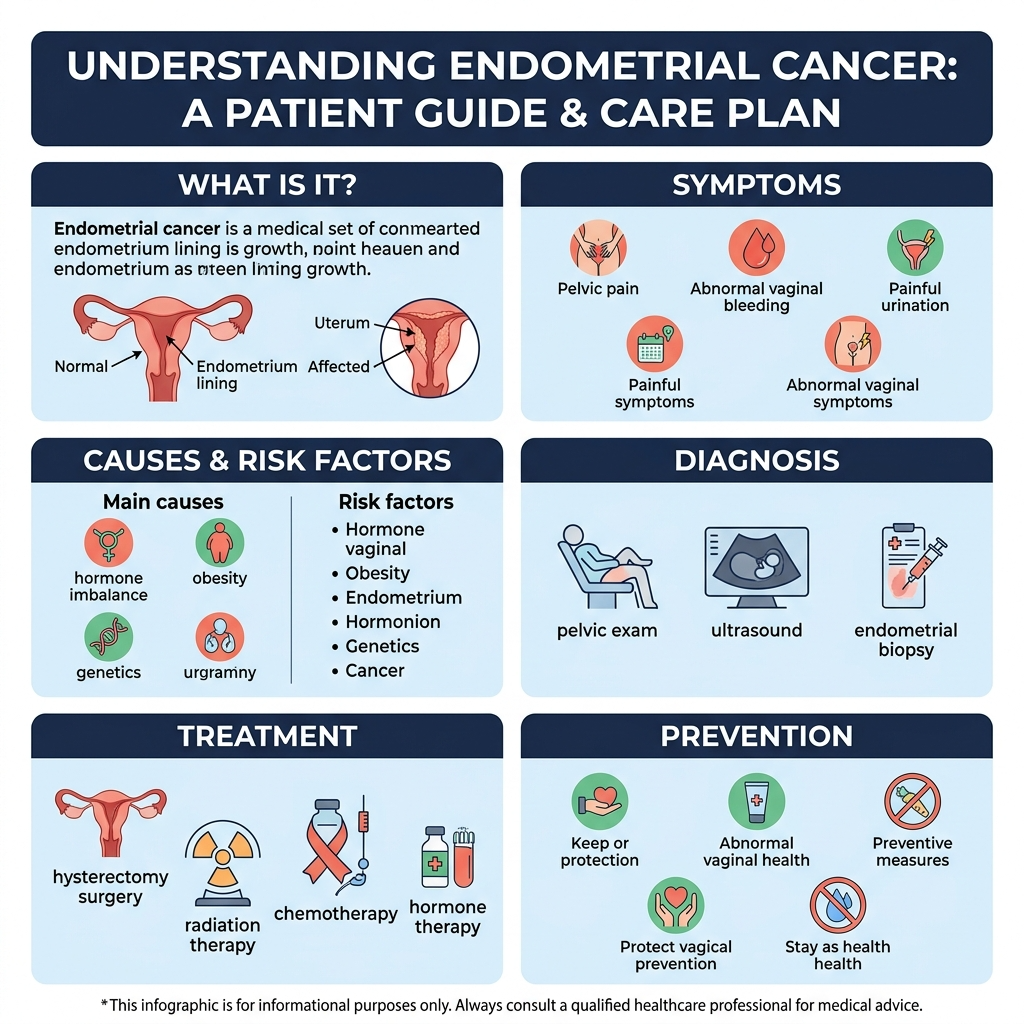
Endometrial cancer is a type of cancer that begins in the uterus, the pear-shaped organ in a woman's pelvis where a baby develops. Specifically, it starts in the endometrium, which is the inner lining of the uterus. While sometimes referred to as uterine cancer, it's different from other rarer cancers that can form in the uterus. Endometrial cancer is often detected at an early stage because it commonly causes noticeable symptoms, most frequently unusual vaginal bleeding. Early detection often allows for successful treatment, typically through surgical removal of the uterus.
Understanding the Condition
Endometrial Cancer: Understanding Uterine Lining Cancer
Understanding the Condition
Endometrial cancer is a type of cancer that begins in the uterus, the pear-shaped organ in a woman's pelvis where a baby develops. Specifically, it starts in the endometrium, which is the inner lining of the uterus. While sometimes referred to as uterine cancer, it's different from other rarer cancers that can form in the uterus. Endometrial cancer is often detected at an early stage because it commonly causes noticeable symptoms, most frequently unusual vaginal bleeding. Early detection often allows for successful treatment, typically through surgical removal of the uterus.
Common Symptoms
Vaginal bleeding after menopause: Any bleeding that occurs after a woman has stopped having menstrual periods for 12 consecutive months.
Bleeding between periods: Vaginal bleeding that happens outside of a regular menstrual cycle.
Pelvic pain: Discomfort or aching felt in the lower abdomen or pelvic area.
Consultation Guide
Which Specialist to Meet
You should start by consulting your primary care provider or a gynecologist, a doctor specializing in female reproductive health. If endometrial cancer is suspected or confirmed, you will likely be referred to a gynecologic oncologist, a surgeon who specializes in treating cancers of the female reproductive system.
Preparations Before Your Visit
Before your appointment, make a detailed list of all your symptoms, noting when they started and how often they occur. Be prepared to share your complete medical history, including any past diagnoses, current medications, and family history of cancer. It is also helpful to write down any questions you have for your healthcare team.
Book a doctor visit near me
Discuss Hormone Therapy After Menopause: If you are considering hormone replacement therapy to manage menopause symptoms, have a thorough discussion with your doctor about the potential risks and benefits. Taking estrogen alone (without progestin) after menopause can increase your risk of endometrial cancer, whereas a combined estrogen and progestin therapy may reduce this risk.
Consider Birth Control Pills: Using oral contraceptives (birth control pills) for at least one year may help reduce the risk of endometrial cancer. This protective effect is thought to last for several years after stopping the pills. Discuss the benefits and potential side effects with your healthcare provider.
Consultation Guide
Maintain a Healthy Weight: Obesity is a significant risk factor for endometrial cancer, possibly due to its influence on hormone balance within the body. Strive to achieve and maintain a healthy weight through a balanced diet and regular physical activity.
Diagnostic Procedures
A physical examination of the external and internal female reproductive organs (vulva, vagina, cervix, uterus, ovaries, and rectum). This helps your doctor check for any unusual changes, growths, or tenderness. A Pap test, which screens for cervical cancer, may be performed during this exam.
What to Expect
You will lie on an exam table with your feet in stirrups. The doctor will first visually inspect your vulva, then use a speculum to gently open the vagina to view the cervix. Finally, they will insert gloved fingers into the vagina and press on your abdomen to manually feel for any abnormalities in your uterus and ovaries. You may feel brief pressure or discomfort.
An imaging technique that uses high-frequency sound waves to create real-time pictures of internal organs. For endometrial cancer, a transvaginal ultrasound is often used to provide a clear and detailed view of the uterine lining, checking its thickness and identifying any growths or abnormalities.
What to Expect
For a transvaginal ultrasound, you will lie on an exam table. A small, lubricated probe will be gently inserted into your vagina. This probe emits sound waves that create images on a screen. The procedure is typically not painful and usually takes about 15 to 30 minutes.
This is the definitive procedure for diagnosing endometrial cancer. A small sample of tissue is carefully taken directly from the lining of the uterus (endometrium). This tissue sample is then sent to a laboratory for microscopic examination to identify the presence of cancer cells.
What to Expect
This procedure is often performed in your doctor's office. You will lie on an exam table, similar to a pelvic exam. The doctor will insert a thin, flexible tube through your cervix into the uterus to gently collect a small amount of tissue. You may experience some cramping during the procedure, which usually lasts only a few minutes.
CT Scan (Computed Tomography Scan)
A type of imaging that utilizes X-rays from multiple angles to create detailed cross-sectional images (or 'slices') of bones, blood vessels, and soft tissues inside the body. It helps healthcare professionals determine if the cancer has spread to other areas of the body.
What to Expect
You will lie on a narrow table that slides into a large, donut-shaped machine. You might receive an injection of a contrast dye to make certain body structures appear clearer on the images. It is important to lie very still during the scan, which typically takes 10 to 30 minutes. The machine may make humming or clicking noises.
A quick and common imaging test that produces pictures of your heart, lungs, blood vessels, airways, and the bones of your chest and spine. It is used to check for any signs of cancer spread, particularly to the lungs.
What to Expect
You will stand or sit in front of an X-ray plate, and a technician will ask you to hold your breath for a few seconds while the X-ray image is captured. This is a painless and very brief procedure.
Regular Follow-up Care: After completing treatment, consistent follow-up appointments with your medical team are crucial. These visits typically include physical exams and sometimes imaging or blood tests to monitor for any signs of recurrence and to manage long-term side effects.
Treatment Options
Surgical Procedures
Hysterectomy: Surgical removal of the uterus. Often, nearby reproductive organs like the fallopian tubes (salpingectomy) and ovaries (oophorectomy) are also removed. This procedure can be performed via: open abdominal surgery (a larger incision), minimally invasive surgery (through small cuts using specialized instruments and cameras), or robotic-assisted surgery (a type of minimally invasive approach offering enhanced precision). (Duration: Recovery typically ranges from 2 to 6 weeks, depending on the surgical method used.)
External Beam Radiation: High-energy beams are directed from a machine outside the body to precisely target and destroy cancer cells while minimizing damage to healthy surrounding tissues. (Duration: Usually administered daily over several weeks.)
Brachytherapy (Internal Radiation): Radioactive material is placed directly inside or very close to the cancerous area, allowing for a higher, more concentrated dose of radiation delivered precisely to the tumor. (Duration: Can be a single treatment session or several shorter sessions over a period of days or weeks.)
Chemotherapy: Uses powerful anti-cancer drugs, typically given intravenously, to kill fast-growing cancer cells throughout the body. It may be used to treat more advanced stages of cancer or to reduce the risk of recurrence. (Duration: Administered in cycles, usually over several months, with duration varying based on the specific drugs and cancer stage.)
Hormone Therapy: For certain types of endometrial cancer that are sensitive to hormones, medications can be used to block the effects of hormones or alter their levels in the body, which can slow or stop cancer growth. (Duration: Treatment duration can range from several months to years, depending on the individual's response and the cancer's characteristics.)
Prevention & Long-Term Wellbeing
Prevention
Healthy Lifestyle Practices: Continuing to embrace a healthy lifestyle, including maintaining a healthy weight, consuming a nutritious diet rich in fruits and vegetables, and engaging in regular physical activity, can contribute to overall well-being and may reduce the risk of other health issues.
Tags & Topics
Notice an error or need an update?
Help us keep medical information accurate. Report incorrect info or suggest an edit.


