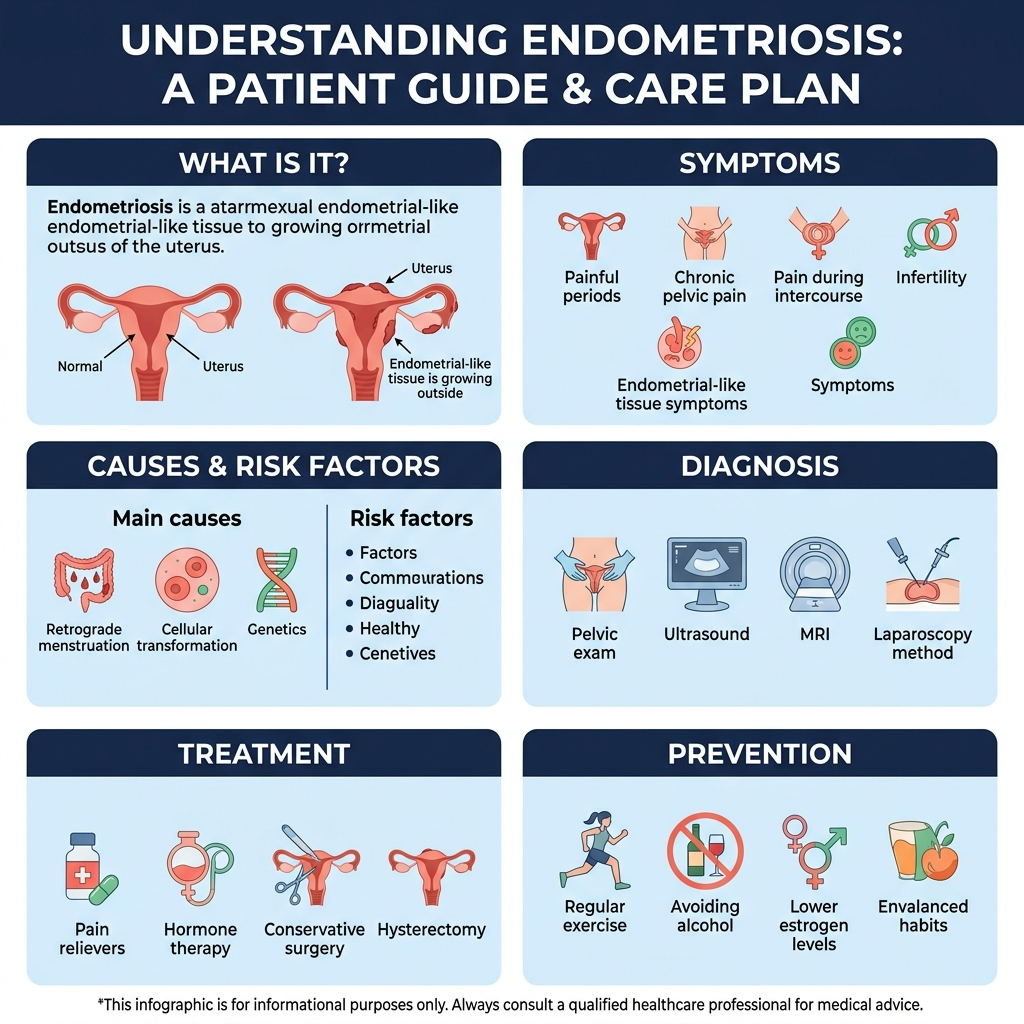
Endometriosis (en-doe-me-tree-O-sis) is an often-painful condition where tissue similar to the lining inside the uterus grows outside of it, commonly affecting the ovaries, fallopian tubes, and pelvic lining. Rarely, it can appear elsewhere. This misplaced tissue thickens and bleeds with each menstrual cycle, but unlike normal menstrual flow, the blood has no exit. This leads to irritation, inflammation, pain, and the formation of cysts (endometriomas), scar tissue, and fibrous bands (adhesions) that can cause organs to stick together. Endometriosis often causes significant pain, especially during periods, and may lead to fertility challenges, but treatments are available.
Understanding the Condition
Understanding Endometriosis: A Guide for Non-Medical Individuals
Understanding the Condition
Common Symptoms
Severe Period Pain (Dysmenorrhea): Pelvic pain and cramping often start days before a menstrual period, intensify during it, and can last for days into the cycle. This pain is typically much more severe than usual menstrual cramps and may worsen over time, often including lower back and stomach discomfort.
Pain During or After Sex: Discomfort or pain experienced during or following sexual intercourse is a common symptom.
Pain with Bowel Movements or Urination: These symptoms are most frequently experienced before or during a menstrual period.
Heavy or Irregular Bleeding: Some individuals experience unusually heavy menstrual periods or bleeding between periods.
Difficulty Getting Pregnant (Infertility): For some, endometriosis is first identified during evaluations for infertility. While it can make conception challenging, many with mild to moderate endometriosis can still achieve pregnancy.
Other Symptoms: Additional symptoms may include fatigue, diarrhea, constipation, bloating, or nausea, particularly around menstrual periods. Importantly, pain severity doesn't always match the amount of endometriosis tissue; some have severe pain with little tissue, others extensive tissue with minimal or no pain. Some individuals have no symptoms at all.
Consultation Guide
Which Specialist to Meet
Consult a gynecologist for reproductive health concerns. For fertility issues, a reproductive endocrinologist can provide specialized guidance. A pain specialist may also assist with managing chronic pain related to endometriosis.
Preparations Before Your Visit
Before your visit, keep a symptom diary (noting when pain occurs, its intensity, and any triggers), list all current medications and supplements, and prepare questions to discuss your full medical history.
Book a doctor visit near me
Over-the-Counter Pain Relievers: Non-steroidal anti-inflammatory drugs (NSAIDs) can help manage menstrual cramps and pelvic pain. (Duration: As needed for symptom relief)
Heat Therapy: Applying heat (pad, warm bath) can relax muscles and reduce cramping. (Duration: As needed for symptom relief)
Regular Medical Follow-ups: Consistent check-ups monitor symptoms, evaluate treatment, and adjust your care plan.
Healthy Lifestyle Choices: Maintain a balanced diet, regular exercise, and stress reduction for overall health and symptom relief.
Education and Support: Learning about endometriosis and connecting with support groups empowers better management and coping.
Consultation Guide
Endometriosis (en-doe-me-tree-O-sis) is an often-painful condition where tissue similar to the lining inside the uterus grows outside of it, commonly affecting the ovaries, fallopian tubes, and pelvic lining. Rarely, it can appear elsewhere. This misplaced tissue thickens and bleeds with each menstrual cycle, but unlike normal menstrual flow, the blood has no exit. This leads to irritation, inflammation, pain, and the formation of cysts (endometriomas), scar tissue, and fibrous bands (adhesions) that can cause organs to stick together. Endometriosis often causes significant pain, especially during periods, and may lead to fertility challenges, but treatments are available.
Diagnostic Procedures
A physical examination to assess your reproductive organs for abnormalities like tenderness or cysts.
What to Expect
You will lie on an exam table. The doctor will visually inspect the outer genitals, then insert two lubricated fingers into the vagina while gently pressing on your abdomen to feel the uterus and ovaries. This checks for unusual tenderness, growths, or changes. A Pap test may also be done. You might feel some pressure or mild discomfort; the exam lasts a few minutes.
Uses sound waves to create images of your uterus, ovaries, and pelvic structures to detect cysts or other abnormalities.
What to Expect
For an abdominal ultrasound, gel is applied to your lower abdomen, and a handheld device is moved across it. For a clearer view, a transvaginal ultrasound involves inserting a thin, lubricated wand into the vagina. Both are generally painless, though some pressure may be felt. You might need a full bladder for the abdominal type.
The most definitive diagnostic method. A surgeon makes small incisions to directly view pelvic organs for endometriosis implants and can take tissue samples for confirmation or treatment.
What to Expect
Treatment Options
Laparoscopy (Minimally Invasive Surgery)
Pain Management & Home Remedies
Medications (Hormone Therapy)
Hormonal Contraceptives: Birth control pills, patches, or vaginal rings reduce pain by thinning tissue and often stopping periods. (Duration: Long-term, typically months to years, depending on individual needs)
Progestin-Only Therapies: Pills, injections, or hormonal IUDs stop periods and slow tissue growth. (Duration: Long-term, typically months to years)
Gonadotropin-Releasing Hormone (GnRH) Agonists and Antagonists: These medications temporarily block ovarian hormone production, creating a reversible menopause-like state to shrink endometriosis tissue. (Duration: Typically 3-6 months, sometimes longer with additional therapy)
Therapies
Acupuncture: Acupuncture, involving thin needles at specific body points, may offer pain relief. (Duration: Multiple sessions over several weeks or months, as recommended)
Surgical Procedures
Laparoscopy (Conservative Surgery): Minimally invasive surgery to remove or destroy endometriosis implants while preserving reproductive organs, especially for those wishing to conceive. (Duration: Single procedure; recovery typically takes a few weeks)
Hysterectomy (with or without Oophorectomy): Removal of the uterus, sometimes with ovaries, for severe cases when other treatments fail and no future pregnancy is desired. Eliminates the primary estrogen source for endometriosis. (Duration: Single procedure; full recovery can take several weeks to a few months)
Pain Management Strategies: Develop a comprehensive pain plan, possibly combining medication, physical therapy, and complementary approaches.
Fertility Counseling: Seek early counseling from a reproductive specialist if fertility is a concern, as the condition can progress.
Prevention & Long-Term Wellbeing
Performed under general anesthesia. Small cuts, usually near the belly button, are made. Gas inflates the abdomen for better viewing. A thin, lighted camera (laparoscope) is inserted to examine organs; small tools may be used to remove or destroy tissue. Post-procedure, you'll have small bandages and may feel abdominal or shoulder discomfort for a few days. Recovery is typically a few days to a week.
Regular Exercise and Stress Reduction: Regular exercise and stress-reducing techniques (yoga, meditation) may help ease pain and improve well-being. (Duration: Ongoing, as part of a healthy lifestyle)
Long-Term Management & Lifestyle
Tags & Topics
Notice an error or need an update?
Help us keep medical information accurate. Report incorrect info or suggest an edit.


