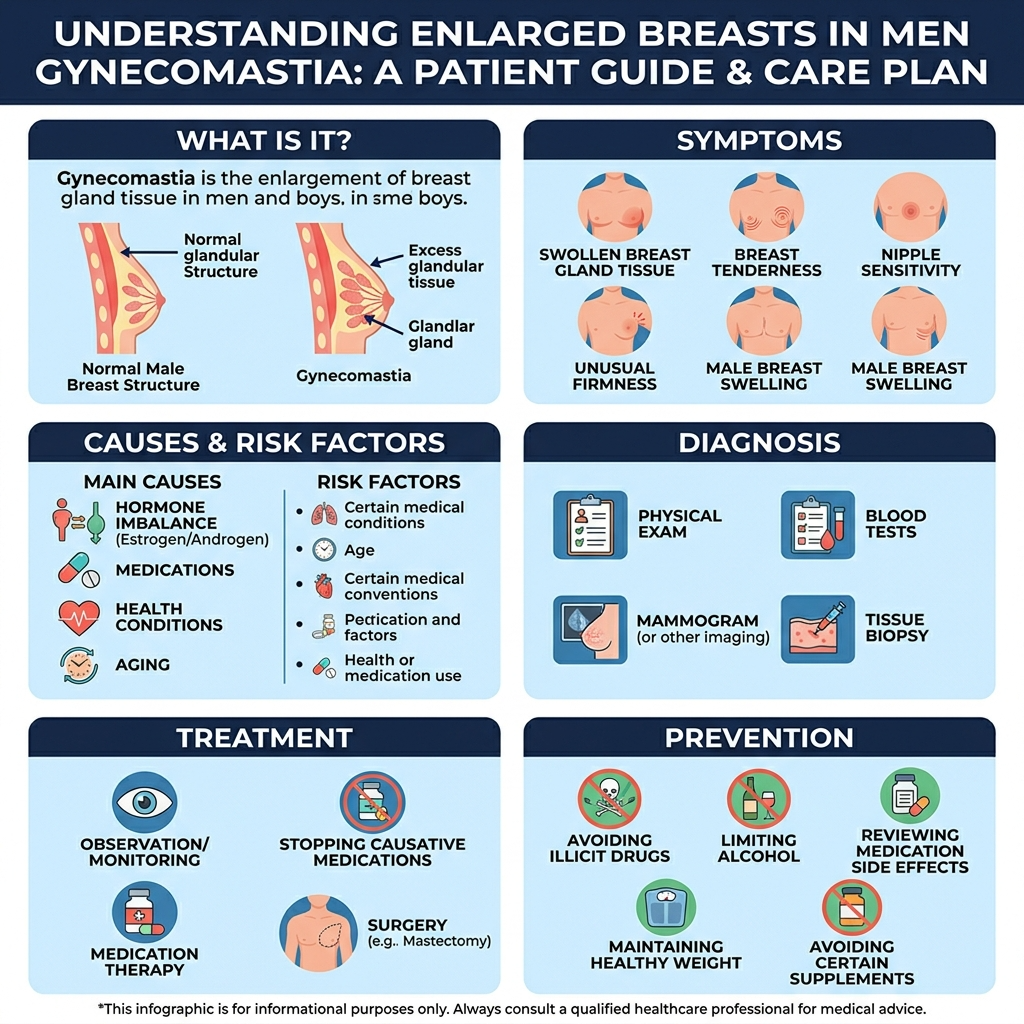
Gynecomastia is a condition where boys or men develop enlarged breast gland tissue. It happens due to an imbalance of hormones, specifically when the body has too much estrogen compared to testosterone. This can affect one or both breasts, sometimes making them uneven. It's different from 'pseudogynecomastia,' which is simply an increase in fat in the male breast without extra gland tissue. Many males experience gynecomastia at different life stages due to natural hormone changes, such as newborns, teenagers going through puberty, and older men. While it's usually not a serious health risk, it can cause physical discomfort like breast pain and significant emotional distress or embarrassment. Often, gynecomastia resolves on its own, but if it doesn't, various medical treatments or surgical options are available to help.
Understanding the Condition
Understanding Enlarged Breasts in Men (Gynecomastia)
Understanding the Condition
Common Symptoms
Pain: Aching or soreness, particularly common in teenagers.
Swollen Breast Tissue: Noticeable enlargement or fullness in one or both breasts.
Tender Breasts: The breast area may be sensitive to touch.
Sensitive Nipples: Nipples may become easily irritated or painful when rubbing against clothing.
Consultation Guide
Which Specialist to Meet
Before your visit, make a list of all your symptoms, including when they started and how they affect you. Gather information about your medical history, any other health conditions you have, and a complete list of all medications, supplements, and herbal remedies you are currently taking. Be prepared to discuss your lifestyle, including alcohol consumption and any recreational drug use. If you experience persistent pain or tenderness, fluid leaking from one or both nipples, a firm or hard lump in the breast, or dimpled skin on the breast, be sure to highlight these symptoms to your doctor immediately. This information helps your doctor accurately diagnose your condition and plan the best course of action.
Book a doctor visit near me
An X-ray specifically for breast tissue, a mammogram screens for breast cancer or investigates unusual breast symptoms, visualizing the internal breast structure.
Regular Medical Check-ups: Periodic doctor visits are crucial to monitor gynecomastia, address new symptoms, and rule out serious underlying conditions.
Address Underlying Health Conditions: Manage existing health issues like liver, kidney, or thyroid disease, or genetic syndromes, as these can contribute to gynecomastia.
Consultation Guide
Gynecomastia is a condition where boys or men develop enlarged breast gland tissue. It happens due to an imbalance of hormones, specifically when the body has too much estrogen compared to testosterone. This can affect one or both breasts, sometimes making them uneven. It's different from 'pseudogynecomastia,' which is simply an increase in fat in the male breast without extra gland tissue. Many males experience gynecomastia at different life stages due to natural hormone changes, such as newborns, teenagers going through puberty, and older men. While it's usually not a serious health risk, it can cause physical discomfort like breast pain and significant emotional distress or embarrassment. Often, gynecomastia resolves on its own, but if it doesn't, various medical treatments or surgical options are available to help.
You should first visit your primary care doctor or family physician. They can help determine the cause and severity of your condition. Depending on their findings, they may refer you to an endocrinologist (a doctor specializing in hormones) to manage hormone imbalances, or a plastic surgeon if surgical correction is considered.
Preparations Before Your Visit
You stand at the machine, and a technician places each breast on a platform, compressing it firmly between plates for clear images. This can cause brief discomfort. You hold your breath, and the process repeats for both breasts and different angles.
An ultrasound uses high-frequency sound waves to create real-time images of internal soft tissues, safely differentiating between glandular tissue, fat, or identifying lumps.
Medication Review: Discuss all medications with your doctor; some can cause gynecomastia. Alternatives might be available.
Diagnostic Procedures
A chest X-ray uses radiation to create images of your heart, lungs, blood vessels, and chest bones, helping doctors detect various heart or lung problems and rule out other conditions.
What to Expect
You'll stand, sit, or lie in front of the X-ray machine. A technician positions you, and you hold your breath briefly. It's quick, painless, and non-invasive, taking minutes.
CT Scan (Computerized Tomography Scan)
A CT scan uses X-rays and computer processing to create detailed cross-sectional images of organs, soft tissues, and bones, providing more detail than a standard X-ray to diagnose or plan treatment.
What to Expect
You lie on a motorized table sliding into a donut-shaped machine, which rotates around you. Remain still; you might hold your breath. Contrast dye may be given, causing a warm sensation. The scan takes 10-30 minutes.
What to Expect
What to Expect
You lie down as clear gel is applied to your skin. A handheld transducer is pressed and moved, emitting sound waves to create images on a monitor. It's typically painless and takes 15-30 minutes.
Hormone-Targeting Medications: Prescribed for hormone imbalances, these medicines block estrogen effects or boost testosterone to reduce breast tissue. (Duration: Varies, often several months.)
Liposuction (Fat Removal): Removes excess fatty tissue using suction through small incisions, reshaping the chest. (Duration: A single procedure; compression garment worn for weeks post-op.)
Treatment Options
Watchful Waiting / Observation
Natural Resolution: Often resolves naturally in newborns and teenagers as hormones balance. Initial management involves monitoring. (Duration: Weeks for infants, months to two years for teenagers.)
Medications
Prevention & Long-Term Wellbeing
Glandular Tissue Removal (Mastectomy): Surgical removal of excess breast gland tissue, often via small incisions to minimize scarring. Can be combined with liposuction. (Duration: A single procedure; several weeks recovery with compression garment.)
Prevention
Avoid Illicit Drugs: Avoid anabolic steroids, amphetamines, heroin, and marijuana, which can severely disrupt hormone balance.
Moderate Alcohol Consumption: Limit alcohol intake; for men, no more than two drinks daily. Excessive alcohol affects liver function and hormones.
Long-Term Monitoring & Management
Tags & Topics
Notice an error or need an update?
Help us keep medical information accurate. Report incorrect info or suggest an edit.


