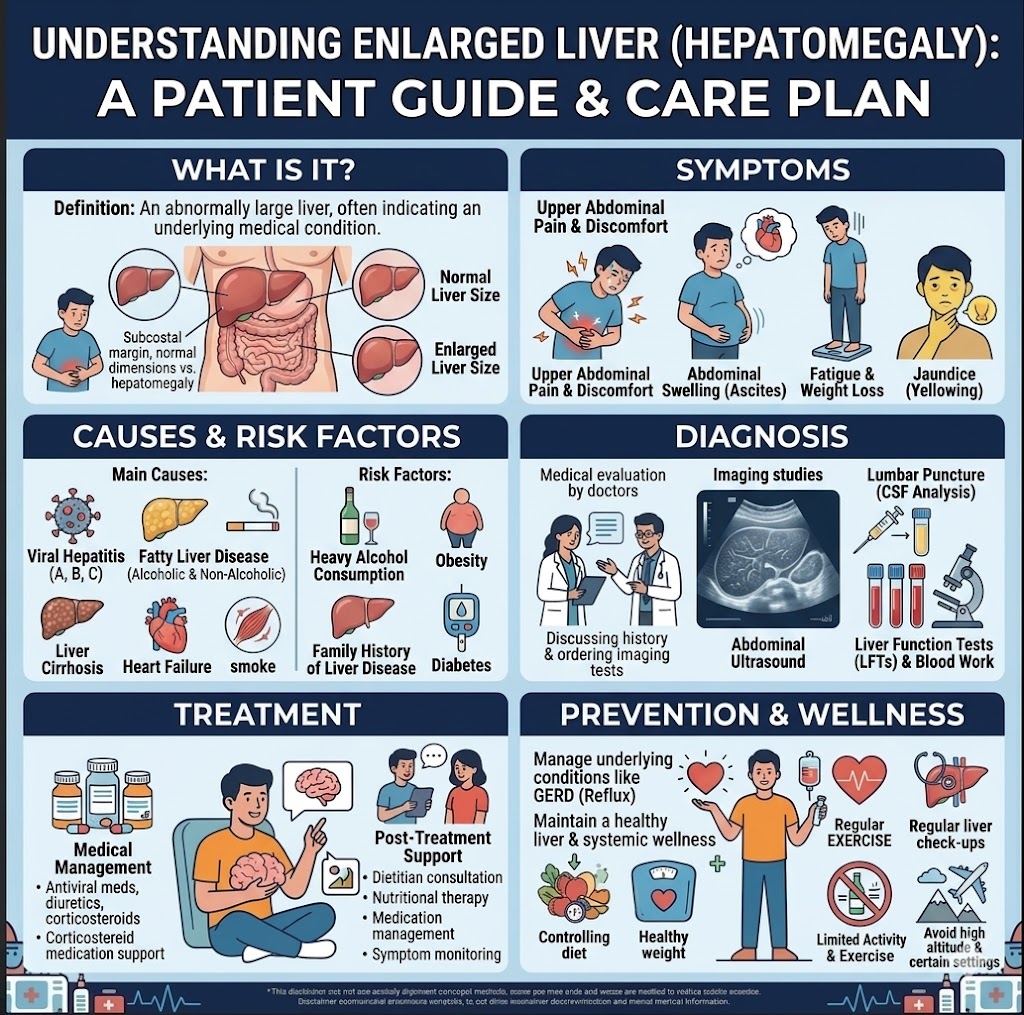
An enlarged liver, medically known as hepatomegaly, is not a disease itself but a sign that something else is affecting your health. It indicates an underlying problem, often related to liver disease, heart conditions, or even certain types of cancer. The liver, a vital football-shaped organ in the upper right part of your abdomen, can expand due to various issues. Effective management focuses on identifying and treating the root cause of the enlargement.
Understanding the Condition
Enlarged Liver (Hepatomegaly)
Understanding the Condition
Common Symptoms
Fatigue: Feeling unusually tired or lacking energy.
Nausea and Vomiting: Stomach discomfort often accompanied by throwing up.
Pain in the Upper Right Abdomen: Discomfort or aching in the area where the liver is located.
Jaundice: Yellowing of the skin and whites of the eyes, indicating a problem with bile processing.
Dark Urine: Urine that appears darker than usual.
Swelling in Legs and Ankles: Fluid retention, often visible in the lower extremities.
Unexplained Weight Loss: Losing weight without trying.
Consultation Guide
Which Specialist to Meet
Before your visit, make a list of all your symptoms, including when they started and how severe they are. Gather your medical history, including any previous conditions, surgeries, and family medical history. List all medications, supplements, and vitamins you're currently taking, including dosages. Prepare any questions you have for the doctor.
Book a doctor visit near me
Fluid Drainage (Paracentesis): Draining excess fluid from the abdomen (ascites) for symptom relief in advanced liver disease. (Duration: As needed, potentially long-term)
Consultation Guide
An enlarged liver, medically known as hepatomegaly, is not a disease itself but a sign that something else is affecting your health. It indicates an underlying problem, often related to liver disease, heart conditions, or even certain types of cancer. The liver, a vital football-shaped organ in the upper right part of your abdomen, can expand due to various issues. Effective management focuses on identifying and treating the root cause of the enlargement.
Start by seeing your primary care doctor. Depending on the suspected cause, you may be referred to a liver specialist (hepatologist), a digestive system expert (gastroenterologist), a heart specialist (cardiologist), or a cancer specialist (oncologist).
Preparations Before Your Visit
You will lie on a movable table that slides into a large, donut-shaped machine. The scanner will rotate around you, taking images. You might hear buzzing or clicking noises. In some cases, a contrast dye may be given through an injection or swallowed to highlight certain areas, which might cause a warm sensation or metallic taste. You'll need to lie still during the scan, which typically takes a few minutes.
Heart Support Medications: If caused by heart failure, these improve heart function and reduce liver congestion. (Duration: Typically long-term)
Diagnostic Procedures
CT Scan (Computerized Tomography Scan)
A CT scan uses special X-ray equipment and computer processing to create detailed cross-sectional images, or 'slices,' of the body's bones, blood vessels, and soft tissues. It provides more detail than standard X-rays and can help doctors see nearly all parts of the body to diagnose disease or injury.
What to Expect
What to Expect
The most common method is a 'percutaneous biopsy.' After numbing an area of skin on your abdomen, a thin needle is guided through your skin and into your liver. You might be asked to hold your breath briefly. Once the tissue sample is collected, the needle is removed. You'll then need to lie on your right side for several hours to minimize bleeding and will be monitored closely for any complications like pain or bleeding. You may experience some soreness at the biopsy site.
Ultrasound (Sonography)
An ultrasound uses high-frequency sound waves to create real-time images of internal body structures. These sound waves bounce off organs and tissues, and a computer translates them into visual images, allowing doctors to assess the size, shape, and condition of your liver and surrounding organs.
What to Expect
You will lie on an examination table. A clear gel is applied to your skin over the area being examined (usually your upper right abdomen). A handheld device called a transducer is then pressed against your skin and moved around. You won't feel any pain, only a slight pressure from the transducer. The images appear on a monitor, and the procedure is generally quick, often lasting 15-30 minutes. Most ultrasounds require no special preparation, but for some abdominal ultrasounds, you might be asked to fast for a few hours beforehand or drink water to fill your bladder.
Periodic Testing: Undergo regular blood tests, imaging (ultrasound/CT), or biopsies to track liver condition and treatment effectiveness.
Treatment Options
A liver biopsy is a procedure where a small piece of liver tissue is removed and sent to a lab for examination under a microscope. This helps doctors identify signs of damage, disease, or abnormal cells, and determine the stage of any existing liver disease, which guides treatment decisions.
Medications
Antivirals: For viral hepatitis, these reduce the viral load and liver damage. (Duration: Weeks to months, sometimes lifelong)
Immunosuppressants: Used for autoimmune liver diseases to prevent the immune system from attacking the liver. (Duration: Long-term or lifelong)
Metal Removal Therapy: For iron or copper overload, medications help remove excess metals from the body. (Duration: Long-term, ongoing)
Anti-inflammatory/Anti-fibrotic Agents: Medications to reduce liver inflammation or slow scarring progression. (Duration: Varies based on condition)
Liver Transplant: Replacing a diseased liver with a healthy donor liver for severe, irreversible failure. (Duration: Major surgery, long recovery, lifelong medication)
Responsible Medication Use: Always follow dosage instructions for medications, especially acetaminophen, to avoid liver injury.
Manage Chronic Health: Control conditions like diabetes, high cholesterol, and high blood pressure, which can impact liver health.
Avoid Toxins: Minimize exposure to environmental toxins and chemicals harmful to the liver.
Regular Check-ups: Consistent medical appointments are vital for monitoring liver health and managing underlying conditions.
Treatment Adherence: Strictly follow prescribed treatments and lifestyle changes for best outcomes.
Prevention & Long-Term Wellbeing
Lifestyle Changes and Home Remedies
Weight Management: Achieving and maintaining a healthy weight through diet and exercise is crucial for conditions like fatty liver disease, reducing liver fat. (Duration: Ongoing)
Alcohol Avoidance: Stopping or significantly reducing alcohol intake prevents further liver damage, allowing healing. (Duration: Ongoing)
Balanced Diet: A diet rich in whole foods, limiting processed items, supports liver health. (Duration: Continuous)
Adequate Hydration: Daily water intake supports overall bodily functions and detoxification. (Duration: Ongoing)
Tumor Resection: Surgical removal of liver tumors, depending on their characteristics. (Duration: Recovery: weeks to months)
Prevention
Healthy Weight: Maintain a healthy weight through balanced diet and exercise to reduce fatty liver risk.
Moderate Alcohol: Limit or abstain from alcohol to protect against liver damage.
Safe Practices & Vaccinations: Prevent viral hepatitis through safe sex, avoiding shared needles, and Hepatitis A/B vaccinations.
Tags & Topics
Notice an error or need an update?
Help us keep medical information accurate. Report incorrect info or suggest an edit.


