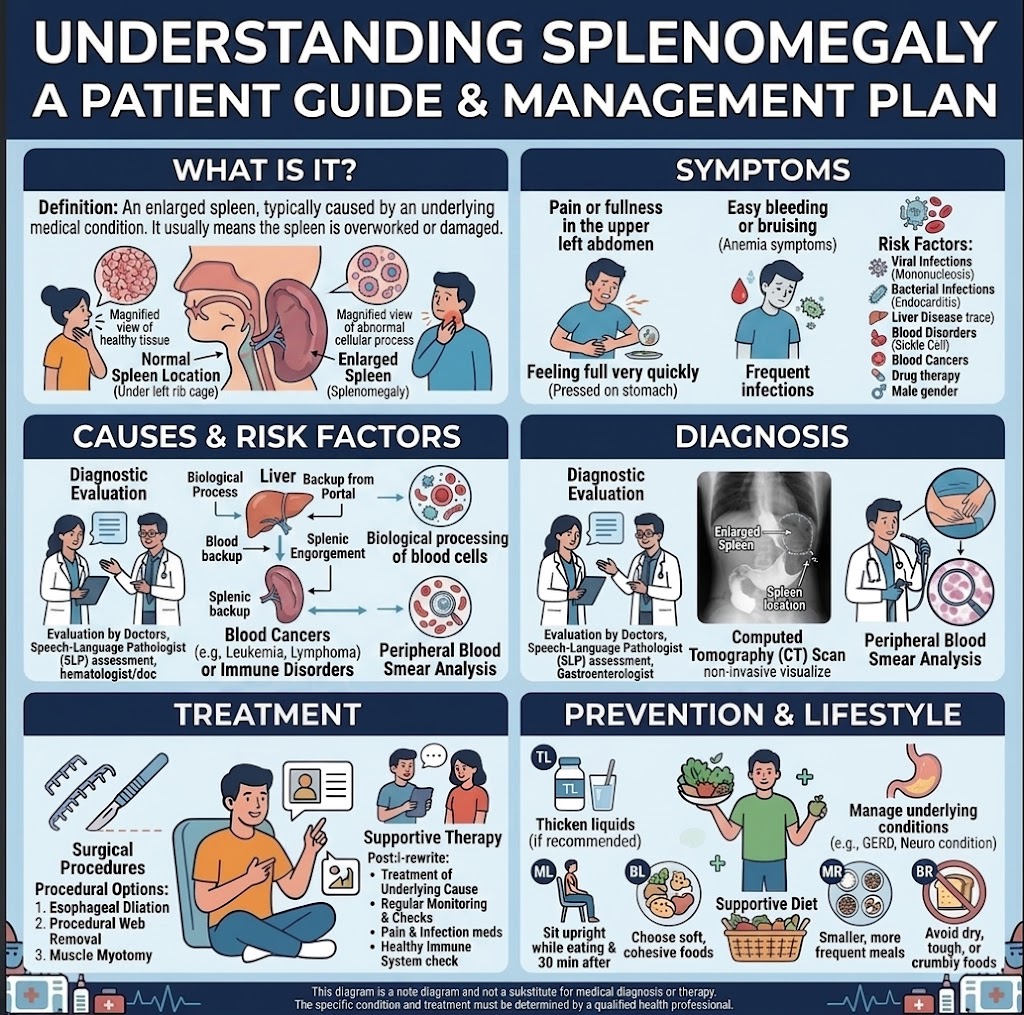
The spleen is a small, fist-sized organ located on the left side of your abdomen, just under your rib cage. It plays a vital role in your immune system by filtering out old or damaged blood cells and fighting infections. An enlarged spleen, clinically known as splenomegaly, occurs when an underlying medical condition—such as an infection, liver disease, or certain blood cancers—causes the organ to swell. While it is not a disease on its own, an enlarged spleen is an important warning sign of another health issue that requires diagnosis and treatment.
Understanding the Condition
Understanding an Enlarged Spleen (Splenomegaly)
Understanding the Condition
Common Symptoms
Abdominal Discomfort or Pain: You may feel pain, pressure, or a sensation of fullness in the upper-left side of your belly. This discomfort can sometimes spread upward to your left shoulder.
Feeling Full Quickly After Eating: As the spleen swells, it can press against your stomach. This pressure can make you feel full even after eating only a small amount of food.
Before your appointment, write down any symptoms you are experiencing, including those that seem unrelated to your stomach. Make a complete list of all medications, vitamins, and supplements you take. Note any recent illnesses, infections, or international travel (especially to areas where malaria is common). Prepare a list of questions to ask your doctor.
Book a doctor visit near me
Watchful Waiting: If you have an enlarged spleen but experience no symptoms and the cause is not critical, your doctor may recommend monitoring your condition rather than treating it immediately. (Duration: Ongoing, with regular follow-up appointments and imaging scans every 6 to 12 months.)
Consultation Guide
The spleen is a small, fist-sized organ located on the left side of your abdomen, just under your rib cage. It plays a vital role in your immune system by filtering out old or damaged blood cells and fighting infections. An enlarged spleen, clinically known as splenomegaly, occurs when an underlying medical condition—such as an infection, liver disease, or certain blood cancers—causes the organ to swell. While it is not a disease on its own, an enlarged spleen is an important warning sign of another health issue that requires diagnosis and treatment.
Fatigue and Pale Skin (Anemia): An enlarged spleen may trap and destroy too many red blood cells, leading to a low red blood cell count, which causes tiredness and shortness of breath.
Frequent Infections: If the spleen traps too many healthy white blood cells, your body loses its primary defense system, making you more prone to catching viruses and bacterial infections.
Easy Bleeding or Bruising: A drop in blood platelets—the cells that help your blood clot—can cause you to bleed easily from minor cuts, experience frequent nosebleeds, or bruise without reason.
Consultation Guide
Which Specialist to Meet
You should start by consulting a primary care physician. Depending on the underlying cause, you may be referred to a hematologist (a blood specialist), a gastroenterologist (a liver and digestive system specialist), or a general surgeon.
Preparations Before Your Visit
These blood tests measure specific proteins and enzymes to evaluate how well your liver is functioning, as liver disease is a common cause of spleen enlargement.
Infection Treatments: If your enlarged spleen is caused by a bacterial, viral, or parasitic infection, targeted prescription medications will be prescribed to clear the infection. (Duration: Typically 1 to 4 weeks, though some parasitic infections may require longer treatment cycles.)
Monitor for Fevers: Because of your increased risk of infection, treat any fever or sudden illness seriously. Seek medical attention immediately if your temperature rises.
Diagnostic Procedures
Complete Blood Count (CBC)
A standard laboratory test that measures the levels of red blood cells, white blood cells, and platelets in your blood.
What to Expect
A healthcare professional will insert a small needle into a vein in your arm to draw a tube of blood. You may feel a brief sting or pinch. The process takes less than five minutes.
What to Expect
This is a simple blood draw from your arm, similar to a CBC. You may be instructed to fast (not eat or drink) for several hours before the test.
Computerized Tomography (CT) Scan
An imaging scan that uses advanced X-rays to create detailed, cross-sectional pictures of your abdominal organs.
What to Expect
You will lie flat on a table that slowly slides into a large, doughnut-shaped scanner. You must remain very still. You may be asked to hold your breath briefly, and some scans require swallowing a liquid contrast material or receiving it through an IV line.
A quick imaging test that uses low levels of radiation to produce pictures of the structures inside your abdomen.
What to Expect
You will stand or lie down in front of an X-ray machine. The technician will position you and then step behind a protective screen to take the picture. It is painless and takes only a few minutes.
Bone Marrow Aspiration and Biopsy
A procedure to collect and examine a sample of bone marrow—the spongy tissue inside your bones where blood cells are made.
What to Expect
A procedure where a thin needle is guided into a suspicious area (such as a lymph node or liver, rather than the spleen itself due to bleeding risks) to harvest tissue cells for lab testing.
What to Expect
The skin over the target area is cleaned and numbed. Guided by an ultrasound or CT scan, the doctor inserts a needle to collect a small tissue sample. You may feel mild pressure or a pinching sensation during the collection.
Treatment Options
The doctor will apply a numbing medication (local anesthetic) to your hip bone. A thin needle is inserted to withdraw a liquid sample of bone marrow (aspiration), followed by a slightly larger needle to take a small solid sample (biopsy). You may feel a brief, sharp pulling sensation and some deep pressure.
Medications and Non-Surgical Therapies
Cancer Therapies: For blood cancers like leukemia or lymphoma, systemic treatments such as chemotherapy or targeted cellular therapies are used to kill cancer cells and reduce spleen size. (Duration: Administered in cycles over several months to a year, depending on the stage and type of cancer.)
Autoimmune Management: Medications that calm an overactive immune system are used if autoimmune disorders like lupus are causing the inflammation. (Duration: Often long-term or lifelong maintenance therapy to manage flare-ups.)
Surgical Procedures
Splenectomy (Spleen Removal): The surgical removal of the spleen. It is usually performed laparoscopically using a tiny camera and specialized tools inserted through small incisions. (Duration: The surgery takes 1 to 2 hours. Hospital stay is usually 1 to 2 days, with a full recovery taking about 2 to 4 weeks.)
Prevention & Long-Term Wellbeing
Avoid Contact Sports: An enlarged spleen is fragile and can easily rupture from a blow to the abdomen. Avoid high-impact activities like football, soccer, hockey, or rough play.
Always Wear a Seatbelt: To protect your abdominal area from sudden, severe trauma during a car accident, always wear a properly adjusted seatbelt.
Stay Up-to-Date on Vaccinations: If your spleen is enlarged or has been removed, your body cannot fight infections as effectively. Ensure you receive recommended vaccines, including those for pneumonia, meningitis, and the annual flu.
Tags & Topics
Notice an error or need an update?
Help us keep medical information accurate. Report incorrect info or suggest an edit.


