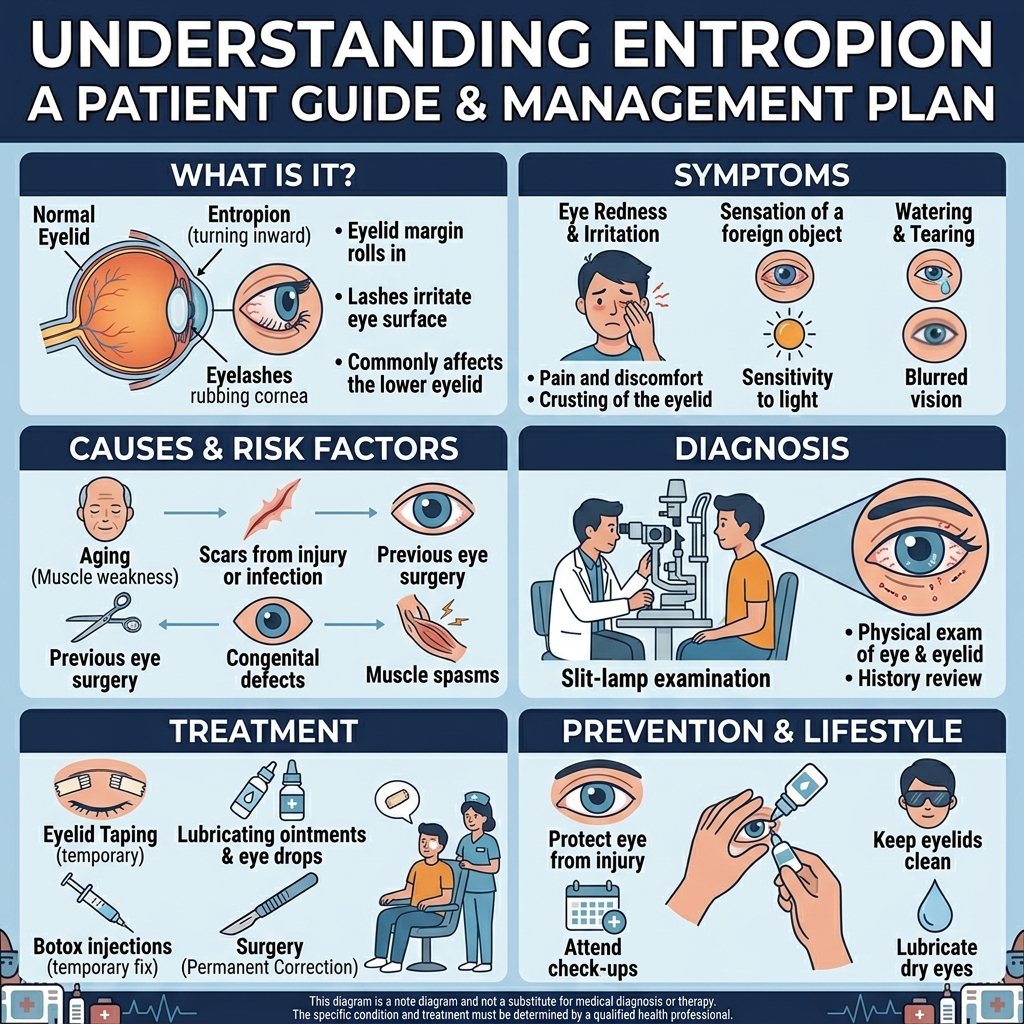
Entropion (pronounced en-TROH-pee-on) is a condition where your eyelid, most commonly the lower one, turns inward. This causes your eyelashes and the skin of your eyelid to rub against the surface of your eye, leading to irritation and discomfort. This inward turning can be constant or happen only when you blink forcefully or squeeze your eyelids shut. While lubricating eye drops and ointments can offer temporary relief, surgery is usually needed for a complete correction. If left untreated, entropion can damage the clear, protective outer layer of your eye (the cornea), cause eye infections, and potentially lead to vision loss.
Understanding the Condition
Entropion: Understanding an Inward-Turning Eyelid
Understanding the Condition
Common Symptoms
Foreign Body Sensation: A persistent feeling that something is in your eye, even when nothing is present.
Eye Redness: Noticeable redness of the eye surface or surrounding tissues.
Eye Irritation or Pain: Discomfort, itching, or a painful sensation in the affected eye.
Sensitivity to Light and Wind: Increased discomfort or pain when exposed to bright light (photophobia) or windy conditions.
Watery Eyes: Excessive tearing or watery discharge from the eye.
Mucous Discharge and Eyelid Crusting: Sticky discharge from the eye, especially noticeable upon waking, leading to crusting along the eyelid margins.
Seek Immediate Care: If you have entropion and experience rapidly increasing redness, increased sensitivity to light, or decreasing vision, seek immediate medical attention. These could be signs of corneal damage or infection.
Consultation Guide
Which Specialist to Meet
Before your appointment, prepare a list of your symptoms, including when they started and how often they occur. Be ready to discuss your full medical history, including any previous eye injuries, surgeries, or infections. Also, list all medications, supplements, and vitamins you currently take. Preparing a list of questions you have for the doctor can also be helpful.
Book a doctor visit near me
Artificial Tears: Over-the-counter lubricating eye drops can help reduce friction between the eyelashes and the eye surface, providing temporary relief from irritation and dryness. (Duration: As needed for temporary symptom relief.)
Lubricating Ointments: Thicker eye ointments, often applied at night, can provide a protective layer over the eye, reducing irritation, especially during sleep. (Duration: As needed, typically for temporary relief.)
Monitor for Recurrence: Be vigilant for any return of entropion symptoms. If you notice your eyelid beginning to turn inward again, contact your doctor promptly for reassessment.
Consultation Guide
Entropion (pronounced en-TROH-pee-on) is a condition where your eyelid, most commonly the lower one, turns inward. This causes your eyelashes and the skin of your eyelid to rub against the surface of your eye, leading to irritation and discomfort. This inward turning can be constant or happen only when you blink forcefully or squeeze your eyelids shut. While lubricating eye drops and ointments can offer temporary relief, surgery is usually needed for a complete correction. If left untreated, entropion can damage the clear, protective outer layer of your eye (the cornea), cause eye infections, and potentially lead to vision loss.
This test helps identify any scratches, abrasions, or damage to the cornea caused by the inward-turning eyelid. A yellow-orange dye is applied to the eye, which highlights any damaged areas when viewed under a blue light.
Skin Graft or Flap Surgery: If entropion is caused by scarring from chemical burns, trauma, or certain infections, a surgeon may need to transplant healthy skin from another part of the body to reshape the eyelid. (Duration: Typically a one-time procedure, with recovery taking several weeks.)
Diagnostic Procedures
Comprehensive Eye Exam
A thorough examination of your eyes and eyelids is usually sufficient to diagnose entropion. The doctor will assess the position of your eyelid, its muscle tone, and look for signs of irritation or damage to the eye's surface.
What to Expect
You will be asked to sit in an examination chair. The doctor will visually inspect your eyelids and eyes, often using a specialized microscope with a bright light called a slit lamp. They may gently pull on your eyelid or ask you to blink or close your eyes tightly to observe the eyelid's movement and position. This procedure is generally painless and quick.
Fluorescein Dye Test (Corneal Staining)
What to Expect
A drop of the fluorescein dye will be placed in your eye. You might feel a brief, mild stinging sensation, and your eye may water slightly. The doctor will then use the blue light of the slit lamp to examine your eye. Any areas of damage on the cornea will appear glowing green. The dye will naturally wash out with your tears and is harmless.
Treatment Options
For entropion, you should consult an ophthalmologist, which is a medical doctor specializing in eye care and surgery. An oculoplastic surgeon, a subspecialist in ophthalmology focusing on plastic and reconstructive surgery of the eyelids and surrounding areas, is particularly skilled in treating this condition. You might start with a general practitioner, who can refer you to the appropriate specialist.
Preparations Before Your Visit
Home Remedies & Temporary Relief
Eyelid Taping: Temporarily taping the lower eyelid outward can prevent it from turning in. This is a short-term solution often used before definitive treatment or for spastic entropion. (Duration: Short-term, usually days to weeks, as a temporary measure.)
Antibiotic Eye Drops or Ointments: If the cornea has been damaged or an infection is present or suspected due to the constant rubbing, your doctor may prescribe antibiotic eye medications. (Duration: As directed by your doctor, typically 7-10 days.)
Procedures (Non-Surgical/Minimally Invasive)
Botulinum Toxin Injections: Injections into the eyelid muscles can temporarily relax them, causing the eyelid to turn outward. This is often used for spastic entropion or when surgery is not immediately possible. (Duration: Effects last for approximately 3-6 months and may require repeat injections.)
Eyelid Sutures: Temporary sutures can be placed on the outside of the eyelid to pull it outward. This is a quick procedure, often performed in the office, suitable for temporary relief or for spastic entropion. (Duration: Sutures may stay in place for several weeks to months, sometimes dissolving on their own or removed by the doctor.)
Surgical Procedures
Eyelid Tightening Surgery: This is the most common and definitive treatment. The surgeon tightens the muscles and tendons of the eyelid, repositioning it to its correct outward position. This is typically an outpatient procedure. (Duration: Generally a one-time procedure for permanent correction, with recovery lasting a few weeks.)
Treat Eye Infections Promptly: Seek immediate medical evaluation and treatment for eye infections, especially if you have traveled to regions where infections like trachoma are common, to prevent potential scarring that can lead to entropion.
Protect Eyes from Injury: Wear appropriate protective eyewear during activities that pose a risk of eye trauma or exposure to chemicals to avoid injuries that could result in eyelid scarring.
Manage Eye Dryness and Irritation: Use lubricating eye drops regularly if you experience dry eyes. Avoiding excessive rubbing or squeezing of the eyelids can help prevent the onset or worsening of spastic entropion.
Regular Eye Examinations: Even after successful treatment, particularly surgery, regular follow-up appointments with your ophthalmologist are crucial to monitor your eyelid's position and overall eye health.
Adhere to Post-Operative Care: If you undergo surgery, carefully follow all instructions regarding wound care, medication use, and activity restrictions to ensure proper healing and minimize the risk of recurrence.
Prevention & Long-Term Wellbeing
Prevention
Tags & Topics
Notice an error or need an update?
Help us keep medical information accurate. Report incorrect info or suggest an edit.


