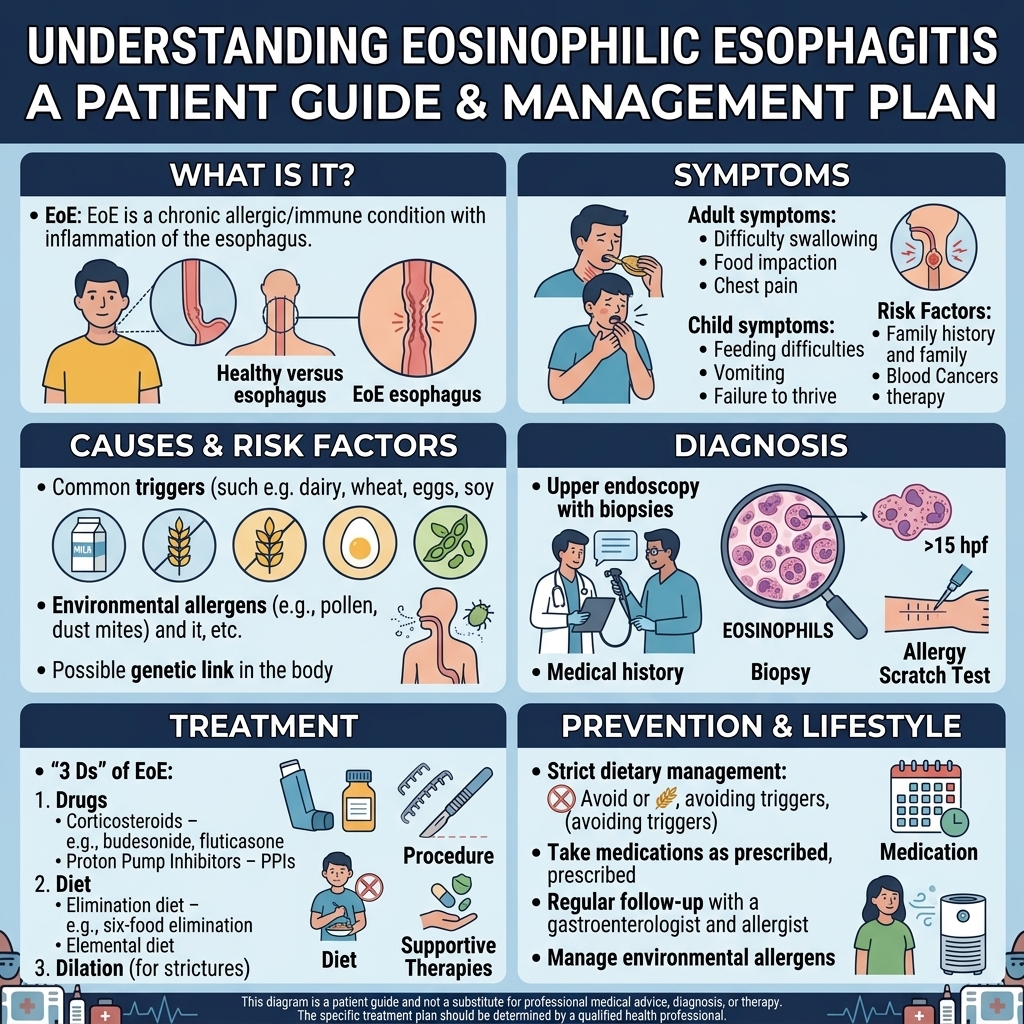
Eosinophilic Esophagitis (pronounced ee-oh-sin-oh-FILL-ik uh-sof-uh-JIE-tis), or EoE, is a chronic immune system disease where a specific type of white blood cell, called an eosinophil, builds up in the lining of the esophagus. The esophagus is the tube connecting your mouth to your stomach. This buildup happens as an allergic reaction to certain foods or environmental triggers and causes inflammation and injury to the esophageal tissue. Damaged esophageal tissue can lead to difficulties swallowing, food getting stuck, and other uncomfortable digestive symptoms. First identified in the early 1990s, EoE is now recognized as a significant cause of digestive illness, with research continually refining its diagnosis and treatment.
Understanding the Condition
Eosinophilic Esophagitis (EoE): A Comprehensive Guide
Understanding the Condition
Eosinophilic Esophagitis (pronounced ee-oh-sin-oh-FILL-ik uh-sof-uh-JIE-tis), or EoE, is a chronic immune system disease where a specific type of white blood cell, called an eosinophil, builds up in the lining of the esophagus. The esophagus is the tube connecting your mouth to your stomach. This buildup happens as an allergic reaction to certain foods or environmental triggers and causes inflammation and injury to the esophageal tissue. Damaged esophageal tissue can lead to difficulties swallowing, food getting stuck, and other uncomfortable digestive symptoms. First identified in the early 1990s, EoE is now recognized as a significant cause of digestive illness, with research continually refining its diagnosis and treatment.
Common Symptoms
Difficulty Swallowing (Dysphagia): A feeling that food is hard to push down or gets stuck on the way to the stomach.
Food Getting Stuck (Impaction): Food becomes completely lodged in the esophagus after swallowing, sometimes requiring medical help to remove.
Lack of Response to Acid Reflux Medication: Symptoms persist despite treatment with standard medications for acid reflux (GERD).
Failure to Thrive (Children): Poor growth, malnutrition, or unexplained weight loss, especially in younger patients.
Consultation Guide
Which Specialist to Meet
You should consult a gastroenterologist (a doctor specializing in digestive system diseases) and potentially an allergist/immunologist (a doctor specializing in allergies and immune system conditions) to help identify triggers.
Preparations Before Your Visit
Before your visit, keep a detailed diary of your symptoms, including when they occur, what you were eating or doing, and their severity. List all medications, supplements, and vitamins you are currently taking. Be prepared to discuss your diet, any known allergies, and your family's medical history. Bring any previous medical records or test results that might be relevant.
Book a doctor visit near me
Elimination Diets: This involves systematically removing common food allergens (like milk, wheat, soy, eggs, nuts, and seafood) from your diet to identify specific triggers. Foods are then reintroduced one by one to pinpoint which ones cause symptoms. This process helps reduce the allergic reaction in your esophagus. (Duration: Each elimination phase typically lasts several weeks to months, followed by reintroduction periods. The overall process can take several months or longer to identify all triggers.)
Elemental Diet: For severe cases, a highly restrictive diet consisting only of special liquid formulas that contain pre-digested nutrients (amino acids). This completely removes all potential food allergens from the diet. (Duration: Typically used for a short period, such as weeks, to achieve rapid symptom control and healing of the esophagus.)
Swallowed Topical Steroids: These medications are designed to reduce inflammation directly in the esophagus by coating its lining. They are usually swallowed as a liquid or dissolved tablet, rather than inhaled, to ensure they reach the esophagus. (Duration: Often requires long-term, ongoing use to manage symptoms and prevent inflammation recurrence.)
Proton Pump Inhibitors (PPIs): These medications reduce the amount of acid produced in the stomach. While primarily used for acid reflux, a subset of EoE patients respond to PPIs, which can help reduce inflammation in the esophagus. (Duration: Typically used long-term if effective in managing EoE symptoms and inflammation.)
Adherence to Treatment Plan: Consistently follow your prescribed medication regimen and dietary restrictions to keep inflammation under control and prevent symptoms from worsening or leading to complications like scarring.
Regular Medical Follow-ups: Schedule regular appointments with your gastroenterologist and allergist to monitor your symptoms, assess treatment effectiveness, and adjust your plan as needed. This often includes periodic repeat endoscopies to check for inflammation, even if you feel well, as inflammation can sometimes be 'silent'.
Awareness of Worsening Symptoms: Be aware of any changes in your swallowing, increased pain, or episodes of food impaction. Promptly report these to your doctor, as they may indicate a need for treatment adjustment or additional intervention.
Lifestyle Adjustments: While not a direct cause, stress can sometimes exacerbate digestive symptoms. Practicing stress-reduction techniques and maintaining a healthy lifestyle can contribute to overall wellbeing.
Consultation Guide
Esophageal Dilation: If chronic inflammation causes the esophagus to narrow or scar, this procedure is performed during an endoscopy. A small balloon or dilator is used to gently stretch the narrowed areas, making it easier to swallow and preventing food from getting stuck. (Duration: Performed as needed, typically during an endoscopy, when significant narrowing causes severe swallowing difficulties. May need to be repeated if narrowing recurs.)
Diagnostic Procedures
Upper Endoscopy with Biopsy
An upper endoscopy is a procedure to visually examine your esophagus, stomach, and the beginning of your small intestine. A long, thin, flexible tube with a camera on its end (an endoscope) is gently guided down your throat. During the procedure, tiny tissue samples (biopsies) are taken from the esophagus to be examined under a microscope for the presence and number of eosinophils. This is the primary method for diagnosing EoE and assessing the severity of inflammation.
What to Expect
You will typically receive a sedative to help you relax and feel comfortable, or sometimes general anesthesia. The doctor will pass the endoscope down your throat while you are lying on your side. You won't feel any pain or discomfort from the biopsies. The procedure usually takes 15-30 minutes. Afterward, you will recover from the sedation for a short period and will need someone to drive you home, as you might feel drowsy. You may experience a mild sore throat for a day or two.
Allergy skin tests help identify specific substances (allergens) that might be triggering your allergic reaction. Tiny amounts of suspected allergens (like food proteins or pollen) are applied to your skin, typically on your arm or back, to observe for a reaction.
What to Expect
During the test, a healthcare professional will lightly prick or scratch your skin with a tiny needle containing different allergen extracts. This is usually not painful, but you might feel minor discomfort. Your skin will be monitored for signs of a reaction, such as a raised bump or redness, which usually appears within 15-20 minutes. If skin tests are not suitable (e.g., due to severe skin conditions or certain medications), a blood test (called an in vitro immunoglobulin E antibody test) may be used instead to check for specific allergic antibodies.
Treatment Options
Chest Pain: Pain often felt in the center of the chest, which typically does not improve with antacids (medications for heartburn).
Regurgitation: Undigested food coming back up from the esophagus.
Feeding Difficulties (Infants): Babies may struggle with feeding, show a refusal to eat, or experience poor weight gain.
Eating Difficulties (Children): Children may have trouble eating, experience stomach pain, or show slow growth.
Abdominal Pain: Discomfort or pain in the stomach area.
Medications
Biologic Therapies: These are newer injectable medications that target specific parts of the immune system responsible for the allergic reaction and inflammation in EoE. They are often reserved for patients who do not respond to other treatments. (Duration: Ongoing treatment, usually administered every few weeks, as determined by your doctor.)
Prevention & Long-Term Wellbeing
Dietary Therapies
Prevention and Long-Term Management
Dietary Vigilance and Nutritional Support: Work closely with a dietitian to ensure your elimination diet is nutritionally complete and sustainable. Continuously monitor your reaction to foods and adapt your diet as advised by your medical team.
Tags & Topics
Notice an error or need an update?
Help us keep medical information accurate. Report incorrect info or suggest an edit.


