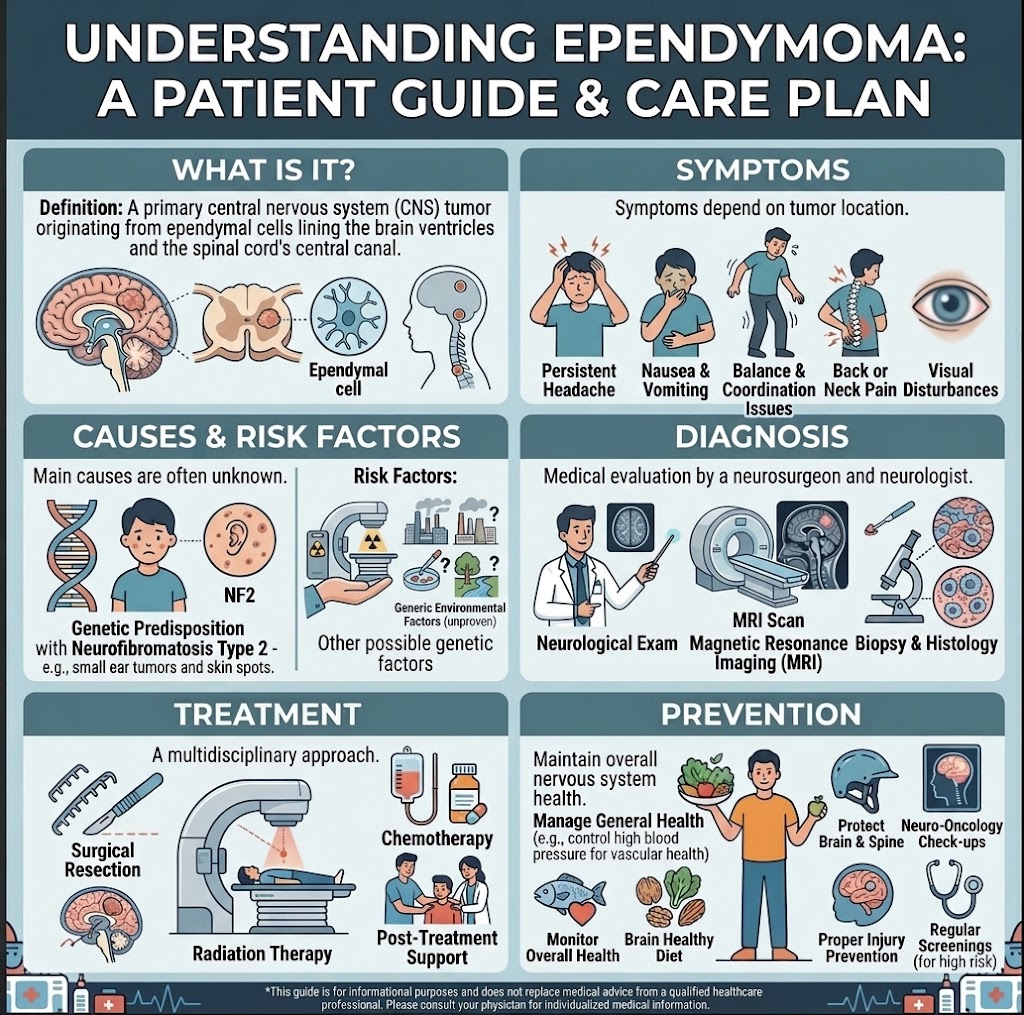
Ependymoma is a type of tumor that begins in the brain or spinal cord. These tumors develop from specialized cells called ependymal cells, which line the fluid-filled spaces of the brain (ventricles) and the central canal of the spinal cord. Ependymomas can occur at any age but are more commonly diagnosed in young children. They can grow slowly or more aggressively, and their location in the brain or spinal cord significantly determines the symptoms and treatment approach.
Understanding the Condition
Ependymoma: Understanding a Brain and Spinal Cord Tumor
Understanding the Condition
Ependymoma is a type of tumor that begins in the brain or spinal cord. These tumors develop from specialized cells called ependymal cells, which line the fluid-filled spaces of the brain (ventricles) and the central canal of the spinal cord. Ependymomas can occur at any age but are more commonly diagnosed in young children. They can grow slowly or more aggressively, and their location in the brain or spinal cord significantly determines the symptoms and treatment approach.
Common Symptoms
Headaches: Persistent headaches, often worse in the morning, which can be a sign of increased pressure in the head, especially in children with brain tumors.
Nausea and Vomiting: Frequent feelings of sickness and throwing up, often accompanying headaches, particularly with tumors in the brain.
Balance and Coordination Problems: Difficulty walking, stumbling, or issues with balance and fine motor skills, especially if the tumor affects the cerebellum (back of the brain).
Vision Problems: Blurred vision, double vision, or involuntary eye movements, which can result from pressure on nerves affecting sight.
Weakness or Numbness: Loss of strength, sensation, or tingling in the arms, legs, or other body parts, more common with tumors affecting the spinal cord.
Back Pain: Persistent, unexplained back pain, especially radiating to the limbs, often indicative of spinal cord tumors.
Bladder and Bowel Problems: Difficulty controlling urination or bowel movements, which can occur when spinal cord tumors affect nerve function.
Irritability and Behavioral Changes: In children, unexplained irritability, changes in mood, personality, or a decline in school performance.
Seizures: Though less common, seizures can occur if the tumor irritates or affects certain areas of the brain.
Before your visit, it's helpful to: write down all your symptoms, including when they started and how often they occur; note any other medical conditions you have and all medications (including over-the-counter drugs, vitamins, and supplements) you are taking; prepare a list of questions for your doctor; and consider bringing a family member or friend to help remember information and take notes.
Book a doctor visit near me
Supportive Care and Rehabilitation: A range of therapies aimed at managing symptoms, recovering lost functions, and improving quality of life. This can include physical therapy for mobility, occupational therapy for daily tasks, and speech therapy for communication issues, as well as pain management and nausea relief as prescribed by a doctor. (Duration: Can be ongoing for weeks, months, or even longer, depending on the individual's needs and recovery progress.)
Consultation Guide
Increased Head Circumference: In infants, an abnormally large head circumference due to the buildup of cerebrospinal fluid (hydrocephalus), caused by tumor blockage.
Consultation Guide
Which Specialist to Meet
No Known Prevention Methods: There are currently no known methods to prevent ependymoma. Research continues to explore potential risk factors and genetic predispositions.
Diagnostic Procedures
Neurological Examination
A doctor will assess your vision, hearing, balance, coordination, strength, and reflexes to check brain, spinal cord, and nerve function.
What to Expect
The doctor will ask you to perform simple tasks like walking in a straight line, touching your finger to your nose, or following a light with your eyes. They will also use a small hammer to check your reflexes and may test your sensation with a light touch or pinprick.
Magnetic Resonance Imaging (MRI)
An MRI uses powerful magnets and radio waves to create detailed images of the brain and spinal cord. It's the most common imaging test for ependymoma and often involves an injection of contrast dye to highlight the tumor.
What to Expect
You will lie still on a narrow table that slides into a large, tube-like scanner. The machine makes loud knocking or buzzing noises, so you might be offered earplugs or headphones. If contrast dye is used, a healthcare professional will inject it into a vein. The procedure typically takes 30 to 60 minutes.
Computed Tomography (CT) Scan
A CT scan uses X-rays to produce cross-sectional images of the brain and spinal cord. While MRI is generally preferred, CT scans may be used in emergencies or if MRI is not possible.
What to Expect
You will lie on a table that slides into a large, donut-shaped machine. The table moves through the scanner as it takes images. Like MRI, contrast dye may be used. The scan is usually quick, lasting 5 to 15 minutes.
A biopsy involves surgically removing a small sample of the tumor tissue for examination under a microscope. This is crucial for confirming the diagnosis and determining the tumor's grade (how fast it might grow).
What to Expect
What to Expect
You will lie on your side with your knees curled to your chest or sit leaning forward. The doctor will clean and numb an area in your lower back. A thin needle is then inserted between two vertebrae to collect a small amount of CSF. You might feel some pressure or brief discomfort. Afterward, you will typically be asked to lie flat for a few hours to help prevent a headache.
Treatment Options
You will likely see a team of specialists including a neurologist (brain and nerve specialist), neurosurgeon (brain and spinal cord surgeon), radiation oncologist (cancer treatment with radiation), and potentially a neuro-oncologist or pediatric oncologist (cancer specialist for children).
Preparations Before Your Visit
This procedure is performed under local or general anesthesia. For some biopsies, a small incision is made, and a tiny hole is drilled into the skull to allow a thin needle to reach the tumor, guided by imaging. In other cases, a biopsy is performed during initial tumor removal surgery. You may need to stay in the hospital for a day or two afterward for monitoring.
Spinal Tap (Lumbar Puncture)
This procedure collects a sample of cerebrospinal fluid (CSF), the fluid that surrounds the brain and spinal cord. The CSF is then examined for tumor cells, especially if the ependymoma is high-grade or located where cells could spread.
Surgical Procedures
Surgery (Resection): The primary treatment for ependymoma is surgery to remove as much of the tumor as safely possible. A neurosurgeon carefully operates to remove the tumor while trying to preserve vital brain or spinal cord functions. The extent of tumor removal is a key factor in the long-term outlook. (Duration: Typically a single procedure, with hospital recovery lasting several days to a week or more, followed by a longer rehabilitation period.)
Therapies
Radiation Therapy: Uses high-energy beams, such as X-rays or protons, to kill remaining tumor cells after surgery or to treat tumors that cannot be fully removed. It is also often used for high-grade ependymomas. Advanced techniques allow precise targeting to minimize damage to healthy tissue. (Duration: Usually delivered daily, five days a week, for a period of several weeks (e.g., 5-7 weeks).)
Chemotherapy: Uses specific drugs, given orally or intravenously, to kill fast-growing cells, including tumor cells. While less effective for ependymoma compared to some other cancers, it may be used in specific situations, such as for very young children, recurrent tumors, or in clinical trials. (Duration: Administered in cycles, typically over several months, with breaks between cycles.)
Regular Follow-up Appointments: Scheduled visits with your oncology team (neurosurgeon, neuro-oncologist, radiation oncologist) are crucial to monitor for any signs of tumor recurrence, assess long-term side effects of treatment, and manage overall health.
Routine Imaging Scans: Regular MRI scans of the brain and/or spinal cord are performed to check for tumor regrowth. These scans are typically frequent in the initial years after treatment and then become less frequent over time.
Comprehensive Rehabilitation: Ongoing physical therapy, occupational therapy, and speech therapy may be necessary to help regain or maintain strength, coordination, cognitive function, and daily living skills. Psychological counseling can also address emotional challenges.
Advocacy and Education: Learning about ependymoma and its treatments empowers you to actively participate in healthcare decisions and advocate for the best possible care for yourself or your child.
Prevention & Long-Term Wellbeing
Long-Term Monitoring
Lifestyle and Support
Healthy Lifestyle Practices: Maintaining a balanced diet, engaging in regular physical activity as tolerated, ensuring adequate sleep, and practicing stress-reduction techniques can support overall well-being and recovery.
Connecting with Support Groups: Joining support groups for individuals and families affected by brain or spinal cord tumors can provide emotional support, shared experiences, and practical advice.
Prevention
Tags & Topics
Notice an error or need an update?
Help us keep medical information accurate. Report incorrect info or suggest an edit.


