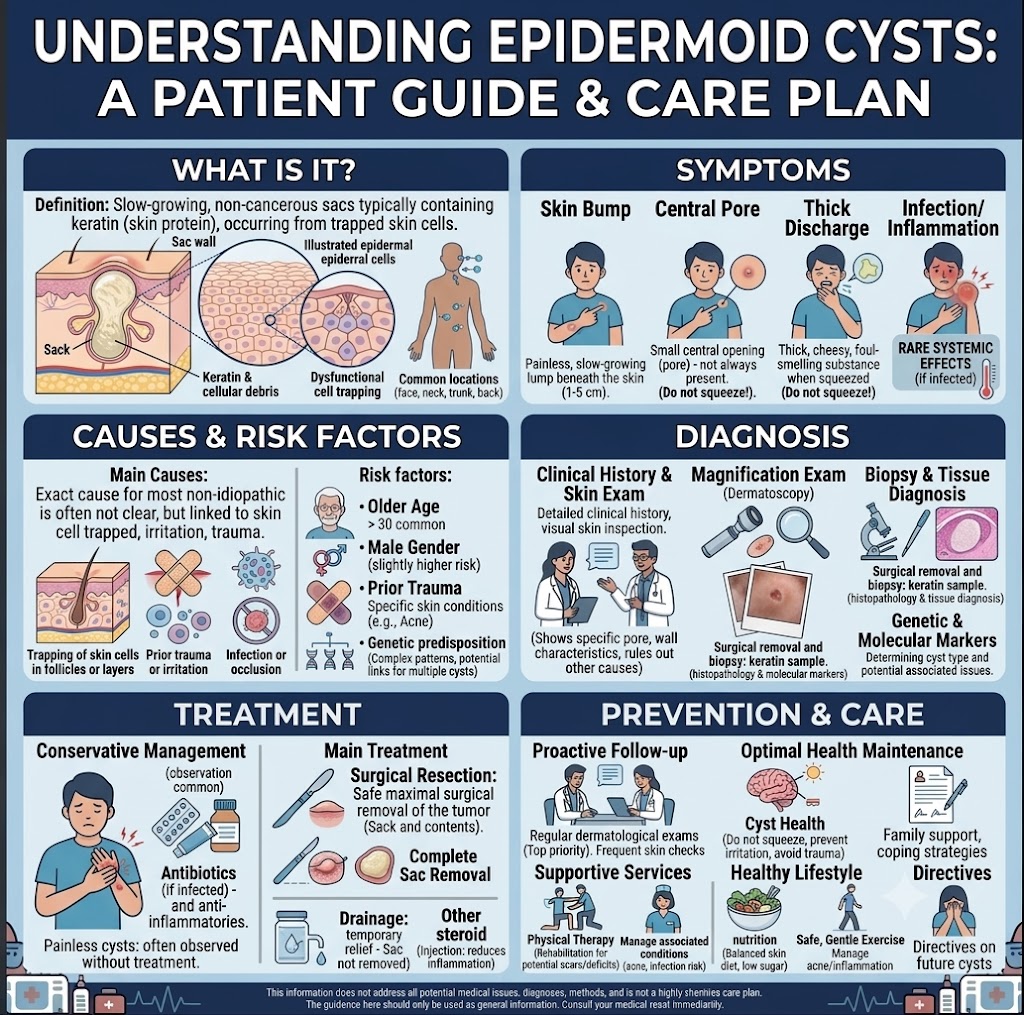
Epidermoid cysts are common, non-cancerous small bumps that grow beneath the skin, frequently appearing on the face, neck, and upper body. They form when surface skin cells, which normally shed, instead move deeper into the skin. These trapped cells multiply and create a sac, filling it with a thick, cheesy protein called keratin. Epidermoid cysts are typically slow-growing and often painless, usually requiring no treatment unless they become bothersome, infected, or rupture.
Understanding the Condition
Epidermoid Cysts: Understanding Skin Bumps
Understanding the Condition
Common Symptoms
Small, Round Bump: A noticeable, firm lump beneath the skin, most commonly found on the face, neck, or torso.
Central Opening: A tiny dark spot or 'blackhead' that may plug the central pore of the cyst.
Cheesy Discharge: A thick, yellowish, sometimes foul-smelling substance that can leak from the cyst if squeezed or ruptured.
Inflammation or Infection: The bump may become red, swollen, tender, or painful, indicating irritation or infection.
Consultation Guide
Which Specialist to Meet
Before your appointment, note down all your symptoms, including when they started and how they've changed. Prepare a list of questions for your doctor. Inform them about any medications you're taking, your general health history, and any previous skin issues. Avoid applying makeup or lotions to the affected area before your visit.
Book a doctor visit near me
A healthcare professional will visually inspect the skin bump and feel it (palpate) to assess its size, texture, and mobility. They will also look for characteristic features like a central pore and inquire about any symptoms you're experiencing.
Home Remedies and Symptom Management
Warm Compresses: Applying a warm, moist cloth to the cyst can help reduce inflammation and encourage drainage if the cyst has a small opening. Avoid squeezing or picking. (Duration: 15-20 minutes, several times a day, until symptoms improve.)
Medical Interventions
Diagnostic Procedures
Begin by consulting your primary care doctor, who can often diagnose and manage epidermoid cysts. They may refer you to a dermatologist, a skin specialist, especially if the cyst is large, persistent, infected, or if there's any concern about its nature.
Preparations Before Your Visit
What to Expect
The doctor will carefully look at the bump and the surrounding skin. They might gently press on it to check for tenderness or fluid. This is usually quick and painless. Often, the distinctive appearance of an epidermoid cyst is enough for a diagnosis.
In cases where the diagnosis isn't clear, or if there are concerns about skin cancer, a small sample of the cyst tissue may be removed for microscopic examination by a pathologist. This is not routinely needed for typical epidermoid cysts.
What to Expect
You will receive a local anesthetic injection to numb the area. The doctor will then remove a small piece of the cyst, either by shaving it off, using a small punch tool, or cutting out a small section. The site will be bandaged, and any stitches will be removed later if necessary. You might feel a slight pressure or tugging, but no pain. The sample is then sent to a lab for analysis, and results typically take several days.
Treatment Options
Epidermoid cysts are common, non-cancerous small bumps that grow beneath the skin, frequently appearing on the face, neck, and upper body. They form when surface skin cells, which normally shed, instead move deeper into the skin. These trapped cells multiply and create a sac, filling it with a thick, cheesy protein called keratin. Epidermoid cysts are typically slow-growing and often painless, usually requiring no treatment unless they become bothersome, infected, or rupture.
Steroid Injection: For inflamed but not infected cysts, an anti-inflammatory medication can be injected directly into the cyst to reduce swelling and tenderness. (Duration: A single injection, with effects usually noticeable within days. Repeat injections are rarely needed.)
Antibiotics: If the cyst becomes infected, oral antibiotics may be prescribed to clear the bacterial infection before further treatment. (Duration: Typically 7-14 days, as directed by your doctor.)
Surgical Procedures
Prevention & Long-Term Wellbeing
Incision and Drainage: If a cyst is acutely infected, ruptured, or very painful, the doctor may make a small cut in the cyst and drain its contents. This provides immediate relief but doesn't remove the cyst wall, meaning the cyst might return. (Duration: A quick office procedure, with recovery taking a few days to weeks depending on the size and infection.)
Surgical Excision: This involves completely removing the entire cyst, including its sac, to prevent recurrence. It's often performed once inflammation has subsided. (Duration: An outpatient procedure, usually taking less than an hour. Stitches are typically removed in 1-2 weeks, with full healing taking several weeks.)
Prevention
Avoid Picking or Squeezing: Do not try to pop or squeeze epidermoid cysts, as this can lead to irritation, inflammation, infection, or rupture, making them more difficult to treat.
Gentle Skin Care: Maintain good skin hygiene, but avoid harsh scrubbing or abrasive products on areas prone to cysts. Gentle cleansing can help prevent blockages.
Protect Injured Skin: Minimize skin irritation and injury, as these can sometimes trigger cyst formation.
Long-Term Monitoring
Self-Monitoring: Regularly check your skin for any new bumps or changes in existing ones. Note any increase in size, pain, redness, or discharge.
Seek Medical Advice for Changes: If a cyst rapidly grows, breaks open, becomes painful or infected, or appears in an unusual location, consult a healthcare professional. Also seek advice if its appearance is a concern or if it's repeatedly irritated.
Genetic Counseling (if applicable): Individuals with a family history of Gardner syndrome or similar inherited conditions should discuss regular screenings and management strategies with a genetic counselor or specialist.
Tags & Topics
Notice an error or need an update?
Help us keep medical information accurate. Report incorrect info or suggest an edit.


