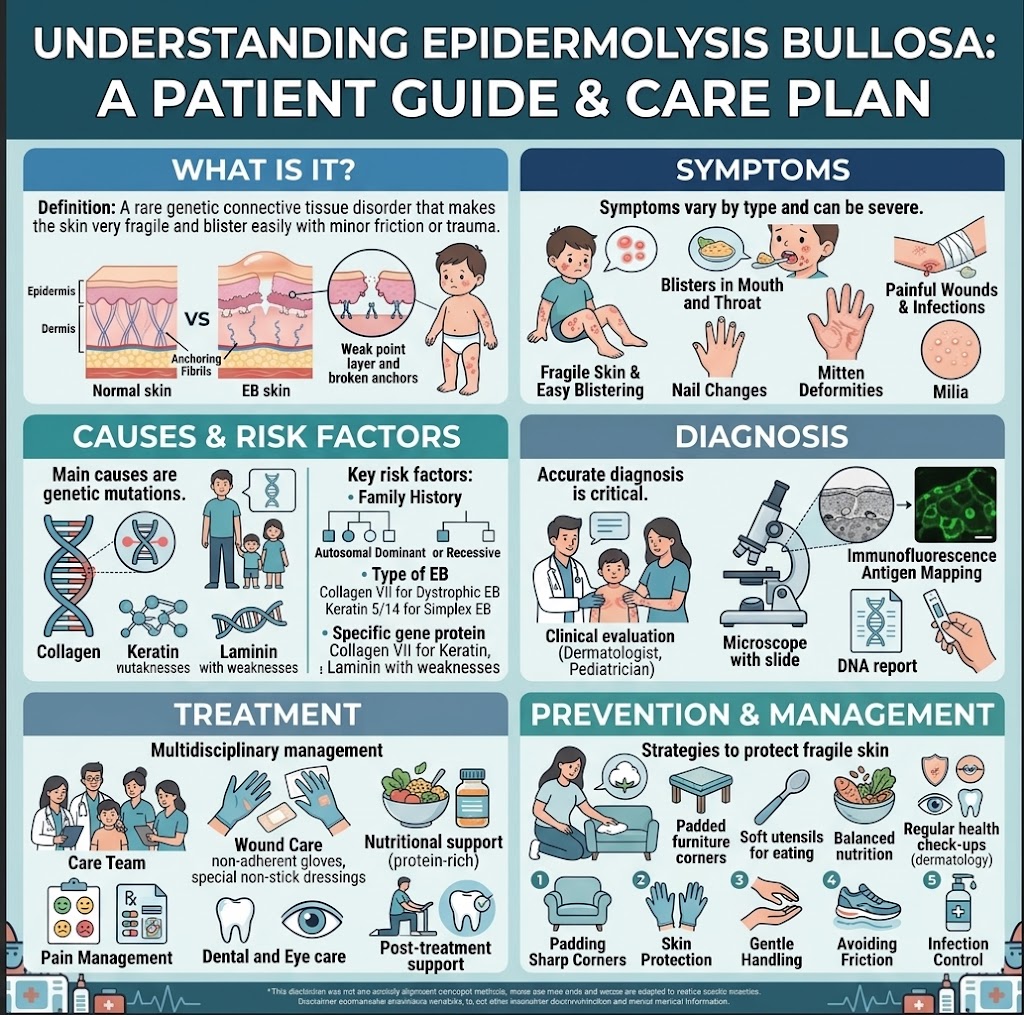
Epidermolysis bullosa (ep-ih-dur-MOL-uh-sis buhl-LOE-sah), often called EB, is a rare inherited condition that makes the skin extremely fragile, causing it to blister easily. These blisters can form from even minor friction, bumps, heat, or scratching. In severe cases, blistering can occur inside the body, affecting linings like those in the mouth, throat, or stomach. EB is caused by a genetic flaw that affects the proteins responsible for holding the skin layers together. When these proteins are missing or don't work correctly, the skin layers separate easily. While there is no cure, mild forms may improve over time. Treatment focuses on managing blisters, preventing new ones, and addressing complications. EB usually appears in infants or young children, though some individuals may not show symptoms until their teenage or young adult years. The specific type of EB depends on which skin layers are affected and defines the severity and symptoms.
Understanding the Condition
Epidermolysis Bullosa: Understanding Fragile Skin
Understanding the Condition
Epidermolysis bullosa (ep-ih-dur-MOL-uh-sis buhl-LOE-sah), often called EB, is a rare inherited condition that makes the skin extremely fragile, causing it to blister easily. These blisters can form from even minor friction, bumps, heat, or scratching. In severe cases, blistering can occur inside the body, affecting linings like those in the mouth, throat, or stomach. EB is caused by a genetic flaw that affects the proteins responsible for holding the skin layers together. When these proteins are missing or don't work correctly, the skin layers separate easily. While there is no cure, mild forms may improve over time. Treatment focuses on managing blisters, preventing new ones, and addressing complications. EB usually appears in infants or young children, though some individuals may not show symptoms until their teenage or young adult years. The specific type of EB depends on which skin layers are affected and defines the severity and symptoms.
Common Symptoms
Fragile, Blistering Skin: Skin that easily forms blisters, especially on the hands and feet, in response to minor touch, heat, or rubbing.
Nail Changes: Fingernails and toenails may appear unusually thick or may not form properly.
Internal Blisters: Blisters can develop inside the mouth and throat, leading to pain and difficulty swallowing.
Scalp Issues and Hair Loss: Blistering on the scalp can occur, sometimes leading to scarring and permanent hair loss.
Thin-Looking Skin: Affected skin may appear abnormally thin or delicate.
Tiny Bumps (Milia): Small, white, pimple-like bumps called milia may develop on the skin.
Dental Problems: Individuals may experience issues such as frequent tooth decay or other dental health concerns.
Difficulty Swallowing: Blisters in the throat or esophagus can make eating and drinking painful and challenging.
Itchy or Painful Skin: The skin can be chronically itchy or painful due to recurring blisters and damage.
Consultation Guide
Which Specialist to Meet
You should consult with a dermatologist, a doctor specializing in skin conditions. For children, a pediatrician may also be involved. A geneticist can provide insights into the inherited nature of the condition, and a wound care specialist or physical therapist may be part of the care team for managing symptoms and complications.
Preparations Before Your Visit
Before your visit, make a list of all your symptoms, including when they started and what seems to trigger them. Gather information about any family history of blistering skin conditions. Prepare a list of questions you have for the doctor, and be ready to discuss your diet, daily activities, and any medications or home remedies you are currently using.
Book a doctor visit near me
Consultation Guide
Genetic testing examines your DNA to identify specific changes (mutations) in genes that are known to cause Epidermolysis Bullosa. This test can confirm the diagnosis, determine the specific type of EB, and help understand inheritance patterns within a family.
Prevent Scratching: Regularly trim fingernails to prevent accidental scratching that can cause new blisters or worsen existing ones.
Encourage Safe Activity: Promote activities that minimize skin injury, such as swimming. For outdoor play, long sleeves and pants can offer protection for those with milder forms.
Cover Hard Surfaces: Pad car seats, bath tubs, and other hard surfaces with soft materials like sheepskin, foam, or thick towels, with a soft cotton or silk top layer.
Long-Term Monitoring and Health
Regular Medical Check-ups: Maintain regular visits with your healthcare team to monitor skin health, overall nutrition, and development, and to address any emerging complications promptly.
Skin Cancer Screening: Individuals with certain types of EB, particularly teenagers and adults, have an increased risk of specific skin cancers. Regular skin checks by a dermatologist are crucial for early detection.
Nutritional Assessment: Ongoing monitoring of nutritional status is vital, especially if swallowing is difficult. Addressing potential malnutrition and iron deficiency (anemia) helps with wound healing and overall health.
Proactive Dental Care: Consistent dental check-ups and specialized oral hygiene strategies are important to manage tooth decay and maintain gum health, which can be challenging with internal blistering.
Diagnostic Procedures
What to Expect
For this test, a small sample of your blood or a swab from inside your cheek will be collected. These samples are then sent to a laboratory for analysis. The procedure itself is minimally invasive with very little physical risk. If done during pregnancy (prenatal testing), a sample of amniotic fluid or placental tissue may be collected, which carries a small risk of pregnancy loss. Results typically take several weeks and will be discussed with you by your doctor or a genetic counselor.
A skin biopsy involves taking a small sample of skin tissue to examine under a microscope. This helps identify the exact layer of skin where blistering is occurring and can reveal specific features consistent with Epidermolysis Bullosa.
What to Expect
Before the biopsy, the skin area will be cleaned, and a local anesthetic will be injected to numb the area, so you will feel little to no pain during the procedure. There are a few types of biopsies: a 'shave biopsy' scrapes the surface, a 'punch biopsy' removes a deeper, cylindrical piece of skin, and an 'excisional biopsy' removes an entire lump or affected area with some surrounding healthy skin. Depending on the type and size, stitches may be needed to close the wound after the sample is taken. The sample is then sent to a lab for detailed analysis by a pathologist. You may feel some soreness or mild discomfort at the biopsy site for a few days, and specific wound care instructions will be provided.
Treatment Options
Home Care and Supportive Management
Blister Care: Carefully drain new blisters to prevent them from spreading, and apply non-stick dressings to protect the fragile skin. This often involves specialized products to minimize friction. (Duration: Ongoing, daily)
Pain Management: Use over-the-counter pain relievers or prescribed medications to manage discomfort from blisters and wounds. (Duration: As needed)
Infection Control: Topical antiseptic creams or oral medications (such as antibiotics) are used to treat or prevent bacterial infections that can develop in open blisters and wounds. (Duration: As prescribed, typically 7-14 days for active infections)
Wound Care Specialists: Working with specialists to learn advanced techniques for dressing changes, wound cleaning, and skin protection to promote healing and prevent further injury. (Duration: Ongoing, as needed)
Physical and Occupational Therapy: Exercises and therapies to maintain joint flexibility, prevent joint stiffening or contractures (especially in severe forms), and adapt daily activities. (Duration: Ongoing, as needed)
Surgical Procedures
Surgery for Complications: Surgical procedures may be necessary to address severe complications like the fusion of fingers or toes (requiring separation), placement of feeding tubes for severe swallowing difficulties, or dental interventions for extensive tooth decay. (Duration: One-time or repeated, followed by recovery and rehabilitation)
Bone Marrow Transplant (Stem Cell Transplant): In some severe cases, typically dystrophic EB, a bone marrow transplant may be considered to introduce healthy blood-forming stem cells. This procedure aims to replace faulty cells with those capable of producing the necessary skin-binding proteins. It's a complex and high-risk treatment usually reserved for the most severe forms and involves extensive preparation, including chemotherapy. (Duration: Requires significant hospital stay (weeks to months), followed by long-term recovery and monitoring)
Gene Therapy: Gene therapy aims to correct or replace the faulty gene responsible for EB. Currently, this is largely an experimental treatment available primarily through clinical trials, focusing on delivering healthy genetic material to skin cells. (Duration: Varies based on clinical trial protocol, long-term monitoring required)
Prevention & Long-Term Wellbeing
Nutritional Support: Dietary adjustments, soft foods, or nutritional supplements may be needed to ensure adequate calorie and nutrient intake, especially if mouth blisters make eating difficult. This helps prevent malnutrition and anemia. (Duration: Ongoing, as advised by a dietitian)
Medical and Therapeutic Interventions
Prevention of Blisters and Infections
Gentle Handling: Always handle individuals with EB with extreme care. When lifting, support the body evenly, avoiding any friction or pressure on vulnerable skin areas.
Special Diaper Care: For infants, remove elastic bands from diapers, use non-stick dressings to line the diaper, and apply a thick layer of protective paste to the skin to prevent friction and moisture damage.
Maintain a Cool Environment: Keep living spaces cool and maintain a stable temperature to minimize sweating and heat, which can trigger blisters.
Keep Skin Moist: Gently apply moisturizer to the skin as needed throughout the day to keep it supple and reduce dryness, which can contribute to fragility.
Soft, Protective Clothing: Dress in soft, loose-fitting clothes. Remove labels, wear clothing with seams on the outside, and consider sewing soft padding into clothing at pressure points like elbows and knees.
Tags & Topics
Notice an error or need an update?
Help us keep medical information accurate. Report incorrect info or suggest an edit.


