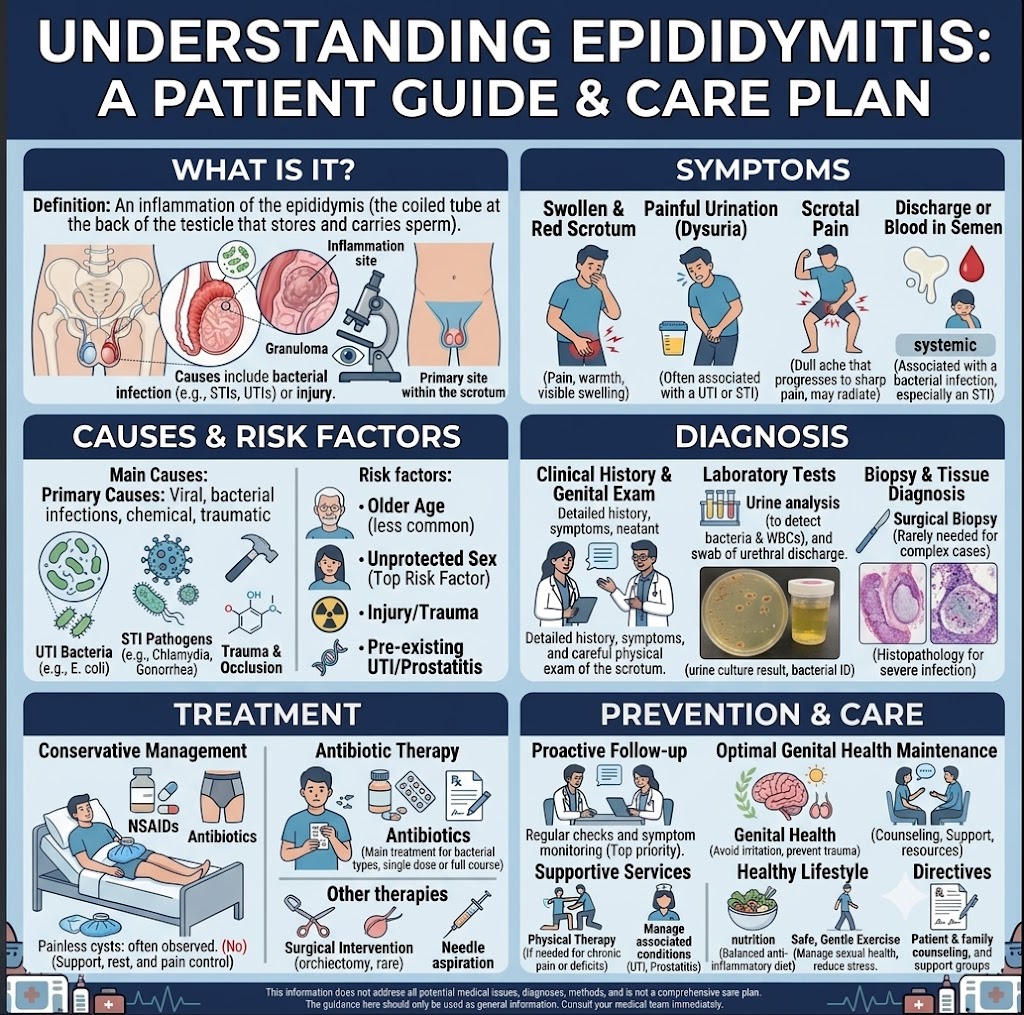
Epididymitis is the swelling and inflammation of the epididymis, a coiled tube located at the back of each testicle. This tube plays a crucial role in storing and transporting sperm. While it can affect males of any age, it is most frequently caused by bacterial infections, including those spread through sexual contact (STIs). In some cases, the testicle itself may also become inflamed, a condition known as epididymo-orchitis. Treatment typically involves antibiotics and measures to ease discomfort.
Understanding the Condition
Common Symptoms
Chronic Symptoms: If symptoms last longer than six weeks or keep coming back frequently, the condition is considered chronic. Chronic symptoms may develop slowly, and sometimes the underlying cause is difficult to pinpoint.
Consultation Guide
Which Specialist to Meet
Initially, you should see your general practitioner (family doctor). If needed, they may refer you to a urologist, a doctor specializing in conditions of the urinary tract and male reproductive system.
Preparations Before Your Visit
Before your appointment, make a list of your symptoms, including when they started, how severe they are, and anything that makes them better or worse. Write down all medications, supplements, and vitamins you take. Be ready to discuss your medical history, including any previous infections or sexual history. Prepare a list of questions to ask your doctor.
Book a doctor visit near me
Rest and Support: Resting and using an athletic supporter or tight-fitting underwear to elevate the scrotum can help reduce discomfort and swelling. (Duration: Continue until symptoms improve, often several days to weeks.)
Cold Packs: Applying cold packs to the affected area for 15-20 minutes at a time, several times a day, can help reduce pain and inflammation. (Duration: As needed for discomfort during the acute phase.)
Antibiotics: If epididymitis is caused by a bacterial infection, your doctor will prescribe antibiotics. It is crucial to complete the entire course of medication, even if symptoms improve. (Duration: Typically 10 days to 4 weeks, depending on the type of infection and its severity. For sexually transmitted infections, treatment for sexual partners may also be necessary.)
Consultation Guide
Epididymitis is the swelling and inflammation of the epididymis, a coiled tube located at the back of each testicle. This tube plays a crucial role in storing and transporting sperm. While it can affect males of any age, it is most frequently caused by bacterial infections, including those spread through sexual contact (STIs). In some cases, the testicle itself may also become inflamed, a condition known as epididymo-orchitis. Treatment typically involves antibiotics and measures to ease discomfort.
Practice Safer Sex: To prevent sexually transmitted infections (STIs) that can cause epididymitis, always use condoms during sexual activity and consider regular STI screenings if you have multiple partners or a new partner.
Long-Term Monitoring and Risk Factor Management
Manage Underlying Health Conditions: If you have conditions like an enlarged prostate, a weakened immune system, or anatomical differences in your urinary tract, work with your doctor to manage these conditions effectively to reduce your risk of epididymitis.
Regular Medical Check-ups: If you have recurrent epididymitis or ongoing risk factors, regular visits to your healthcare provider can help monitor your condition and explore additional preventative measures.
Diagnostic Procedures
Epididymitis: Understanding and Managing Testicular Inflammation
Understanding the Condition
Swollen, Red, or Warm Scrotum: The skin around the testicles (scrotum) may look swollen, appear red, or feel warm to the touch.
Testicle Pain and Tenderness: Discomfort or pain in one testicle, often starting slowly and gradually worsening.
Painful Urination: A burning sensation or pain when passing urine.
Frequent or Urgent Need to Urinate: Feeling the need to urinate more often than usual or a sudden, strong urge.
Discharge from the Penis: Unusual fluid coming from the opening of the penis.
Lower Abdomen or Pelvic Pain: Aches or discomfort in the lower part of the belly or groin area.
Blood in Semen: Visible blood noticed in ejaculated fluid.
Fever: Less commonly, individuals may experience a fever.
Urinalysis (Urine Test)
A urinalysis is a common test that examines a sample of your urine. It helps doctors detect and manage a variety of conditions, such as urinary tract infections (UTIs) and kidney problems. The test checks the urine's appearance (e.g., cloudy vs. clear), its concentration, and its content for substances like blood cells, protein, or bacteria.
What to Expect
You will be asked to provide a urine sample, typically using a 'clean catch' method where you collect urine midstream into a sterile cup. This usually requires no special preparation, and the collection process is quick and straightforward. The sample is then sent to a lab for analysis.
An ultrasound, also known as sonography, uses high-frequency sound waves to create real-time pictures of the organs and structures inside your body. It is a safe procedure that does not use radiation and can help visualize the epididymis and testicles, identify inflammation, and rule out other conditions.
What to Expect
During an ultrasound of the scrotum, you will lie on an exam table. A gel will be applied to the skin over your scrotum. A small, handheld device called a transducer will be gently moved over the gelled area. The transducer sends sound waves into your body, which bounce back and create images on a monitor. You might feel a slight pressure from the transducer, but it is generally a painless procedure. In most cases, no specific preparation like fasting is required, but you may be asked to remove jewelry from the area. The entire procedure typically takes about 15-30 minutes.
Epididymectomy or Orchiectomy (Rare): For severe, chronic epididymitis that doesn't respond to other treatments, or in very rare cases of testicular cancer or severe damage, surgical removal of the epididymis (epididymectomy) or the entire testicle (orchiectomy) might be considered. (Duration: A single procedure, with recovery typically taking several weeks.)
Treatment Options
Home Remedies and Self-Care
Over-the-Counter Pain Relievers: Medications available without a prescription, such as those that reduce pain and inflammation, can help manage discomfort. (Duration: As directed by your doctor, usually for several days to a week.)
Medications
Address Urinary Tract Infections Promptly: Seek medical attention and complete the full course of treatment for any urinary tract or prostate infections to prevent them from spreading to the epididymis.
Avoid Excessive Straining: If you have a history of urine flowing backward into the epididymis, try to avoid heavy lifting or straining that could contribute to this condition.
Prevention & Long-Term Wellbeing
Abscess Drainage: In rare cases, a pus-filled infection (abscess) may form in the scrotum. This might require a minor surgical procedure to drain the pus. (Duration: A single procedure, followed by recovery, usually within a few weeks.)
Prevention of Infections
Tags & Topics
Notice an error or need an update?
Help us keep medical information accurate. Report incorrect info or suggest an edit.


