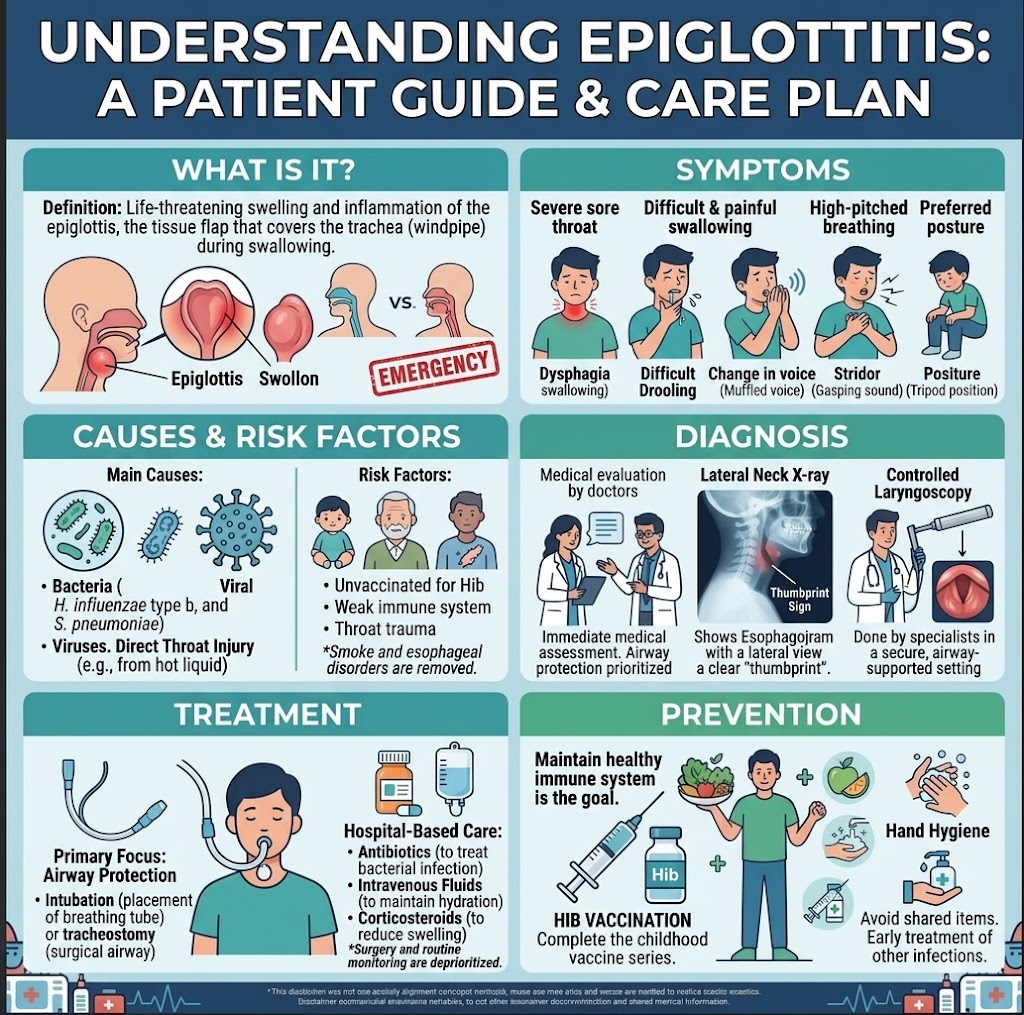
Epiglottitis is a serious, potentially life-threatening condition where the epiglottis, a small, leaf-shaped piece of cartilage that acts like a lid over your windpipe, swells. This swelling can block the flow of air into your lungs, making it very difficult to breathe. While once more common in children, routine vaccination has made it rarer in that group, shifting its prevalence to adults. Prompt medical attention is crucial to prevent severe complications.
Understanding the Condition
Epiglottitis: Understanding This Urgent Breathing Condition
Understanding the Condition
Epiglottitis is a serious, potentially life-threatening condition where the epiglottis, a small, leaf-shaped piece of cartilage that acts like a lid over your windpipe, swells. This swelling can block the flow of air into your lungs, making it very difficult to breathe. While once more common in children, routine vaccination has made it rarer in that group, shifting its prevalence to adults. Prompt medical attention is crucial to prevent severe complications.
Common Symptoms
Symptoms in Children (can develop within hours): Sore throat; an unusual, high-pitched sound when breathing in (known as stridor); difficult and painful swallowing; acting anxious and irritable; sitting up or leaning forward to ease breathing.
Symptoms in Adults (can develop over days): Sore throat; a muffled or hoarse voice; an unusual, high-pitched sound when breathing in (stridor); difficulty breathing; difficulty swallowing.
Consultation Guide
Which Specialist to Meet
If you suspect epiglottitis, seek immediate medical attention by visiting an emergency room. Emergency physicians will provide initial care. Specialists involved may include an Ear, Nose, and Throat (ENT) specialist (otolaryngologist) to manage the airway and an infectious disease specialist if an infection is present.
Preparations Before Your Visit
Monitor for Complications: While rare, be aware of any return of symptoms or signs of complications like pneumonia or other infections, and seek immediate medical attention if they occur.
Consultation Guide
Antibiotics: These medications are administered intravenously (through a vein) to fight bacterial infections, which are a common cause of epiglottitis. The specific type depends on the identified bacteria. (Duration: Typically 7 to 10 days, but can vary based on the severity of the infection and the specific bacteria.)
Routine Immunization (Hib vaccine): Getting vaccinated against Haemophilus influenzae type b (Hib) bacteria is highly effective in preventing epiglottitis caused by this germ. Infants typically receive several doses, and certain older children and adults with weakened immune systems may also be recommended to receive this vaccine.
Good Hand Hygiene: Regular and thorough hand washing helps prevent the spread of various bacteria and viruses that can cause infections, including those that might lead to epiglottitis.
Avoid Throat Irritants: Being cautious with extremely hot liquids and avoiding the inhalation of smoke can prevent burns and irritation that might contribute to epiglottitis.
Diagnostic Procedures
This quick imaging test uses radiation to create images of the structures in your neck, including the epiglottis. It can reveal swelling, often showing a characteristic 'thumb sign' where the epiglottis appears enlarged.
What to Expect
You will be asked to sit or stand still, and a technician will position your head and neck. The X-ray is painless and takes only a few seconds. You might be asked to hold your breath briefly.
This is the most definitive way to diagnose epiglottitis. A doctor gently inserts a thin, flexible tube with a camera (laryngoscope) into your throat to directly view the epiglottis for swelling and redness.
What to Expect
This procedure is often performed in a controlled environment, like an operating room or intensive care unit, under general anesthesia or heavy sedation. This approach helps prevent further airway irritation and ensures patient safety while the doctor obtains a clear view.
Blood samples are taken to check for signs of infection, such as an elevated white blood cell count. Blood cultures may also be done to identify the specific bacteria causing the infection.
What to Expect
A healthcare professional will draw blood from a vein, typically in your arm. You might feel a brief pinch or sting as the needle is inserted.
This is a non-invasive test that measures the oxygen level in your blood. Low oxygen levels can indicate significant breathing difficulties.
What to Expect
A small, clip-like device is painlessly placed on your finger, toe, or earlobe. It uses light to measure oxygen saturation and provides a reading within seconds.
Treatment Options
Epiglottitis is an emergency, so no specific preparation is needed beyond seeking immediate care. Avoid examining the throat at home, as this can worsen the swelling. If possible, bring a list of your current medications and medical history.
Book a doctor visit near me
Surgical Procedures/Interventions
Endotracheal Intubation: A flexible breathing tube is carefully inserted through the mouth and into the windpipe to secure the airway and ensure air can reach the lungs. This is a critical step, especially if the epiglottis swelling is severe. (Duration: Days to a week, until swelling reduces sufficiently for independent breathing.)
Tracheostomy: If endotracheal intubation isn't possible, or if a breathing tube is needed for an extended period, surgeons create a small opening in the front of the neck directly into the windpipe, and a breathing tube is placed through this opening. (Duration: Can be temporary, healing shut when no longer needed, or permanent for long-term breathing support.)
Medications
Anti-inflammatory Medications: These are given to reduce the swelling and inflammation of the epiglottis. (Duration: Short-term, usually for a few days until swelling decreases.)
Oxygen Therapy and Intravenous Fluids: Oxygen is provided through a mask or nasal tubes to ensure adequate oxygen levels in the blood. Intravenous fluids are given through a vein to prevent dehydration, especially if swallowing is painful or difficult. (Duration: As needed, until the patient is stable and can breathe and drink normally on their own.)
Prevention & Long-Term Wellbeing
Prevention
Long-Term Monitoring & Recovery
Follow-Up Medical Care: After discharge from the hospital, it's important to have follow-up appointments with your doctor or an Ear, Nose, and Throat (ENT) specialist to ensure complete recovery and address any lingering issues related to breathing or swallowing.
Tags & Topics
Notice an error or need an update?
Help us keep medical information accurate. Report incorrect info or suggest an edit.


