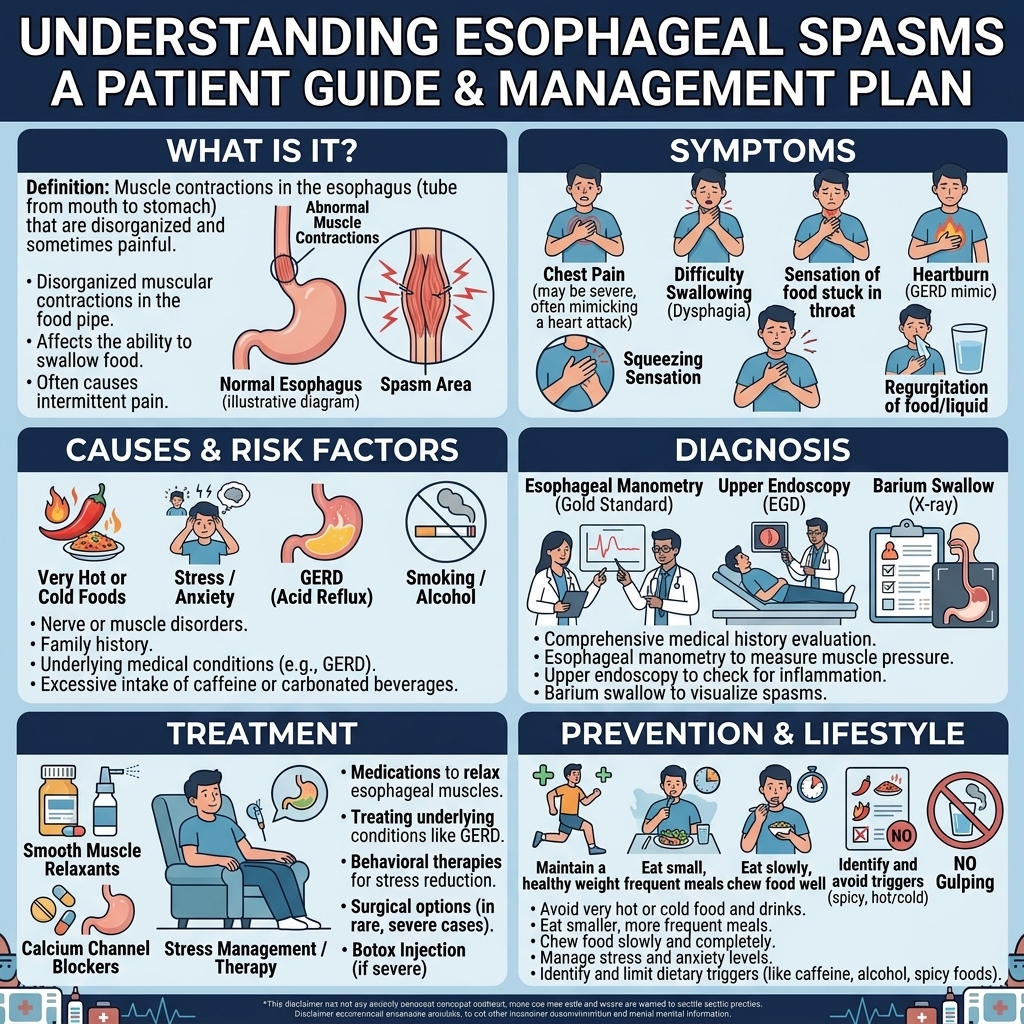
Esophageal spasms are painful, uncontrolled squeezes of the esophagus, the muscular tube that carries food and liquids from your mouth to your stomach. These spasms can cause sudden, intense chest pain lasting minutes to hours, often mistaken for heart pain. While they typically occur occasionally and may not need treatment, frequent spasms can make it hard to swallow food and liquids, necessitating medical intervention. There are two main types: distal esophageal spasm and hypercontractile esophagus (also known as nutcracker esophagus).
Understanding the Condition
Understanding Esophageal Spasms
Understanding the Condition
Common Symptoms
Squeezing Chest Pain: Often intense and might be confused with heart pain or heartburn. This type of chest pain requires immediate medical attention to rule out a heart attack.
Difficulty Swallowing: Trouble swallowing both solid foods and liquids, sometimes triggered by specific items like red wine or very hot or cold drinks.
Feeling of Something Stuck: A sensation that an object is lodged in the throat or chest.
Regurgitation: The return of food and liquids back up the esophagus.
Consultation Guide
Which Specialist to Meet
A doctor specializing in digestive system disorders, called a gastroenterologist, is the primary specialist to consult.
Preparations Before Your Visit
Before your visit, it's helpful to keep a diary of your symptoms, noting when they occur, what you were doing, what you ate or drank, how long they lasted, and their severity. Be prepared to discuss your medical history, any existing conditions, and all medications you are currently taking. You might be asked to fast for a few hours before certain diagnostic tests.
Book a doctor visit near me
Stress Management: Since stress can exacerbate symptoms, practicing relaxation techniques like deep breathing, yoga, or meditation can be beneficial. (Duration: Ongoing as needed)
Identify and Avoid Triggers: Keep a food and symptom diary to pinpoint specific foods, drinks, or situations (like stress or very fast eating) that provoke spasms, and then consciously avoid them.
Eat Slowly and Chew Thoroughly: Taking time to eat and properly chewing food can reduce the workload on the esophagus, potentially preventing spasms.
Long-Term Monitoring and Management
Consultation Guide
Esophageal spasms are painful, uncontrolled squeezes of the esophagus, the muscular tube that carries food and liquids from your mouth to your stomach. These spasms can cause sudden, intense chest pain lasting minutes to hours, often mistaken for heart pain. While they typically occur occasionally and may not need treatment, frequent spasms can make it hard to swallow food and liquids, necessitating medical intervention. There are two main types: distal esophageal spasm and hypercontractile esophagus (also known as nutcracker esophagus).
Diagnostic Procedures
This test checks how well your esophagus muscles work. It measures the strength and coordination of muscle contractions as you swallow.
What to Expect
A thin, flexible tube (catheter) with pressure sensors is gently passed through your nose, down your esophagus, and into your stomach. You will be asked to swallow small sips of water during the test while the sensors measure muscle activity and the opening and closing of the sphincter muscles at the top and bottom of your esophagus. The procedure typically takes about 30-45 minutes.
This procedure uses a long, flexible tube with a tiny camera (endoscope) to visually inspect the lining of your upper digestive system, including your esophagus, stomach, and the beginning of your small intestine. It helps diagnose conditions by allowing the doctor to look for abnormalities or take tissue samples (biopsies).
What to Expect
You will likely receive a sedative to help you relax and a local anesthetic to numb your throat. The endoscope is gently guided down your throat. You might feel some pressure but generally no pain. The procedure usually takes 15-30 minutes. You will need someone to drive you home afterward due to the sedative.
An X-ray is a quick imaging test that uses radiation to create pictures of the inside of your body. For esophageal spasms, a special type of X-ray, often involving a barium swallow, can help visualize the movement of the esophagus. Barium is a contrast material that coats the inside of the esophagus, making it visible on the X-ray.
What to Expect
You will be asked to stand or lie in various positions. For an esophageal X-ray, you will drink a barium liquid, and the X-ray technician will take images as the barium moves through your esophagus. This allows doctors to observe how well your esophagus is squeezing and if there are any blockages or irregular movements. The procedure is typically quick and painless.
Treatment Options
Medications
Muscle Relaxants: Certain medications can help relax the muscles in the esophagus, reducing the frequency and intensity of spasms. (Duration: Varies, often taken before meals or as needed during spasm episodes, typically for several weeks or months)
Acid-Reducing Medications: If acid reflux contributes to or worsens spasms, medications that reduce stomach acid production can be prescribed. (Duration: Daily use for several weeks to months, or long-term if needed for chronic reflux)
Endoscopic Injections: In some cases, tiny amounts of a muscle-relaxing substance can be injected directly into the esophageal muscles during an endoscopy to temporarily ease spasms. (Duration: Effects typically last for several months, requiring repeat injections)
Advanced Endoscopic Procedures: For severe, persistent spasms, an advanced endoscopic procedure might involve making small incisions in the esophageal muscle layers to weaken the muscle contractions permanently. This is typically reserved for very specific types of severe spasms not responsive to other treatments. (Duration: A one-time procedure, with long-lasting effects that are monitored over time)
Surgical Procedures
Esophageal Myotomy: In extremely rare and severe cases where other treatments have failed, a surgical procedure may be considered to cut specific muscle fibers in the lower esophagus. This is a significant intervention with careful consideration given to its risks and benefits. (Duration: A one-time surgical procedure, followed by a recovery period of several weeks)
Regular Medical Follow-up: Ongoing communication with your healthcare provider is important to adjust treatments as needed and monitor the condition's progression.
Stress Reduction Techniques: Incorporate mindfulness, meditation, or other stress-reducing activities into your daily routine to help manage the physiological responses that can trigger spasms.
Prevention & Long-Term Wellbeing
Home Remedies and Lifestyle Adjustments
Dietary Modifications: Identify and avoid foods or drinks that trigger spasms, such as very hot or cold beverages, red wine, caffeine, or certain acidic foods. Eating smaller, more frequent meals and chewing food thoroughly can also help. (Duration: Ongoing as needed)
Prevention
Maintain a Healthy Lifestyle: Regular exercise, maintaining a healthy weight, and avoiding smoking and excessive alcohol consumption contribute to overall digestive health.
Tags & Topics
Notice an error or need an update?
Help us keep medical information accurate. Report incorrect info or suggest an edit.


