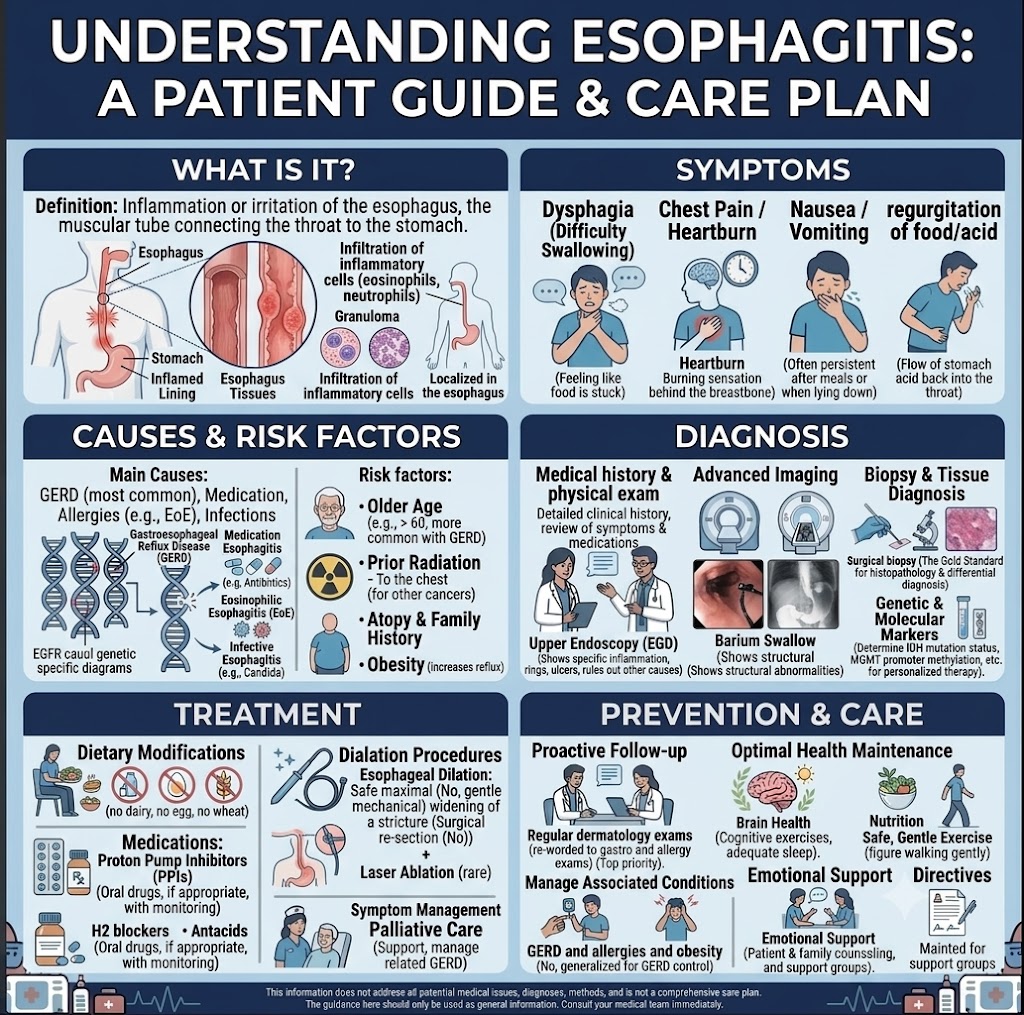
Esophagitis is a condition characterized by swelling and irritation, known as inflammation, of the delicate tissues lining your esophagus. The esophagus is the muscular tube responsible for carrying food and liquids from your mouth down to your stomach. This inflammation can cause uncomfortable and sometimes painful symptoms, including difficulty swallowing and chest pain. Various factors can trigger esophagitis, such as stomach acids backing up into the esophagus, allergic reactions, certain oral medications, and occasionally infections.Without proper treatment, esophagitis can lead to significant damage to the esophageal lining. This damage can make it hard for the esophagus to move food and liquid properly and can result in serious complications. These include permanent scarring or narrowing of the esophagus (stricture), tearing of the lining, unhealthy weight loss, dehydration, and a condition called Barrett's esophagus, which increases the risk of esophageal cancer.
Understanding the Condition
Esophagitis: Understanding and Managing Inflammation of Your Swallowing Tube
Understanding the Condition
Esophagitis is a condition characterized by swelling and irritation, known as inflammation, of the delicate tissues lining your esophagus. The esophagus is the muscular tube responsible for carrying food and liquids from your mouth down to your stomach. This inflammation can cause uncomfortable and sometimes painful symptoms, including difficulty swallowing and chest pain. Various factors can trigger esophagitis, such as stomach acids backing up into the esophagus, allergic reactions, certain oral medications, and occasionally infections.Without proper treatment, esophagitis can lead to significant damage to the esophageal lining. This damage can make it hard for the esophagus to move food and liquid properly and can result in serious complications. These include permanent scarring or narrowing of the esophagus (stricture), tearing of the lining, unhealthy weight loss, dehydration, and a condition called Barrett's esophagus, which increases the risk of esophageal cancer.
Common Symptoms
Trouble Swallowing (Dysphagia): Feeling like food is stuck, or having difficulty moving food down your throat.
Painful Swallowing (Odynophagia): Experiencing pain or discomfort when you swallow.
Food Getting Stuck (Food Impaction): A sensation that swallowed food has become lodged in your esophagus.
Heartburn: A burning pain in the chest, often felt behind the breastbone, especially after eating.
Symptoms in Babies and Children: Young children may show feeding difficulties, such as becoming easily upset during meals, arching their back, refusing to eat, or failing to grow at a healthy rate. Older children might complain of chest or belly pain.
Consultation Guide
Which Specialist to Meet
For adults, a **Gastroenterologist** (a doctor specializing in the digestive system) is the primary specialist. If allergies are suspected, an **Allergist/Immunologist** may also be involved. For children, a **Pediatric Gastroenterologist** or **Allergist** would be appropriate.
Preparations Before Your Visit
Before your visit, consider keeping a diary of your symptoms. Note what you ate, when symptoms occurred, and any medications you are taking. You may be asked to fast (not eat or drink) before certain diagnostic tests like an endoscopy, or to temporarily stop taking specific medications before allergy tests. Always follow your doctor's specific instructions.
Book a doctor visit near me
Acid-Reducing Medications: These medicines decrease the amount of acid your stomach produces, helping to heal the esophageal lining and relieve symptoms of reflux-related esophagitis. (Duration: Weeks to months, or long-term for chronic conditions, as prescribed by your doctor.)
Corticosteroids: Used to reduce inflammation, especially in allergic forms of esophagitis. They can be swallowed (often in liquid form) or inhaled to directly target the esophagus. (Duration: Several weeks to months, or on an as-needed basis, as prescribed by your doctor.)
Identify and Avoid Trigger Foods: Paying attention to foods that worsen your symptoms and avoiding them can significantly prevent flare-ups, especially in reflux or allergy-related esophagitis.
Practice Healthy Eating Habits: Eating smaller, more frequent meals, avoiding late-night eating, and consuming fewer fatty or spicy foods can reduce the risk of acid reflux.
Adherence to Treatment Plan: Consistently following prescribed medications and lifestyle changes is vital for managing symptoms and preventing long-term damage to the esophagus.
Watch for Worsening Symptoms: Be alert for any new or worsening symptoms, especially severe difficulty swallowing, painful swallowing, or food getting stuck, and report them to your doctor promptly.
Consultation Guide
Acid Reflux: Stomach acid backing up into the esophagus, which can cause a sour taste or burning sensation in the throat.
Other Allergy Medications: If specific allergies are identified as a cause, other anti-allergic treatments may be used to manage the immune response and prevent inflammation. (Duration: As long as exposure to allergens is present, or for specific courses, as prescribed by your doctor.)
Esophageal Dilation: If the esophagus has narrowed due to scarring, a procedure can be performed during an endoscopy to gently stretch and widen the constricted area, making swallowing easier. (Duration: Typically a single procedure, but may need to be repeated if narrowing recurs.)
Diagnostic Procedures
These tests help determine if specific foods or environmental triggers are causing your esophagitis. Your skin is exposed to tiny amounts of suspected allergy-causing substances (allergens) to observe for an allergic reaction. Blood tests for allergies, which measure specific immune responses, can also be used if skin tests are not suitable.
What to Expect
During the test, a healthcare professional will lightly prick or scratch your skin (typically on your forearm or back) with small needles containing different allergens. You might feel a brief, minor discomfort. The skin is then observed for about 15-20 minutes for signs of an allergic reaction, such as a red, itchy bump (hive) at the site of exposure. You may be advised to avoid certain allergy medications for several days before the test, as they can interfere with the results.
Upper Endoscopy (Esophagogastroduodenoscopy)
An upper endoscopy is a procedure where a thin, flexible tube with a tiny camera (called an endoscope) is passed down your throat to visually examine the lining of your esophagus, stomach, and the first part of your small intestine. This allows the doctor to look for inflammation, damage, scarring, or other abnormalities and collect small tissue samples (biopsies) for further analysis.
What to Expect
Treatment Options
You will typically receive medication to help you relax or fall asleep (sedation) during the procedure. Your throat may also be numbed with a spray. The endoscope is gently guided down your throat; you might feel some pressure but generally no pain. The procedure usually takes about 15-30 minutes. After the procedure, you'll be monitored until the sedation wears off. You may experience a mild sore throat or feel bloated for a short time. You will need someone to drive you home if you received sedation.
Proper Pill-Taking Practices: Taking oral medications with plenty of water and remaining upright for at least 30 minutes afterward can prevent pills or their residue from getting stuck and irritating the esophagus. (Duration: As needed, with medication use)
Medications
Take Medications Safely: Always swallow oral medications with plenty of water and avoid lying down immediately afterward to prevent them from irritating the esophagus lining.
Regular Doctor Visits: Ongoing follow-up with your healthcare provider is important to monitor the condition, adjust treatments, and check for potential complications like scarring or Barrett's esophagus.
Prevention & Long-Term Wellbeing
Lifestyle and Home Remedies
Dietary Modifications: Avoiding trigger foods (e.g., fatty foods, peppermint, chocolate, caffeine, acidic foods), eating smaller, more frequent meals, and not eating close to bedtime can help reduce acid reflux and related esophagitis. (Duration: Ongoing)
Weight Management: Maintaining a healthy weight can reduce pressure on the abdomen, which lessens the likelihood of stomach acid backing up into the esophagus. (Duration: Ongoing)
Prevention
Manage Underlying Allergies: If esophagitis is allergy-related, working with an allergist to manage sensitivities to foods or environmental allergens is crucial for prevention.
Maintain a Healthy Weight: Excess weight can increase pressure on the stomach, contributing to acid reflux. Maintaining a healthy weight helps prevent this.
Long-Term Monitoring
Tags & Topics
Notice an error or need an update?
Help us keep medical information accurate. Report incorrect info or suggest an edit.


