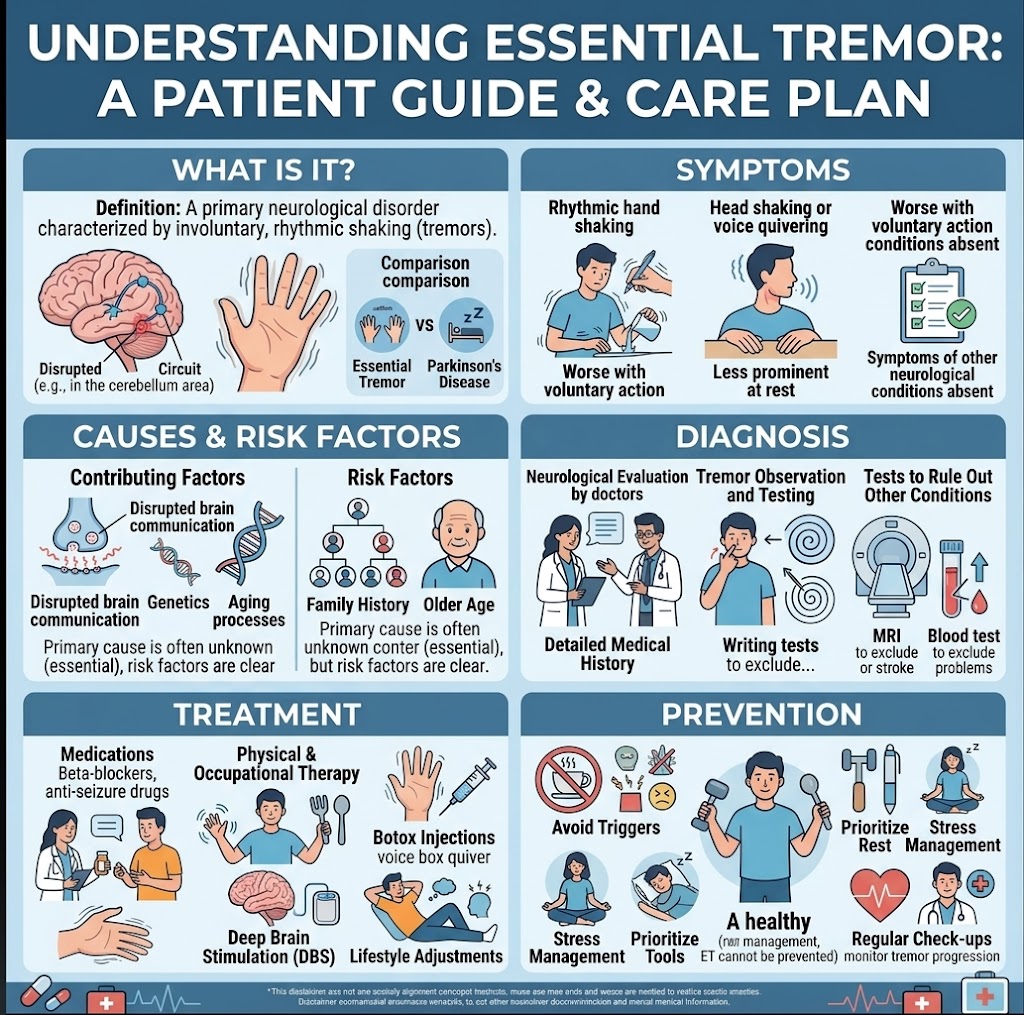
Essential tremor is a common nervous system condition causing rhythmic, involuntary shaking, most often in the hands, especially during simple actions like drinking or writing. While not typically dangerous, it usually worsens over time and can significantly impact daily tasks. It can begin at any age but is most common in people over 40. About half of those affected have a genetic link, for others, the cause is unclear.
Understanding the Condition
Essential Tremor: Understanding and Managing Involuntary Shaking
Understanding the Condition
Common Symptoms
Hand Tremors: The most common symptom, causing rhythmic shaking in one or both hands, especially when performing tasks like writing, eating, or holding objects.
Head and Voice Tremors: May include an involuntary 'yes-yes' or 'no-no' nodding of the head. If the voice box or tongue is affected, speech can become shaky.
Gradual Onset and Worsening with Movement: Symptoms typically begin subtly, often more noticeable on one side of the body, and tend to worsen when you are actively moving or using the affected body part.
Aggravating Factors: Emotional stress, fatigue, caffeine consumption, and exposure to extreme temperatures can temporarily increase tremor severity.
Differences from Parkinson's Disease: Unlike Parkinson's disease where tremors are most apparent at rest, essential tremor primarily occurs during purposeful movement. Essential tremor does not cause other common Parkinson's symptoms like slowed movement or stooped posture, though an unsteady walk may sometimes develop.
Consultation Guide
Which Specialist to Meet
Before your appointment, prepare a list of your symptoms (onset, triggers, impact) and all medications you're taking. Also, note any questions you have for the doctor regarding diagnosis, treatment, and management.
Book a doctor visit near me
During the examination, the doctor will review your medical history and symptoms. They will then perform various tests to check your reflexes, muscle strength, balance, coordination, sensation, and possibly your mental status. You might be asked to walk, stand with your eyes closed, touch your finger to your nose, or perform other simple movements to observe any tremors or difficulties.
Sometimes, additional tests like blood tests or brain imaging (MRI/CT) may be ordered to rule out other conditions that cause similar symptoms, or to assess for an unsteady gait. These tests help exclude other potential causes rather than directly diagnose essential tremor.
Stress and Fatigue Management: Since stress and fatigue can worsen tremors, prioritizing adequate sleep, practicing stress-reduction techniques, and maintaining a balanced lifestyle are crucial for long-term symptom management.
Regular Physical Activity: Regular, moderate exercise can improve overall physical health and may aid in tremor management.
Long-Term Monitoring and Support
Regular Medical Follow-ups: Maintain regular appointments with your neurologist to monitor tremor progression, adjust medications as needed, and discuss any new symptoms or challenges. As the condition can worsen over time, ongoing care ensures optimal management.
Support Networks: Connecting with support groups or others living with essential tremor can provide emotional support and practical advice.
Consultation Guide
Essential tremor is a common nervous system condition causing rhythmic, involuntary shaking, most often in the hands, especially during simple actions like drinking or writing. While not typically dangerous, it usually worsens over time and can significantly impact daily tasks. It can begin at any age but is most common in people over 40. About half of those affected have a genetic link, for others, the cause is unclear.
You should consult a neurologist, a doctor specializing in conditions of the brain and nervous system, if you experience persistent or worsening tremors. They can accurately diagnose your condition and differentiate it from other causes of shaking.
Preparations Before Your Visit
A comprehensive assessment performed by a neurologist to evaluate the function of your brain, spinal cord, nerves, and muscles. This exam helps to identify any nervous system abnormalities and rule out other conditions that might cause tremors.
Beta-Blockers: These medications are often among the first treatments prescribed to reduce tremor severity, especially hand tremors. They work by blocking nerve impulses that cause shaking. (Duration: Trial period of several weeks to assess effectiveness; long-term as needed.)
Diagnostic Procedures
Neurological Examination
What to Expect
Tremor Assessment Tests (e.g., Spiral Drawing Test)
These tests involve specific tasks designed to visually assess the characteristics and severity of your tremor, helping the doctor understand how it affects your fine motor skills. The spiral drawing test is a common example.
What to Expect
You will typically be asked to perform tasks such as drawing a spiral or a straight line on a piece of paper, writing a sentence, or holding a cup of water. The doctor will observe your performance to evaluate the steadiness of your hand movements and the nature of the tremor.
Other Diagnostic Tests
What to Expect
This could involve giving blood samples for laboratory analysis to check for conditions like thyroid problems. If imaging is needed, you would lie on a table that slides into a machine for an MRI or CT scan of your brain. These procedures are generally painless and non-invasive, beyond the blood draw or brief time spent in the scanner.
Treatment Options
Medications
Anti-Seizure Medications: Certain medications typically used to treat epilepsy can also be effective in reducing essential tremor for some individuals. (Duration: Trial period of several weeks to assess effectiveness; long-term as needed.)
Tranquilizers: These medications can provide temporary relief from tremors, particularly when stress is a factor, but are used cautiously. (Duration: Used cautiously for short periods or specific situations due to potential for tolerance.)
Therapies
Occupational Therapy: A therapist can teach you strategies and provide adaptive devices to help manage daily tasks made difficult by tremors, such as eating, drinking, writing, or dressing. They can also recommend exercises to improve muscle control and coordination. (Duration: Varies, from short-term training to ongoing support.)
Surgical Procedures
Deep Brain Stimulation (DBS): This surgical procedure involves implanting small electrodes in specific areas of the brain that control movement. These electrodes deliver controlled electrical impulses, regulated by a small device placed under the skin in your chest, to disrupt the abnormal brain activity causing tremors. DBS is typically considered for people whose severe tremors are not adequately controlled by medications. (Duration: Permanent implant with periodic adjustments.)
Prevention & Long-Term Wellbeing
Lifestyle and Home Remedies
Trigger Avoidance: Identify and avoid factors that worsen your tremors, such as caffeine, excessive stress, extreme temperatures, or certain situations. Keeping a journal can help pinpoint these triggers. (Duration: Ongoing)
Relaxation Techniques: Practicing relaxation methods like deep breathing, meditation, or yoga can help manage stress, which often exacerbates tremors. (Duration: Ongoing)
Prevention
No Known Prevention: Currently, there is no known way to prevent the onset of essential tremor. Genetic counseling may be helpful for those with a family history.
Adaptive Tools and Strategies: Utilize specialized utensils, weighted cups, writing aids, or voice amplifiers to minimize the impact of tremors on eating, drinking, writing, and speaking. Occupational therapists can provide personalized recommendations.
Tags & Topics
Notice an error or need an update?
Help us keep medical information accurate. Report incorrect info or suggest an edit.


