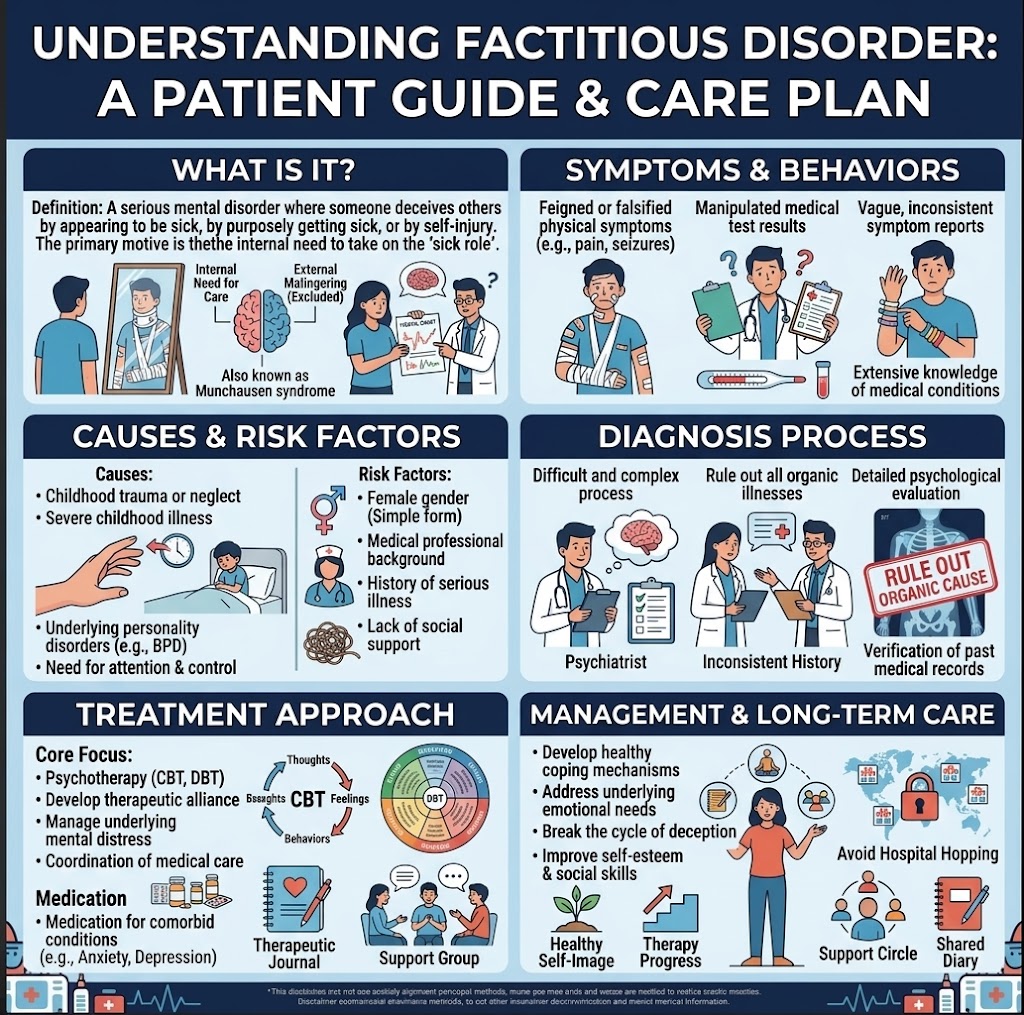
Factitious disorder, formerly known as Munchausen syndrome, is a serious mental health condition where a person knowingly fakes, exaggerates, or actively causes physical or psychological symptoms of illness. Driven by a deep-seated psychological need to assume the sick role, individuals with this disorder may tamper with medical tests, self-inflict injuries, or undergo unnecessary, risky surgeries. This condition differs from malingering, which is fabricating illness for external benefits like financial gain or avoiding work. People with factitious disorder are aware they are causing their symptoms, but they often do not understand the complex mental health issues driving their behavior.
Understanding the Condition
Understanding Factitious Disorder: Symptoms, Diagnosis, and Treatment
Understanding the Condition
Factitious disorder, formerly known as Munchausen syndrome, is a serious mental health condition where a person knowingly fakes, exaggerates, or actively causes physical or psychological symptoms of illness. Driven by a deep-seated psychological need to assume the sick role, individuals with this disorder may tamper with medical tests, self-inflict injuries, or undergo unnecessary, risky surgeries. This condition differs from malingering, which is fabricating illness for external benefits like financial gain or avoiding work. People with factitious disorder are aware they are causing their symptoms, but they often do not understand the complex mental health issues driving their behavior.
Common Symptoms
Fabrication of Medical History: Presenting highly convincing but false symptoms or mental health issues to medical professionals.
Inconsistent or Vague Clinical Signs: Reporting symptoms that do not align with clinical test results, or describing conditions that worsen without a clear biological explanation.
Advanced Medical Literacy: Demonstrating an unusually deep and detailed knowledge of medical terms, complex diseases, and hospital procedures.
A systematic review of the patient's comprehensive medical records across various clinics and hospitals to identify inconsistent symptoms, overlapping diagnoses, and unexplained treatments.
Targeted physical exams and laboratory diagnostics used exclusively to rule out genuine physical illnesses before attributing symptoms to a psychological origin.
You will undergo standard, non-invasive diagnostic tests such as blood draws, imaging, or physical evaluations to verify if there is an active biological cause for the reported symptoms.
Building Emotional Coping Strategies: Practicing healthy stress management techniques, such as mindfulness, journaling, and regular physical activity, to address emotional pain without using physical symptoms.
Maintaining Open Communication with Therapists: Attending scheduled therapy sessions consistently, even when feeling well, to identify emotional triggers early and prevent relapse into self-harming patterns.
Diagnostic Procedures
To prepare for the consultation, compile a complete timeline of past medical visits, procedures, and tests. Bring a trusted family member if possible to help provide an objective history, and compile a list of all current medications, supplements, and active healthcare providers.
Book a doctor visit near me
Comprehensive Psychiatric Evaluation
A thorough mental health assessment conducted by a psychiatrist to evaluate the individual's psychological history, behavior patterns, and diagnostic criteria according to standard psychiatric manuals.
What to Expect
You will participate in detailed, structured clinical interviews focusing on your personal history, emotions, coping mechanisms, and relationships. The specialist may also observe behavioral indicators during the session.
Objective Medical History Verification
What to Expect
The medical team will ask you to sign release forms so they can legally retrieve and review historic medical files from previous providers. They will cross-reference clinical lab reports with reported histories.
Ruling Out Physical Pathology
What to Expect
Primary Care Gatekeeping: Appointing a single, primary care doctor to oversee and authorize all medical care. This limits unnecessary specialist referrals, invasive testing, and redundant procedures. (Duration: Continuous and long-term, serving as an ongoing safety framework.)
Treatment Options
Doctor Shopping and Alias Usage: Seeking treatments from multiple doctors, clinics, and emergency rooms, sometimes using false names to prevent providers from coordinating care.
Self-Induced Illness or Injury: Intentionally harming oneself, contaminating wounds, swallowing toxins, or tampering with medical samples to produce positive lab results.
Resistance to Collaboration: Refusing to allow healthcare providers to speak with family members, friends, or previous medical professionals.
Abundant Surgical Scars: Showing physical evidence of numerous previous surgeries, procedures, or invasive medical investigations.
Consultation Guide
Which Specialist to Meet
Management of factitious disorder requires a coordinated multidisciplinary approach led by a licensed psychiatrist or clinical psychologist, working in close collaboration with a primary care physician.
Preparations Before Your Visit
Therapies
Cognitive Behavioral Therapy (CBT): A structured psychotherapy that helps individuals identify harmful thought patterns, understand the underlying emotional drivers of faking illness, and develop healthy coping mechanisms. (Duration: Typically 12 to 24 weekly sessions, but often transition into long-term supportive therapy lasting a year or more.)
Family Therapy: Therapy sessions involving family members to improve communication, address relational dynamics, and educate loved ones on how to avoid reinforcing sick-role behaviors. (Duration: 3 to 6 months, depending on the family's adaptation and progress.)
Pharmacotherapy for Underlying Conditions: Using psychiatric medications (such as antidepressants or anti-anxiety drugs) to treat co-occurring mental health issues like depression, anxiety, or personality disorders. (Duration: Several months to years, requiring close monitoring by a psychiatrist to prevent medication misuse.)
Establishing a Single Medical Home: Committing to receiving all non-emergency medical care from one primary doctor to prevent fragmented care and reduce the temptation to seek unnecessary treatments.
Prevention & Long-Term Wellbeing
Long-Term Monitoring and Prevention
Developing a Strong Support Network: Fostering healthy, honest relationships with friends and family members who support recovery goals without enabling illness-seeking behavior.
Tags & Topics
Notice an error or need an update?
Help us keep medical information accurate. Report incorrect info or suggest an edit.


