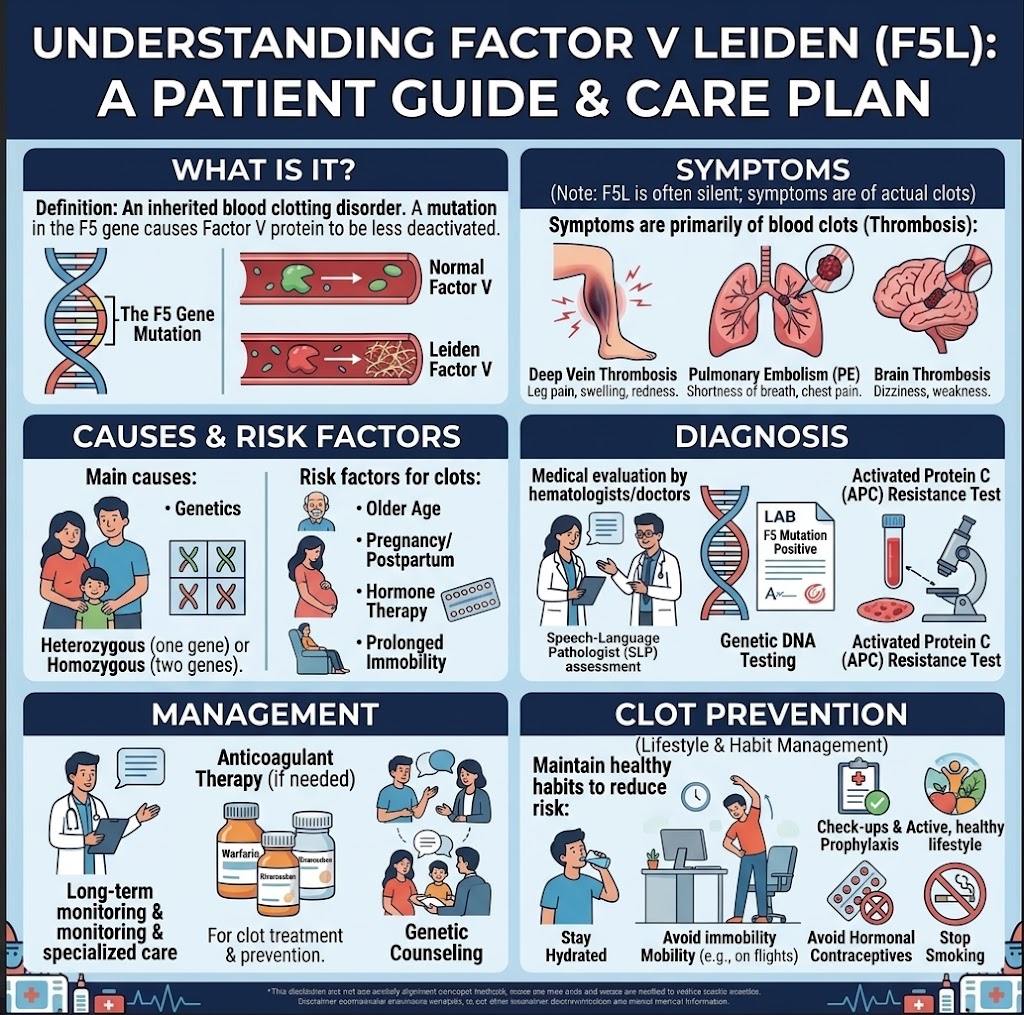
Factor V Leiden is an inherited genetic change in one of the blood's clotting factors, making blood more likely to form abnormal clots. These most commonly occur in the legs (deep vein thrombosis) or lungs (pulmonary embolism). Many people with Factor V Leiden never develop clots, but for those who do, these can cause serious health issues or be life-threatening. The condition affects both men and women; women face increased risk during pregnancy or with estrogen use.
Understanding the Condition
Factor V Leiden: Understanding a Genetic Clotting Risk
Understanding the Condition
Common Symptoms
General Symptoms of Blood Clots: Factor V Leiden itself causes no symptoms. The first sign is often an abnormal blood clot. While some clots disappear harmlessly, others can be life-threatening. Symptoms depend on the clot's location. Seek immediate medical attention for any DVT or PE symptoms.
Deep Vein Thrombosis (DVT): Deep vein thrombosis (DVT), usually in the legs, may have no symptoms. If present, signs include: Swelling in the affected leg (ankle, calf, or thigh); Pain or tenderness, like a cramp; Warmth in the affected area; Reddish or bluish skin discoloration.
Pulmonary Embolism (PE): A pulmonary embolism (PE) occurs when a DVT fragment travels to the lungs, blocking blood flow. This is a life-threatening emergency. Signs may include: Sudden shortness of breath; Chest pain, especially when breathing deeply; A cough, sometimes with bloody mucus; Rapid heartbeat.
Consultation Guide
Which Specialist to Meet
Vigilance for Symptoms: Be aware of blood clot symptoms in legs and lungs. Seek immediate medical attention for sudden shortness of breath, chest pain, or unexplained leg swelling, pain, or redness.
Regular Medical Check-ups: Maintain ongoing communication with your healthcare provider to review risk factors, discuss new symptoms, and ensure appropriate management, especially if you've had a clot or have additional risks.
Consultation Guide
Factor V Leiden is an inherited genetic change in one of the blood's clotting factors, making blood more likely to form abnormal clots. These most commonly occur in the legs (deep vein thrombosis) or lungs (pulmonary embolism). Many people with Factor V Leiden never develop clots, but for those who do, these can cause serious health issues or be life-threatening. The condition affects both men and women; women face increased risk during pregnancy or with estrogen use.
Anticoagulant Medications (Blood Thinners): These medicines reduce the blood's ability to form new clots and prevent existing ones from growing. They are crucial for individuals with Factor V Leiden who have developed a deep vein thrombosis (DVT) or pulmonary embolism (PE), or who are at high risk. (Duration: Treatment duration varies, from a few months (typically 3-6 months for a first clot) to potentially lifelong, based on clot severity, risk factors, and history of previous clots. Regular monitoring is essential.)
Clot Removal Procedures: In severe or life-threatening cases of blood clots (e.g., large pulmonary embolisms or extensive deep vein thromboses threatening limb health), procedures may be necessary to remove the clot. Options include catheter-directed thrombolysis (delivering clot-dissolving medicine) or surgical thrombectomy (surgical removal). (Duration: These are acute procedures, often followed by long-term anticoagulant therapy.)
Compression Stockings and Leg Elevation: For deep vein thrombosis (DVT) in the legs, graduated compression stockings help reduce swelling and discomfort by improving blood flow. Elevating the affected leg also aids in reducing swelling. (Duration: Compression stockings may be recommended for several months or longer following a DVT, as advised by your doctor.)
Diagnostic Procedures
Start with your primary care physician, who may refer you to a hematologist (blood disorder specialist) or a genetic counselor (inherited conditions expert) for diagnosis and management.
Preparations Before Your Visit
Genetic Testing for Factor V Leiden
This test examines your DNA to identify the specific genetic mutation in the Factor V gene, which increases blood clot risk. It reveals if you inherited one or, rarely, two copies of the defective gene.
What to Expect
Genetic testing is usually simple, involving a blood sample from your arm or a cheek swab. These samples are analyzed in a lab. Physical risks are very low. Results help determine your inherited risk, guiding discussions with your healthcare provider about monitoring and prevention.
Treatment Options
Before your visit, gather family medical history (especially blood clots or Factor V Leiden). List all current medications (including over-the-counter drugs/supplements), and prepare questions about your risks and next steps.
Book a doctor visit near me
Medications
Managing Immobility: Prolonged inactivity (long flights, car rides, post-surgery) significantly increases clot risk. During travel, stand and walk every 1-2 hours; perform seated leg exercises. Post-surgery, follow doctor's instructions for early mobilization.
Discussing Hormone Use: For women with Factor V Leiden, estrogen-containing medications (e.g., birth control, hormone therapy) heighten clot risk. Discuss your status with your doctor to explore alternatives or ensure careful monitoring.
Post-Surgery or Injury Care: Surgeries or significant injuries (like broken bones) increase clot risk. Your doctor may prescribe temporary blood thinners or other preventive measures during recovery.
Prevention & Long-Term Wellbeing
Prevention Strategies
Understanding Your Genetic Risk: Knowing your Factor V Leiden status, especially with a family history of clots, allows proactive risk management with your doctor. Genetic counseling offers personalized information.
Maintaining an Active Lifestyle: Regular physical activity improves circulation and vascular health, reducing clot risk.
Long-Term Management
Tags & Topics
Notice an error or need an update?
Help us keep medical information accurate. Report incorrect info or suggest an edit.


