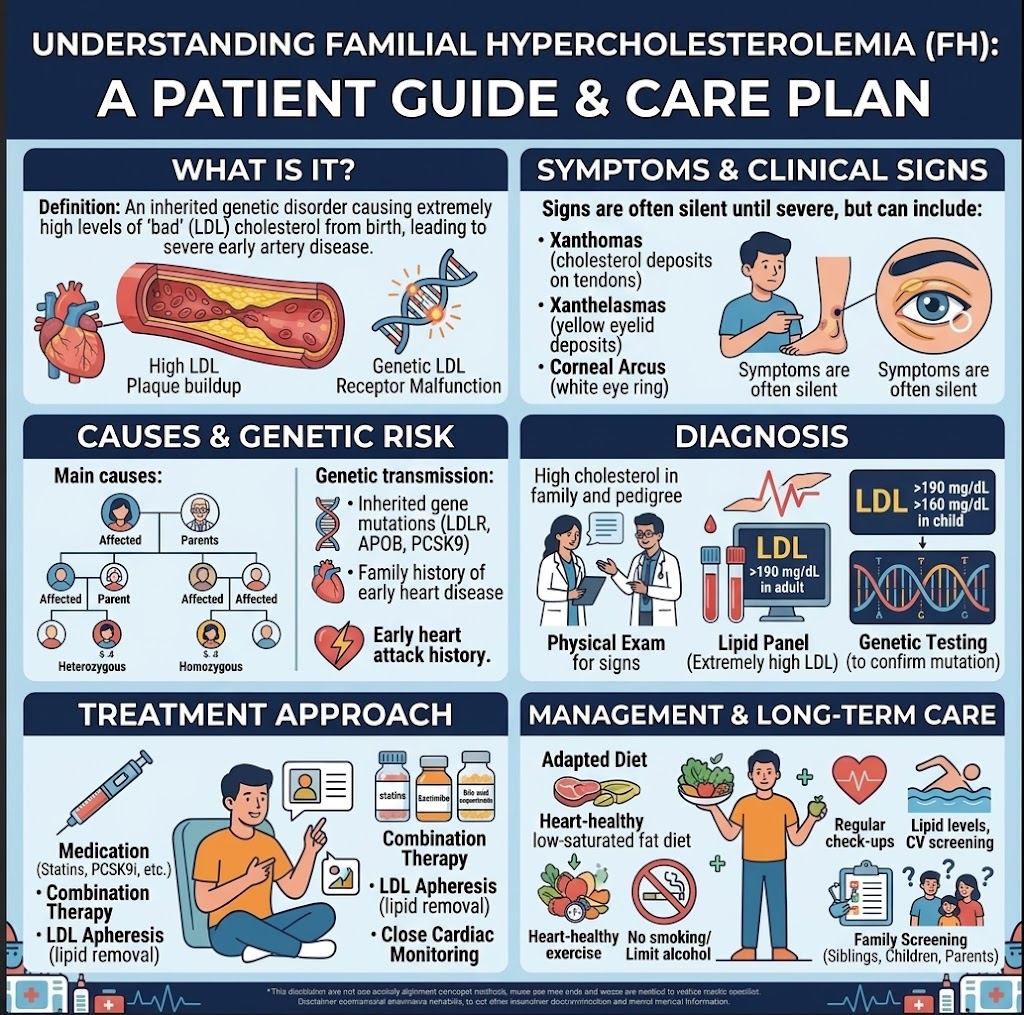
Familial Hypercholesterolemia (FH) is a genetic condition, inherited from birth, that prevents the body from effectively removing "bad" cholesterol (low-density lipoprotein or LDL) from the blood. This leads to very high LDL levels, which accumulate in artery walls, causing hardening and narrowing. Consequently, individuals with FH face a significantly increased risk of developing early heart disease and experiencing heart attacks at a younger age. There are two types: the more common heterozygous form (HeFH), inherited from one parent, and the rarer, more severe homozygous form (HoFH), inherited from both parents.
Understanding the Condition
Familial Hypercholesterolemia (FH): Understanding an Inherited High Cholesterol Condition
Understanding the Condition
Familial Hypercholesterolemia (FH) is a genetic condition, inherited from birth, that prevents the body from effectively removing "bad" cholesterol (low-density lipoprotein or LDL) from the blood. This leads to very high LDL levels, which accumulate in artery walls, causing hardening and narrowing. Consequently, individuals with FH face a significantly increased risk of developing early heart disease and experiencing heart attacks at a younger age. There are two types: the more common heterozygous form (HeFH), inherited from one parent, and the rarer, more severe homozygous form (HoFH), inherited from both parents.
Common Symptoms
Physical Signs of Cholesterol Buildup: While FH often shows no symptoms early, very high cholesterol can lead to visible deposits. These signs are more common and appear earlier in severe HoFH.
Skin Deposits (Xanthomas): Yellowish bumps that can appear on the skin, especially over knuckles, knees, elbows, or buttocks. Yellowish patches on or around the eyelids are called xanthelasma.
Tendon Deposits (Tendon Xanthomas): Cholesterol deposits causing thickening or swelling of tendons, most commonly in the Achilles tendons (at the back of the ankle) and over the knuckles.
Eye Deposits (Corneal Arcus): A white or gray ring that forms around the colored part of the eye (iris). While it can occur with aging in anyone, its presence in younger individuals can signal very high cholesterol.
Symptoms of Early Heart Disease: Untreated cholesterol buildup in arteries can lead to early heart disease. Symptoms may include chest pain (angina), shortness of breath, fatigue during physical activity, or leg pain when walking due to narrowed arteries.
Consultation Guide
Which Specialist to Meet
A healthcare team for FH may include a primary care physician, a cardiologist (a heart specialist), and a lipid specialist (an endocrinologist or internal medicine doctor with expertise in cholesterol disorders). For children, a pediatric cardiologist or pediatric endocrinologist is often involved. A genetic counselor can also provide valuable information about inheritance patterns and family planning.
Preparations Before Your Visit
Consultation Guide
You will be asked to fast (not eat or drink anything other than water) for 9-12 hours before the test. A healthcare professional will draw a small sample of blood, usually from a vein in your arm, using a small needle. The process is quick, generally causes only mild discomfort, and the sample is sent to a lab for analysis.
A doctor will perform a thorough physical exam, looking for visible signs of cholesterol deposits, such as yellowish bumps on the skin (xanthomas) or thickened tendons (tendon xanthomas), particularly around the Achilles tendon or knuckles. They will also examine your eyes for a white or gray ring around the iris (corneal arcus).
Diagnostic Procedures
Before your visit, gather your personal and family medical history, specifically noting any relatives who had early heart disease or high cholesterol. Bring a list of all current medications, vitamins, and supplements. Prepare a list of questions you have for the doctor, and any previous blood test results or medical records.
Book a doctor visit near me
Lipid Panel Blood Test
This standard blood test measures total cholesterol, LDL ("bad") cholesterol, HDL ("good") cholesterol, and triglycerides. Exceptionally high LDL cholesterol levels, especially without other underlying conditions, strongly suggest FH.
What to Expect
What to Expect
During the exam, the doctor will visually inspect your skin, especially around your joints, and gently feel your tendons. They will also look into your eyes using a light or ophthalmoscope. This part of the examination is non-invasive and painless.
Genetic testing is the most definitive way to confirm FH. It identifies the specific gene alteration responsible for the condition. This test is particularly useful for confirming a diagnosis, especially in cases where cholesterol levels are borderline, or when planning family screening.
What to Expect
A sample for genetic testing is typically collected through a simple blood draw or a saliva sample. If a blood draw, it's similar to the lipid panel test. For a saliva sample, you'll provide saliva into a collection tube. The sample is then sent to a specialized lab for genetic analysis. You may receive genetic counseling before and after the test to understand the implications of the results for yourself and your family.
Early Diagnosis and Screening: Given that FH is inherited, early diagnosis through family screening is vital. If one family member is diagnosed, all first-degree relatives (parents, siblings, children) should be screened for FH through lipid panel and potentially genetic testing. Early detection allows for earlier intervention and significantly better outcomes.
Regular Medical Check-ups: Consistent follow-up with your healthcare team is essential to monitor cholesterol levels, assess heart health, adjust treatments as needed, and manage any potential complications. This often includes regular blood tests and cardiac evaluations.
Genetic Counseling: Consulting with a genetic counselor can help individuals and families understand the inheritance pattern of FH, the risks to future children, and available testing options. This is particularly important for family planning.
Long-Term Heart Health
Monitoring for Heart Disease: Beyond cholesterol levels, individuals with FH will undergo regular assessments of their heart health, which may include electrocardiograms (ECGs), echocardiograms, stress tests, or other imaging studies to detect any signs of artery narrowing or heart damage early.
Support Networks: Connecting with support groups or patient advocacy organizations for FH can provide emotional support, practical advice, and access to the latest information on managing the condition.
Treatment Options
Medications
Cholesterol-Lowering Medications: Several classes of medications are used to lower LDL cholesterol. These typically include drugs that block cholesterol production in the liver, those that prevent cholesterol absorption from the gut, and newer injectable treatments that enhance the liver's ability to clear LDL cholesterol from the blood. The specific medication or combination will depend on the individual's FH type, cholesterol levels, and tolerance. (Duration: Typically long-term or lifelong, often starting in childhood or early adulthood for HeFH, and even younger for HoFH.)
LDL Apheresis: For individuals with very severe FH, especially the homozygous form, or those who cannot tolerate or achieve sufficient cholesterol reduction with medications, LDL apheresis may be recommended. This procedure is similar to kidney dialysis, where blood is drawn, passed through a machine to remove excess LDL cholesterol, and then returned to the body. (Duration: Typically performed every one to two weeks on an ongoing basis.)
Adherence to Treatment Plan: Strictly following prescribed medications and lifestyle modifications is crucial for controlling cholesterol levels and preventing or slowing the progression of heart disease. Consistency is key for long-term health.
Prevention & Long-Term Wellbeing
Lifestyle Modifications
Heart-Healthy Diet: Focus on a diet rich in fruits, vegetables, whole grains, lean proteins, and healthy fats (like those in avocados and olive oil). Limit saturated and trans fats, cholesterol, processed foods, and added sugars. This helps lower cholesterol and supports overall heart health. (Duration: Lifelong commitment.)
Regular Physical Activity: Engage in at least 150 minutes of moderate-intensity aerobic exercise or 75 minutes of vigorous-intensity exercise per week, along with muscle-strengthening activities. Exercise helps improve cholesterol levels and cardiovascular fitness. (Duration: Lifelong commitment.)
Weight Management: Achieving and maintaining a healthy weight can significantly improve cholesterol levels and reduce the risk of heart complications associated with FH. (Duration: Lifelong commitment.)
Smoking Cessation: Quitting smoking is crucial as it dramatically reduces the risk of heart disease and further damage to arteries. (Duration: Lifelong abstinence.)
Prevention and Early Management
Tags & Topics
Notice an error or need an update?
Help us keep medical information accurate. Report incorrect info or suggest an edit.


