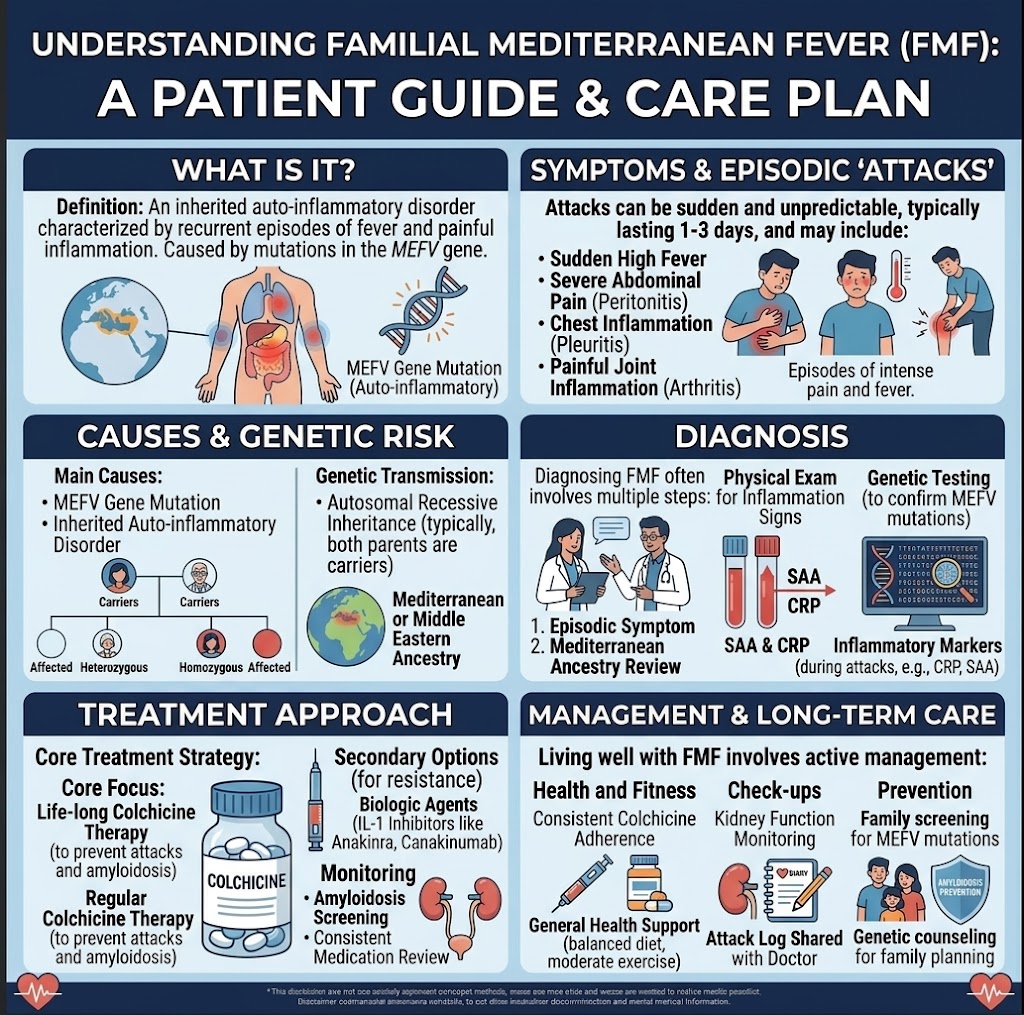
Familial Mediterranean Fever (FMF) is an inherited condition where the body's immune system overreacts, causing sudden, repeated episodes of fever and painful inflammation. This inflammation typically affects the lining of the abdomen, chest, and joints. Though often seen in people of Mediterranean and Middle Eastern heritage (including Jewish, Arab, Armenian, Turkish, North African, Greek, or Italian ancestry), FMF can affect anyone. Symptoms usually begin in childhood. While there's no cure, consistent treatment can effectively manage or prevent these painful episodes and complications.
Understanding the Condition
Familial Mediterranean Fever (FMF): A Guide to Understanding and Managing a Genetic Inflammatory Condition
Understanding the Condition
Familial Mediterranean Fever (FMF) is an inherited condition where the body's immune system overreacts, causing sudden, repeated episodes of fever and painful inflammation. This inflammation typically affects the lining of the abdomen, chest, and joints. Though often seen in people of Mediterranean and Middle Eastern heritage (including Jewish, Arab, Armenian, Turkish, North African, Greek, or Italian ancestry), FMF can affect anyone. Symptoms usually begin in childhood. While there's no cure, consistent treatment can effectively manage or prevent these painful episodes and complications.
Common Symptoms
Recurrent Fever: Sudden onset of high fever, often lasting a few days, that comes and goes unpredictably.
Abdominal Pain: Intense pain in the belly, often accompanied by tenderness, which can sometimes be mistaken for appendicitis.
To make the most of your appointment, consider these preparations:* **Symptom Diary:** Keep a detailed record of your symptoms, including when attacks started, how long they lasted, their severity, what seemed to trigger them, and what provided relief.* **Medical History:** Compile a list of all your current medications, supplements, and any family medical history, particularly any relatives with similar symptoms or diagnosed inflammatory conditions.* **Questions:** Write down any questions you have for the doctor.
Book a doctor visit near me
Your doctor will conduct a thorough physical exam and ask detailed questions about your symptoms, their frequency, and duration, as well as your family’s medical background, especially any ancestry linked to FMF.
Anti-Inflammatory Medication: This is the cornerstone of FMF treatment. It works by reducing the inflammation that causes FMF attacks. Taking this medication regularly, even when symptom-free, is crucial for preventing episodes and serious complications like amyloidosis. (Duration: Lifelong, daily medication.)
Rest and Hydration: During an FMF attack, getting plenty of rest and staying well-hydrated can help alleviate symptoms and support recovery. (Duration: During acute attacks.)
Warm Compresses: Applying warm compresses or taking warm baths may help soothe joint and muscle pain during attacks. (Duration: As needed during attacks.)
Consultation Guide
Chest Pain: Sharp, stabbing pain in the chest, making deep breaths difficult, caused by inflammation of the lining around the lungs.
Joint Pain and Swelling: Aches and swelling in joints, most commonly affecting the knees, ankles, and hips, potentially limiting movement. Joint pain can sometimes persist for weeks or months.
Muscle Aches: Widespread muscle soreness and pain.
Skin Rash: Red, tender skin rash, often appearing on the lower legs, typically below the knees.
Scrotal Swelling: In males, painful inflammation and swelling in the scrotum.
Consultation Guide
Which Specialist to Meet
A small sample of blood will be drawn, usually from a vein in your arm. This is a quick procedure that may cause a brief sting or pinch.
Diagnostic Procedures
If you or your child experiences unexplained fever paired with abdominal, chest, or joint pain, it's important to seek medical advice. You should consult a **rheumatologist**, a doctor specializing in inflammatory diseases affecting joints, muscles, and bones. For children, a **pediatric rheumatologist** is the appropriate specialist. If the condition affects the kidneys or other organs, a **nephrologist** (kidney specialist) or other relevant specialists may be involved. A **geneticist** can also provide valuable insights regarding genetic testing and inheritance.
Preparations Before Your Visit
Physical Examination and Medical History
What to Expect
The doctor will check for tenderness in your abdomen, listen to your heart and lungs, examine your joints for swelling, and look for any skin rashes. You will answer questions about your health and your family’s health history.
Blood tests are used to check for general signs of inflammation in the body (e.g., Erythrocyte Sedimentation Rate - ESR, and C-reactive protein - CRP), which are typically elevated during an FMF attack. They also help rule out other conditions.
What to Expect
Genetic Testing (MEFV Gene Test)
This is the most definitive test for FMF. It identifies specific changes (mutations) in the *MEFV* gene, which is responsible for FMF.
What to Expect
A blood sample, similar to other blood tests, is typically used. In some cases, a cheek swab might be an option. The sample is sent to a specialized lab to analyze the *MEFV* gene for known FMF-causing mutations. Results can take several weeks.
This test checks for the presence of protein in your urine, which can be an early sign of kidney damage due to a serious complication of FMF called amyloidosis (abnormal protein buildup).
What to Expect
You will be asked to provide a urine sample in a sterile cup. This is a non-invasive procedure, and the sample is then analyzed in a lab.
Biopsy (if amyloidosis suspected)
If there is suspicion of amyloidosis, a small tissue sample may be taken from an affected organ, like the kidney, or from the rectum or fat tissue, to look for amyloid deposits.
What to Expect
Depending on the biopsy site, you will receive a local anesthetic to numb the area. A small needle will be used to collect a tissue sample. For a kidney biopsy, it's typically done under imaging guidance. You may feel some pressure during the procedure. Afterwards, there might be mild discomfort, and you'll be monitored for a short period.
Routine Blood and Urine Tests: Regular monitoring of inflammatory markers and urine protein levels helps track disease activity and detect early signs of amyloidosis, allowing for timely intervention.
Genetic Counseling: For individuals planning a family, genetic counseling can provide information about the risks of passing FMF to children and discuss available options.
Emotional and Psychological Support: Living with a chronic condition can be challenging. Seeking support from family, friends, support groups, or mental health professionals can help manage stress and improve coping strategies.
Treatment Options
Medications
Biologic Medications (for severe or unresponsive cases): For individuals who do not respond well to standard anti-inflammatory treatment, other medications that target specific parts of the immune system may be prescribed. These aim to block the inflammatory pathways more directly. (Duration: Long-term, as directed by a specialist, often administered via injection or infusion.)
Pain Management: Over-the-counter or prescription pain relievers may be used during acute attacks to manage pain and discomfort. (Duration: As needed during attacks, typically for 1-3 days.)
Home Remedies & Supportive Care
Adhere to Treatment Plan: Consistently taking prescribed medication, even when feeling well, is the most critical step in preventing FMF attacks and protecting against long-term complications like amyloidosis.
Identify and Avoid Triggers: While specific triggers are not always clear, some individuals find that stress, infections, or strenuous exercise can sometimes precede an attack. Learning personal triggers and trying to minimize them can be helpful.
Regular Medical Check-ups: Schedule regular visits with your specialist to monitor your condition, assess treatment effectiveness, and screen for potential complications, especially kidney function.
Prevention & Long-Term Wellbeing
Prevention
Maintain a Healthy Lifestyle: Eating a balanced diet, engaging in regular moderate exercise (as tolerated), and ensuring adequate sleep can support overall immune health and reduce general inflammation.
Long-Term Monitoring and Support
Tags & Topics
Notice an error or need an update?
Help us keep medical information accurate. Report incorrect info or suggest an edit.


