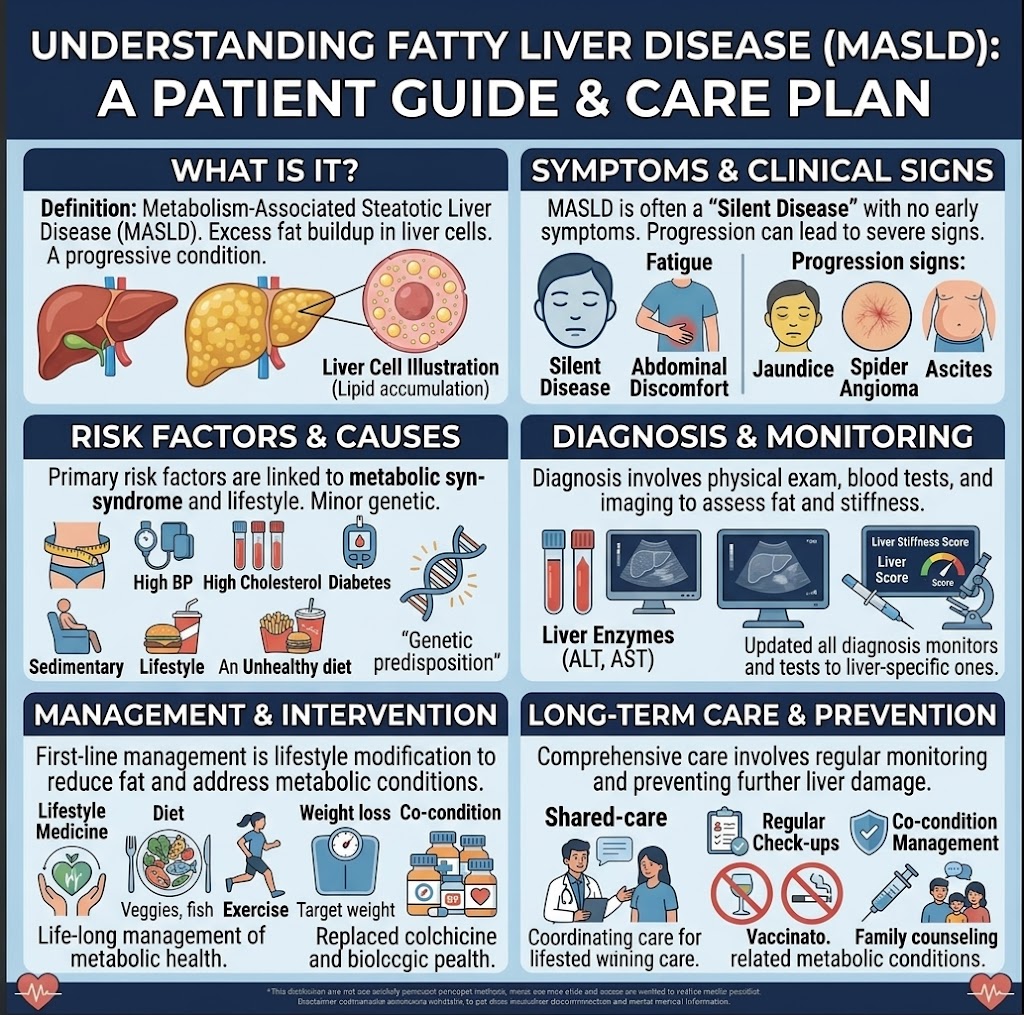
Metabolic dysfunction-associated steatotic liver disease (MASLD), formerly known as nonalcoholic fatty liver disease (NAFLD), is a condition where excess fat builds up inside liver cells. It primarily affects individuals living with obesity, type 2 diabetes, high blood pressure, or high cholesterol. While early stages may be harmless, MASLD can progress to Metabolic dysfunction-associated steatohepatitis (MASH), formerly NASH. MASH causes liver inflammation, swelling (hepatomegaly), and progressive damage. Over time, persistent inflammation triggers permanent scarring (cirrhosis), liver failure, or liver cancer. Early intervention through lifestyle modifications can halt or even reverse the disease.
Understanding the Condition
Understanding Fatty Liver Disease (MASLD and MASH)
Understanding the Condition
Common Symptoms
Early Stage Symptoms: Many people with early-stage MASLD experience no symptoms. When symptoms do occur, they commonly include persistent, extreme tiredness (fatigue), a general feeling of being unwell (malaise), and a dull ache or discomfort in the upper right side of the belly.
Advanced Stage Symptoms (MASH and Cirrhosis): As liver damage progresses to severe scarring, symptoms become more pronounced. These include yellowing of the skin and eyes (jaundice), severe itchy skin, swelling in the abdominal cavity (ascites), shortness of breath, leg swelling, visible spider-like blood vessels on the skin, reddening of the palms, and confusion or slurred speech.
Consultation Guide
Which Specialist to Meet
Before your appointment, document all of your symptoms, compile a complete list of all medications and supplements you take, write down your family history of liver issues, and fast for at least 8 to 12 hours as blood tests or imaging might be performed during your initial visit.
Book a doctor visit near me
Consultation Guide
Metabolic dysfunction-associated steatotic liver disease (MASLD), formerly known as nonalcoholic fatty liver disease (NAFLD), is a condition where excess fat builds up inside liver cells. It primarily affects individuals living with obesity, type 2 diabetes, high blood pressure, or high cholesterol. While early stages may be harmless, MASLD can progress to Metabolic dysfunction-associated steatohepatitis (MASH), formerly NASH. MASH causes liver inflammation, swelling (hepatomegaly), and progressive damage. Over time, persistent inflammation triggers permanent scarring (cirrhosis), liver failure, or liver cancer. Early intervention through lifestyle modifications can halt or even reverse the disease.
Diagnostic Procedures
You should consult a gastroenterologist or a hepatologist (a specialist who focuses exclusively on liver diseases) for targeted diagnosis and management.
Preparations Before Your Visit
Alanine Aminotransferase (ALT) & Aspartate Aminotransferase (AST) Blood Tests
These blood tests measure specific enzymes mainly located in the liver. Elevated levels of ALT and AST indicate that liver cells are damaged or inflamed, causing these enzymes to leak into the bloodstream.
What to Expect
A healthcare provider will insert a small needle into a vein in your arm to draw a vial of blood. You may feel a brief pinch. Results are typically available within a few days.
Comprehensive Liver Function Panel
A group of blood tests that assess overall liver health by measuring specific proteins (like albumin), waste products (like bilirubin), and liver enzymes.
What to Expect
This requires a standard blood draw from your arm. You may be instructed to fast (avoiding food and drink except water) for 8 to 12 hours before the test.
An imaging test that uses high-frequency sound waves to create visual representations of your liver, allowing doctors to check its size and detect fatty deposits.
What to Expect
You will lie on an exam table. A technician will apply warm gel to your upper abdomen and move a hand-held device (transducer) over the area. The procedure is painless, noninvasive, and takes about 20 to 30 minutes.
Computerized Tomography (CT) Scan
An imaging procedure that combines a series of X-ray images taken from different angles to create highly detailed, cross-sectional views of the liver.
What to Expect
You will lie on a flat table that slides into a large, doughnut-shaped scanner. You must remain still during the scan. In some cases, an intravenous contrast dye is injected to make liver structures show up more clearly.
Magnetic Resonance Elastography (MRE)
An advanced, noninvasive imaging technology that combines MRI with low-frequency vibrations to measure the physical stiffness of liver tissue, indicating the presence and severity of scarring (fibrosis).
What to Expect
You will lie inside a standard MRI machine. A small, flexible pad will be placed on your abdomen that emits gentle vibrations. The test is painless and takes about 15 minutes as part of a routine MRI exam.
The extraction of a tiny tissue sample from the liver using a thin needle to analyze under a microscope for signs of inflammation, fat, and scarring.
What to Expect
You will receive a local anesthetic to numb the area. Under ultrasound guidance, the doctor inserts a thin needle through your skin and between your ribs into the liver to quickly withdraw a sample. You will need to rest at the clinic for a few hours afterward to monitor for bleeding.
Treatment Options
Prescription Drug Therapy: Specific FDA-approved medications designed to lower liver inflammation and arrest the progression of liver tissue scarring in individuals with advanced MASH. (Duration: Continuous, long-term therapy managed and monitored periodically by your specialist.)
Bariatric Surgery: Weight-loss surgery recommended for patients with severe obesity who have been unable to lose weight through diet and exercise alone. (Duration: A single surgical procedure requiring permanent, lifelong dietary modifications and medical follow-ups.)
Liver Transplantation: Surgical replacement of a severely scarred, failing liver with a healthy donor liver, reserved for end-stage cirrhosis and liver failure. (Duration: A major surgery followed by lifelong administration of immunosuppressant medications and regular medical monitoring.)
Supplements (Under Medical Supervision)
Antioxidant Support (Vitamin E): Daily supplementation with Vitamin E to shield liver cells from oxidative stress and reduce inflammation. Not suitable for individuals with type 2 diabetes or severe cirrhosis. (Duration: Determined and monitored by your healthcare provider during periodic liver panels.)
Manage Co-existing Metabolic Conditions: Keep type 2 diabetes, high cholesterol, and high blood pressure under tight control through prescribed medications and routine health checkups.
Prevention & Long-Term Wellbeing
Lifestyle and Dietary Changes
Weight Reduction: The primary approach for treating MASLD. Losing 5% to 10% of total body weight significantly reduces liver fat accumulation, inflammation, and early scarring. (Duration: Lifelong, with a target rate of 1 to 2 pounds of gradual weight loss per week.)
Caloric Restriction: Consistently reducing daily intake by 500 to 1,000 calories to support steady weight reduction and metabolic recovery. (Duration: Ongoing until a stable, healthy target weight is reached and maintained.)
Medical and Surgical Interventions
Omega-3 Fatty Acids: High-quality fish oil or omega-3 supplements to help lower overall liver fat levels and improve your blood lipid profile. (Duration: Used continuously as an adjunct to diet, reviewed during annual wellness evaluations.)
Dietary Management
Adopt a Mediterranean Diet: Base your meals on fresh vegetables, whole fruits, whole grains, beans, and healthy fats like olive oil. Incorporate lean proteins, white poultry, and omega-3-rich fish while minimizing processed meats.
Eliminate Simple Sugars: Avoid drinks containing high-fructose corn syrup, such as sodas, sweetened teas, sports drinks, and processed fruit juices, which accelerate fat accumulation in the liver.
Long-Term Monitoring and Prevention
Strictly Limit or Avoid Alcohol: Eliminating alcohol consumption prevents unnecessary stress on the liver, helping to avoid accelerated tissue damage and scarring.
Regular Physical Activity: Engage in moderate aerobic and resistance exercises for at least 150 minutes per week to improve insulin sensitivity and help burn liver fat.
Tags & Topics
Notice an error or need an update?
Help us keep medical information accurate. Report incorrect info or suggest an edit.


