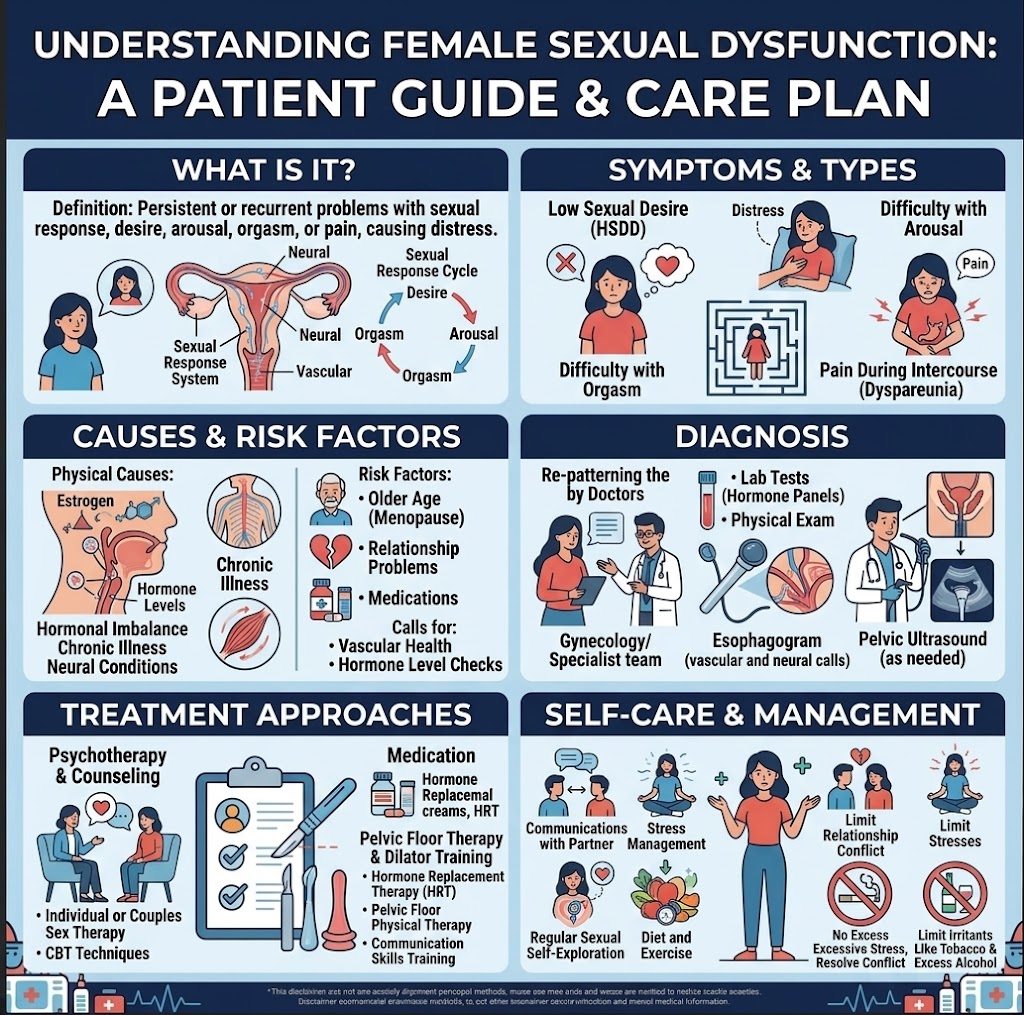
Female sexual dysfunction refers to ongoing difficulties with sexual response, desire, orgasm, or experiencing pain during sex, which cause personal distress or affect a relationship. These problems are common and can occur at any stage of life, sometimes or all the time. Sexual health is complex, influenced by physical health, emotional well-being, life experiences, beliefs, lifestyle, and relationships. Issues in any of these areas can impact sexual desire, arousal, or satisfaction. Effective treatment often involves a combination of approaches.
Understanding the Condition
Understanding Female Sexual Dysfunction
Understanding the Condition
Common Symptoms
Low Sexual Desire: This is the most common type, characterized by a lack of interest in sex and not wanting to engage in sexual activity.
Sexual Arousal Disorder: Even if you desire sex, you may find it difficult to become physically aroused or to maintain arousal during sexual activity.
Orgasmic Disorder: You experience persistent or recurrent difficulty achieving orgasm, even with sufficient sexual stimulation and arousal. It's important to note that many individuals achieve orgasm only through direct clitoral stimulation, not solely through vaginal penetration.
Sexual Pain Disorder: This involves experiencing pain during sexual activity, which can range from mild discomfort to severe pain.
Consultation Guide
Which Specialist to Meet
You may consult with a gynecologist, a sexual health specialist, a urogynecologist, a sex therapist, or a mental health professional such as a psychologist or psychiatrist, depending on the nature of your symptoms.
Preparations Before Your Visit
Before your appointment, prepare a detailed list of your symptoms, including when they started, how often they occur, and their severity. Note any medical conditions you have, all medications you are currently taking (including over-the-counter drugs and supplements), and any recent life changes or stressors. Be ready to discuss your relationship dynamics and any concerns you have about your sexual health openly and honestly. Write down any questions you have for your healthcare provider.
Book a doctor visit near me
Your doctor will start by discussing your sexual history, symptoms, medical conditions, and medications. A general physical exam and a pelvic exam will be performed to check for any physical abnormalities, signs of infection, or tenderness.
Consultation Guide
Female sexual dysfunction refers to ongoing difficulties with sexual response, desire, orgasm, or experiencing pain during sex, which cause personal distress or affect a relationship. These problems are common and can occur at any stage of life, sometimes or all the time. Sexual health is complex, influenced by physical health, emotional well-being, life experiences, beliefs, lifestyle, and relationships. Issues in any of these areas can impact sexual desire, arousal, or satisfaction. Effective treatment often involves a combination of approaches.
If an infection is suspected as a cause of pain or discomfort, a vaginal swab may be taken to identify bacteria or yeast.
During the pelvic exam, your doctor will gently use a cotton swab to collect a sample of cells or discharge from your vagina or cervix. This is usually quick and causes minimal discomfort.
You may undergo a transabdominal ultrasound (a gel is applied to your abdomen, and a transducer is moved over the skin) or a transvaginal ultrasound (a slender probe is gently inserted into the vagina). Both procedures are generally painless, though the transvaginal approach may cause some pressure.
Psychological Evaluation
A mental health professional may conduct an assessment to identify any psychological factors such as anxiety, depression, stress, or past trauma that could be contributing to sexual dysfunction.
Surgery for Structural Issues: Rarely, if sexual dysfunction is caused by a correctable physical abnormality or severe structural damage (e.g., severe scarring from childbirth or injury), surgical repair may be considered. (Duration: Recovery varies depending on the specific procedure, typically weeks to months)
Diagnostic Procedures
Medical History and Physical Exam
What to Expect
You will have a conversation about your overall health and sexual concerns. During the physical exam, you will lie on an examination table. The doctor will visually inspect your external genitalia and may gently use gloved fingers to feel for any abnormalities in your pelvic area.
Blood tests may be ordered to check hormone levels (such as estrogen, testosterone, thyroid hormones) and to screen for conditions like diabetes, which can impact sexual function.
What to Expect
A healthcare professional will draw a small sample of blood, usually from a vein in your arm. You might feel a brief pinch or sting. The sample is then sent to a lab for analysis.
Vaginal Swab or Culture
What to Expect
This imaging test uses sound waves to create pictures of your uterus, ovaries, and other pelvic organs, helping to rule out structural issues or conditions like fibroids or cysts.
What to Expect
What to Expect
This typically involves a private discussion with a therapist or counselor who will ask questions about your mood, relationships, life stressors, and sexual experiences. You may also complete questionnaires.
Systemic Hormone Therapy: In some cases, oral or patch-based hormone therapy (estrogen, sometimes with progesterone, or testosterone in specific situations) may be considered to address hormonal imbalances affecting desire and arousal. (Duration: Typically short-term (e.g., a few months) for testosterone, or longer-term for estrogen, as prescribed by a specialist.)
Treatment Options
Medications
Topical Estrogen Therapy: For postmenopausal individuals with vaginal dryness or thinning, estrogen applied directly to the vagina (creams, rings, tablets) can restore tissue health and reduce pain. (Duration: Ongoing, as prescribed, typically months to years)
Oral Medications for Desire/Arousal: Certain prescription medications may be used to enhance sexual desire or arousal in specific circumstances, under careful medical supervision. (Duration: Typically several months, as evaluated by your doctor)
Adjusting Other Medications: If existing medications (e.g., certain antidepressants or blood pressure drugs) are identified as contributing to sexual problems, your doctor may suggest adjusting the dose or switching to an alternative medicine. (Duration: As long as the contributing medication is taken; change made as directed by doctor)
Therapies
Sex Therapy: A specialized therapist can help individuals or couples explore concerns, improve communication, and develop strategies for enhancing sexual satisfaction and intimacy. (Duration: Typically several weeks to months, depending on individual needs)
Cognitive Behavioral Therapy (CBT): CBT can help address underlying anxiety, depression, or negative thoughts related to sex, improving emotional well-being and sexual function. (Duration: Usually 8-20 sessions, over several weeks or months)
Pelvic Floor Physical Therapy: For sexual pain disorders, a physical therapist specializing in pelvic health can teach exercises and techniques to relax or strengthen pelvic muscles and reduce pain. (Duration: Weeks to months, depending on the severity and response)
Procedures and Surgical Interventions
Injections for Pain: In specific cases of severe muscle spasms causing pain (e.g., vaginismus), injections of muscle-relaxing agents may be used to alleviate discomfort. (Duration: Temporary relief, may require repeat injections every few months)
Prioritize Mental Health: Seek timely treatment for anxiety, depression, or stress, as these conditions are strongly linked to sexual dysfunction.
Prevention & Long-Term Wellbeing
Home Remedies and Lifestyle Adjustments
Open Communication: Discussing desires, concerns, and needs openly with your partner can significantly improve sexual satisfaction and resolve misunderstandings. (Duration: Ongoing)
Vaginal Lubricants and Moisturizers: Using water-based or silicone-based lubricants during sex can reduce friction and pain, especially with vaginal dryness. Regular use of vaginal moisturizers can improve tissue health. (Duration: As needed (lubricants), Ongoing (moisturizers))
Foreplay and Clitoral Stimulation: Engaging in sufficient foreplay and direct clitoral stimulation is often essential for arousal and orgasm for many individuals. (Duration: As needed during sexual activity)
Stress Reduction Techniques: Practices like yoga, meditation, mindfulness, and ensuring adequate sleep can help manage stress, which often impacts sexual desire and response. (Duration: Ongoing, daily practice)
Pelvic Floor Exercises: Kegel exercises can strengthen pelvic floor muscles, which may help with arousal and orgasm, or pelvic floor relaxation exercises can alleviate pain. (Duration: Weeks to months for noticeable results, then ongoing maintenance)
Prevention and Long-Term Monitoring
Maintain Open Communication: Continuously communicate with your partner about your desires, boundaries, and any changes in your sexual health to foster intimacy and understanding.
Manage Chronic Health Conditions: Regularly monitor and effectively manage conditions like diabetes, heart disease, or thyroid issues, as they can significantly impact sexual function.
Adopt a Healthy Lifestyle: Engage in regular physical activity, maintain a balanced diet, get adequate sleep, and limit alcohol and tobacco use to support overall health and sexual well-being.
Regular Gynecological Check-ups: Attend routine check-ups to discuss any changes in sexual function, address hormonal shifts, and screen for potential issues early.
Practice Pelvic Floor Exercises: Incorporate Kegel exercises to maintain pelvic muscle tone or relaxation techniques, depending on individual needs, to support sexual health and comfort.
Address Body Image Concerns: Work on developing a positive body image through self-care, self-compassion, and professional support if needed, as body image can impact sexual confidence.
Explore and Understand Your Body: Take time to understand your own body, what brings you pleasure, and communicate this knowledge, especially regarding the importance of clitoral stimulation for orgasm.
Tags & Topics
Notice an error or need an update?
Help us keep medical information accurate. Report incorrect info or suggest an edit.


