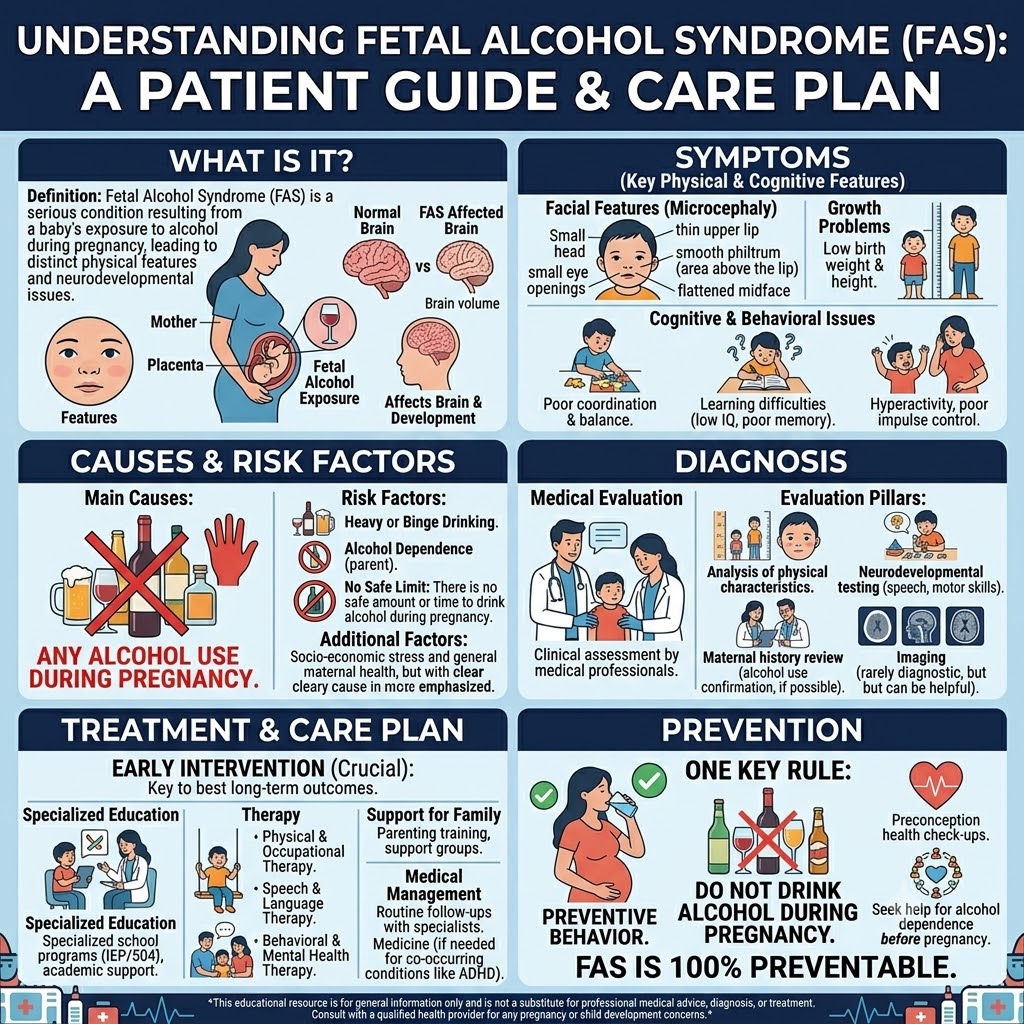
Fetal Alcohol Syndrome (FAS) is a severe condition that occurs in a child due to alcohol exposure before birth. When a mother drinks alcohol during pregnancy, it can lead to permanent disabilities impacting the child's physical development, learning abilities, thinking processes, and behavior. While symptoms vary, they are lifelong. FAS represents the most severe end of a spectrum of conditions known as Fetal Alcohol Spectrum Disorders (FASD), all caused by alcohol use during pregnancy. It's crucial to understand that there is no known safe amount or type of alcohol to drink at any stage of pregnancy. Any alcohol consumption puts the developing baby at risk. Early identification and comprehensive support can significantly improve outcomes.
Understanding the Condition
Fetal Alcohol Syndrome (FAS): Understanding the Impact of Alcohol During Pregnancy
Understanding the Condition
Fetal Alcohol Syndrome (FAS) is a severe condition that occurs in a child due to alcohol exposure before birth. When a mother drinks alcohol during pregnancy, it can lead to permanent disabilities impacting the child's physical development, learning abilities, thinking processes, and behavior. While symptoms vary, they are lifelong. FAS represents the most severe end of a spectrum of conditions known as Fetal Alcohol Spectrum Disorders (FASD), all caused by alcohol use during pregnancy. It's crucial to understand that there is no known safe amount or type of alcohol to drink at any stage of pregnancy. Any alcohol consumption puts the developing baby at risk. Early identification and comprehensive support can significantly improve outcomes.
Common Symptoms
Physical Characteristics: Distinctive facial features (small eyes, a very thin upper lip, a smooth area between the nose and upper lip, and a flat nasal bridge). Also, smaller head and brain size, and slow physical growth before and after birth.
Growth and Developmental Delays: Delayed achievement of developmental milestones like sitting up, walking, and talking. Poor coordination or balance. Potential issues with heart, kidney, and bone development. Impaired vision or hearing.
Brain, Learning, and Behavioral Challenges: Lifelong difficulties with learning, memory, attention (e.g., Attention-Deficit/Hyperactivity Disorder - ADHD), judgment, and problem-solving. Challenges managing emotions, understanding social cues, and adapting behavior, which can lead to impulsivity, aggression, and rule-breaking. Jitteriness or hyperactivity is also common.
Symptom-Specific Medications: Medications may be prescribed to manage specific symptoms like hyperactivity, attention deficits, anxiety, or depression, aiming to improve focus, reduce impulsivity, and stabilize mood under medical supervision. (Duration: As needed, typically long-term under medical guidance.)
Educational and Support Services
Specialized Education and Family Support: Individualized education programs (IEPs) provide tailored instruction and accommodations in school. Family counseling and support groups assist caregivers in understanding the condition and developing effective strategies. (Duration: Throughout schooling and potentially into adulthood; ongoing family support.)
Consultation Guide
Long-Term Functional Issues: These brain-based problems can cause significant difficulties in daily life, impacting school success, social relationships, independent living, and employment. Increased risk for mental health conditions, substance misuse, and inappropriate social behaviors.
Consultation Guide
Which Specialist to Meet
Consider Alcohol Abstinence in Childbearing Years: If sexually active and not using contraception, consider avoiding alcohol. Many pregnancies are unplanned, and early exposure can cause damage.
Diagnostic Procedures
When considering Fetal Alcohol Syndrome (FAS) or Fetal Alcohol Spectrum Disorders (FASD), it's important to consult a team of healthcare professionals. This typically includes a pediatrician or family doctor for initial assessment. They may then refer to specialists such as a developmental pediatrician, a medical geneticist, a neurologist, or a child psychologist/psychiatrist to diagnose and manage specific challenges. Additionally, therapists like occupational therapists, physical therapists, and speech-language pathologists are often crucial for intervention.
Preparations Before Your Visit
Medical History Review
Comprehensive review of the child's and mother's medical history, specifically gathering information about prenatal alcohol exposure, pregnancy details, and the child's health and developmental progress.
What to Expect
You will answer detailed questions about maternal alcohol use during pregnancy (if known), the child's growth, milestones, behaviors, and existing medical conditions. Confidentiality is assured.
Doctor performs a thorough physical check-up to identify characteristic facial features (small eyes, thin upper lip, smooth area between nose and upper lip, flat nose bridge), measure height, weight, and head circumference to assess growth delays, and look for organ abnormalities.
What to Expect
A non-invasive physical check, similar to a routine visit, focusing on specific physical markers of FAS.
Developmental and Neuropsychological Assessment
A series of tests evaluate intellectual abilities, learning, memory, attention, communication, motor skills, and social behaviors to identify brain and nervous system functioning issues.
What to Expect
Your child will participate in age-appropriate activities (puzzles, drawing, questions) and tasks over several hours, sometimes multiple appointments. Parents provide input on daily functioning.
Neurological Assessment
A neurologist assesses for central nervous system damage signs, including reflexes, muscle tone, balance, or coordination. Brain imaging (like an MRI) may be used for structural abnormalities if indicated, but isn't always part of the routine diagnosis.
What to Expect
The neurologist conducts a physical exam focusing on neurological signs. If imaging is needed, your child lies still in a noisy machine for brain pictures.
Early Diagnosis and Intervention: Prompt diagnosis is crucial for accessing timely therapies and support services, significantly improving long-term outcomes.
Stable and Nurturing Environment: A consistent, supportive home environment with strong family involvement is vital for individuals with FAS to navigate lifelong challenges.
Proactive Management of Secondary Disabilities: Addressing common co-occurring conditions (e.g., ADHD, mental health issues, substance use) can prevent further complications and enhance quality of life.
Treatment Options
Before your visit, gather any available medical records, especially those from the mother's pregnancy if possible. Prepare a detailed list of your child's developmental milestones, behaviors, and any concerns you have about their learning, physical growth, or social interactions. Note down any medications or therapies your child is currently receiving. Write down all your questions to ensure you get the information you need.
Book a doctor visit near me
Therapies
Developmental and Behavioral Therapies: Includes speech, occupational, and physical therapies to improve communication, daily living skills, motor coordination, and balance. Behavioral therapy and counseling help manage challenging behaviors, improve social skills, and develop coping mechanisms. Parent training is also key. (Duration: Ongoing, often lifelong, adjusted to evolving needs.)
Medications
Seek Help for Alcohol Problems: If you have an alcohol use disorder, seek professional help before pregnancy to create a treatment plan and support cessation.
Long-Term Management and Support
Prevention & Long-Term Wellbeing
Prevention
No Alcohol During Pregnancy: The only way to prevent FAS is complete abstinence from alcohol throughout pregnancy, including when trying to conceive or suspecting pregnancy, as early development is critical. Stopping at any point benefits the baby.
Tags & Topics
Notice an error or need an update?
Help us keep medical information accurate. Report incorrect info or suggest an edit.


