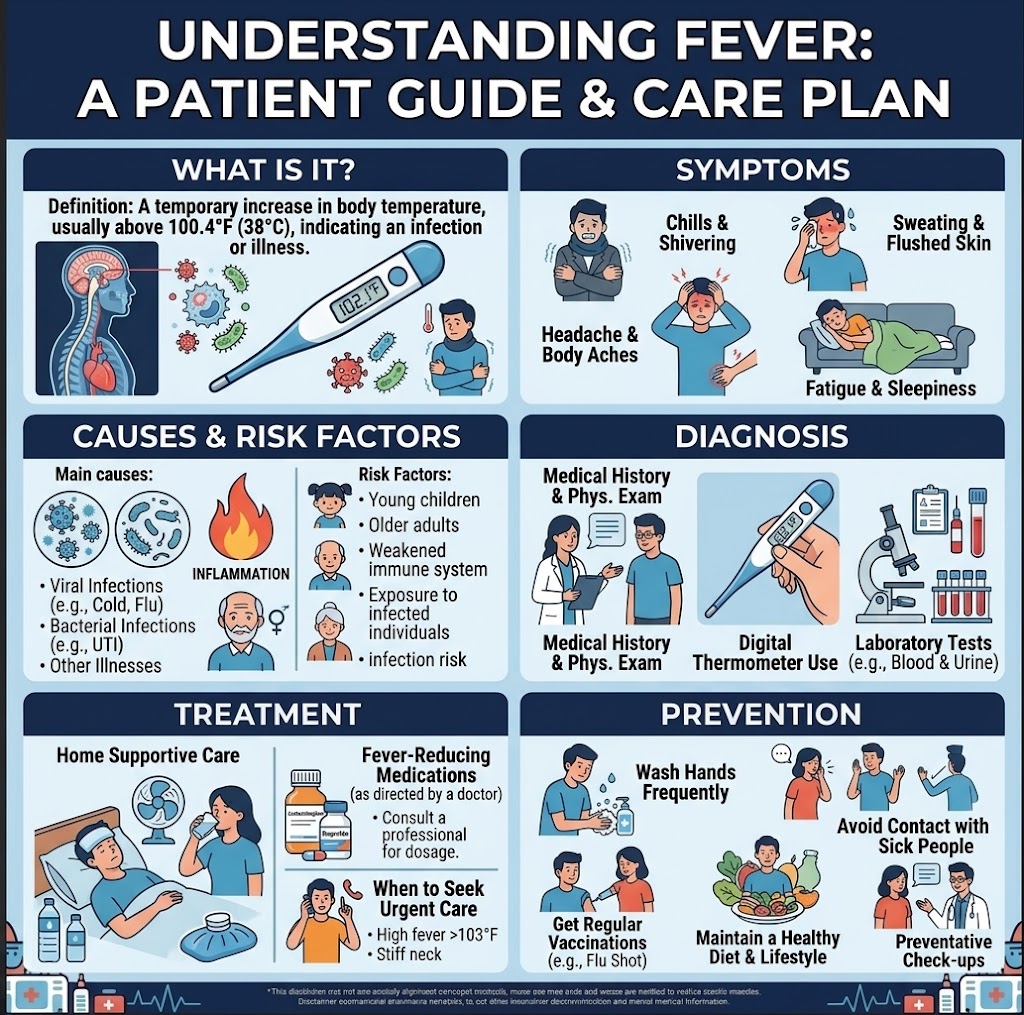
A fever is a temporary increase in your body's temperature, often signaling that your immune system is fighting off an infection. While it can cause discomfort, a fever is usually not harmful and often helps your body combat illness. For most adults and children, fevers typically resolve within a few days and may not require specific treatment unless they cause significant distress. However, for infants, especially those under a few months old, even a slightly elevated temperature can indicate a serious infection and warrants immediate medical attention. Normal body temperature varies, but an oral temperature of 100 F (37.8 C) or higher is generally considered a fever.
Understanding the Condition
Fever: A Guide to Understanding and Managing Body Temperature Changes
Understanding the Condition
Common Symptoms
Sweating: Increased perspiration as the body tries to cool down.
Chills and Shivering: Involuntary muscle contractions to generate heat.
Headache: Pain or throbbing sensation in the head.
Muscle Aches: Generalized soreness or pain in the muscles.
Loss of Appetite: Reduced desire to eat.
Irritability: Increased agitation or crankiness, especially in children.
Dehydration: Loss of body fluids due to increased fluid needs and sweating.
General Weakness: A feeling of being tired or lacking energy.
Consultation Guide
Which Specialist to Meet
For most fevers, you can start by consulting a General Practitioner (GP) or your family doctor. If the fever affects a child, a Pediatrician is the most appropriate specialist. In cases of very high fever, severe symptoms, or for infants under three months old with any fever, seeking care at an urgent care center or emergency room is advisable.
Preparations Before Your Visit
Before your visit, make a note of:* The highest temperature reading and the type of thermometer used.* All accompanying symptoms, their onset, and how they have progressed.* Any recent illnesses, travel, or exposure to sick individuals.* Your or your child's medical history, including any chronic conditions or medications.* Any attempts to lower the fever and their effectiveness.
Book a doctor visit near me
Physical Examination and Symptom Review
A healthcare provider will thoroughly examine you or your child to look for signs of infection or other causes of the fever. This includes checking the throat, ears, lungs, and abdomen. They will also ask detailed questions about symptoms, how long they've been present, and any relevant medical history.
The doctor will ask about your symptoms, medical history, and recent activities. They will use tools like an otoscope to look in the ears and throat, and a stethoscope to listen to your heart and lungs. This is generally a quick and painless part of the visit.
Temperature Measurement
This involves using a thermometer to accurately gauge body temperature. Different types of thermometers are available:* Oral (mouth) thermometers are common for older children and adults.* Rectal thermometers are considered the most accurate for infants (especially under 3 months) and young children up to age 3, as they provide the best measure of core body temperature. It's crucial to use a separate, clearly labeled thermometer for rectal use.* Forehead (temporal artery) and Ear (tympanic) thermometers are convenient but may be less accurate than oral or rectal methods.* Armpit thermometers are generally the least accurate.
Rest and Hydration: Get plenty of rest to help your body recover. Drink ample fluids like water, clear broths, and rehydration solutions to prevent dehydration, especially with sweating. (Duration: As needed until symptoms subside, typically a few days.)
Monitor Symptoms Closely: Pay attention to fever duration, height, and any accompanying symptoms. Keep a record of temperature readings and symptom progression.
Know When to Call a Doctor: * For Infants (under 3 months): Call immediately for any fever, even low-grade.* For Children: Seek medical advice if fever is 102 F (38.9 C) or higher, lasts more than 3 days, or if they appear unwell, are very irritable, have a stiff neck, severe headache, unexplained rash, or difficulty breathing.* For Adults: Consult a doctor if fever is 103 F (39.4 C) or higher, lasts more than 3 days, or is accompanied by severe headache, stiff neck, shortness of breath, unusual rash, or confusion.
Proper Thermometer Use: Understand how to use different types of thermometers correctly for accurate readings, especially for infants where rectal temperature is preferred.
Consultation Guide
A fever is a temporary increase in your body's temperature, often signaling that your immune system is fighting off an infection. While it can cause discomfort, a fever is usually not harmful and often helps your body combat illness. For most adults and children, fevers typically resolve within a few days and may not require specific treatment unless they cause significant distress. However, for infants, especially those under a few months old, even a slightly elevated temperature can indicate a serious infection and warrants immediate medical attention. Normal body temperature varies, but an oral temperature of 100 F (37.8 C) or higher is generally considered a fever.
An X-ray is a non-invasive imaging test that uses a small amount of radiation to create pictures of the inside of your body, particularly bones and internal organs like the lungs. If an underlying condition like pneumonia (a lung infection) or a swallowed foreign object is suspected as the cause of the fever, an X-ray can help identify it. Dense materials like bone appear white, air appears black, and soft tissues like fat and muscle appear in shades of gray.
You will be asked to remove any metal objects or jewelry. A technician will position you on an examination table or in front of an X-ray plate, and you may need to hold your breath and stay very still for a few seconds while the images are taken. The procedure itself is quick and painless. In some cases, a special liquid called a contrast medium might be given (swallowed or injected) to highlight specific areas, which might cause a temporary warm sensation or a strange taste.
Comfort Measures: Dress in light clothing and use a light blanket. Maintain a comfortable room temperature. A lukewarm sponge bath may help cool the skin and provide comfort, but avoid cold baths which can cause shivering. (Duration: As needed for discomfort, typically a few days.)
Stay Up-to-Date on Vaccinations: Ensure you and your family receive recommended vaccinations, including the annual flu shot and other childhood immunizations, which can prevent many infections that cause fever.
Long-Term Monitoring and When to Seek Help
Diagnostic Procedures
What to Expect
What to Expect
A healthcare professional or you will place a thermometer in the mouth (under the tongue), rectum (for infants/young children), against the forehead, or in the ear. The reading typically appears within seconds to a minute. Rectal temperature taking involves gently inserting the lubricated tip a small distance into the rectum. While generally quick, it might be slightly uncomfortable for infants. Always report the temperature reading and the type of thermometer used to your healthcare provider.
What to Expect
Treatment Options
Home Remedies and Supportive Care
Medications
Fever-Reducing Medications: Over-the-counter medications can help lower fever and relieve discomfort. These are generally recommended if the fever is causing significant distress. Always follow dosage instructions carefully, especially for children, and consult a doctor or pharmacist if unsure. Do not give aspirin to children or teenagers due to the risk of a serious condition. (Duration: As needed, typically for a few days until fever resolves or discomfort lessens.)
Prevention & Long-Term Wellbeing
Prevention
Practice Good Hygiene: Wash hands frequently with soap and water, especially after coughing, sneezing, using the restroom, and before eating. Use an alcohol-based hand sanitizer if soap and water are unavailable.
Avoid Sick Individuals: Limit close contact with people who are sick. If you are sick, try to stay home to prevent spreading illness to others.
Tags & Topics
Notice an error or need an update?
Help us keep medical information accurate. Report incorrect info or suggest an edit.


