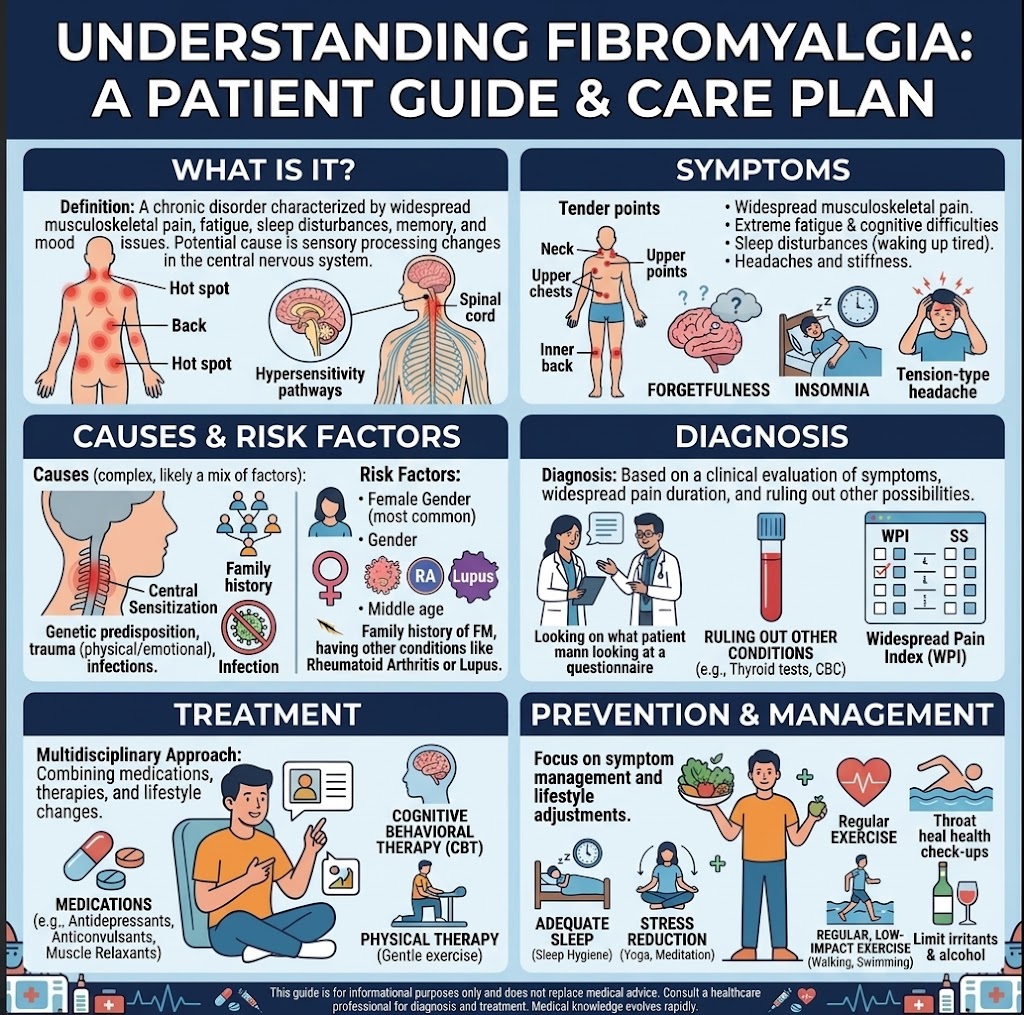
Fibromyalgia is a chronic condition characterized by widespread body pain, often accompanied by severe fatigue, sleep disturbances, memory issues, and mood changes. Researchers believe it stems from how the brain and spinal cord process pain signals, leading to increased sensitivity to both painful and non-painful stimuli. Symptoms can begin after a specific event like an injury, surgery, infection, or significant emotional stress, or they can develop gradually over time without a clear trigger. Women are more frequently affected than men. While there is no cure, a combination of treatments, including medication, exercise, talk therapy, and stress-reduction techniques, can effectively manage symptoms.
Understanding the Condition
Understanding Fibromyalgia: A Guide for Non-Medical Readers
Understanding the Condition
Fibromyalgia is a chronic condition characterized by widespread body pain, often accompanied by severe fatigue, sleep disturbances, memory issues, and mood changes. Researchers believe it stems from how the brain and spinal cord process pain signals, leading to increased sensitivity to both painful and non-painful stimuli. Symptoms can begin after a specific event like an injury, surgery, infection, or significant emotional stress, or they can develop gradually over time without a clear trigger. Women are more frequently affected than men. While there is no cure, a combination of treatments, including medication, exercise, talk therapy, and stress-reduction techniques, can effectively manage symptoms.
Common Symptoms
Widespread Pain: Persistent pain across the body, often described as a dull ache.
Fatigue: Exhaustion that interferes with daily activities, even after adequate sleep.
Sleep Problems: Difficulty falling or staying asleep, leading to waking up feeling unrefreshed.
Cognitive Difficulties ('Fibro Fog'): Problems with memory, concentration, and mental clarity.
Mood Disorders: Increased likelihood of experiencing depression and anxiety.
Other Related Conditions: Commonly associated conditions include Irritable Bowel Syndrome (IBS), migraines and other headaches, bladder problems, Temporomandibular Joint (TMJ) disorders (jaw pain), and Postural Tachycardia Syndrome (PoTS - fast heart rate upon standing).
Consultation Guide
Which Specialist to Meet
Begin by discussing your symptoms with your primary care doctor. They may refer you to specialists such as a rheumatologist (for musculoskeletal conditions), a neurologist (for nerve-related issues), a pain management specialist, a physical therapist, or a mental health professional like a psychiatrist or psychologist.
Preparations Before Your Visit
Before your appointment, it's helpful to write down a detailed list of your symptoms, including when they started, what makes them better or worse, and how they affect your daily life. Also, prepare a list of all medications, supplements, and vitamins you are currently taking, along with any relevant medical history. Write down any questions you have for your doctor.
Book a doctor visit near me
Diagnosing fibromyalgia primarily relies on your doctor's clinical evaluation of your symptoms, medical history, and a physical exam. There isn't a single definitive test for fibromyalgia itself. However, your doctor may order specific blood tests to rule out other conditions that cause similar symptoms or to identify co-occurring issues.
Your doctor will ask detailed questions about your pain, fatigue, sleep patterns, and other symptoms. They will also perform a physical examination to check for tender points and assess your overall health. There is no specific procedure for this initial diagnostic approach, but rather a thorough medical evaluation.
Complete Blood Count (CBC)
This common blood test provides a broad overview of your general health by measuring the number of red blood cells, white blood cells, and platelets in your blood. Abnormalities can indicate various conditions, such as anemia, infection, or other underlying health problems that might mimic or contribute to fibromyalgia symptoms.
The sed rate test is another blood test used to detect inflammation in the body. When red blood cells clump together due to inflammation, they settle faster in a test tube. A higher sed rate indicates increased inflammatory activity, which can be linked to various conditions, though it doesn't pinpoint the exact cause of inflammation. It helps doctors understand if an inflammatory condition might be contributing to your symptoms.
Pain Relievers: Over-the-counter pain medications may offer some relief. For more severe pain, your doctor might prescribe stronger non-opioid options. (Duration: As needed for symptom relief, often long-term under medical supervision.)
Occupational Therapy: Helps you learn to adapt daily tasks and modify your environment to reduce strain and manage symptoms, making activities easier to perform. (Duration: Varies based on individual needs, from several weeks to months.)
Counseling/Talk Therapy (e.g., Cognitive Behavioral Therapy - CBT): Helps you learn coping strategies for chronic pain, manage stress, improve sleep, and address mood changes like depression or anxiety. (Duration: Typically short-term (e.g., 8-20 sessions), but can be extended as needed.)
Complementary Procedures
Acupuncture: Involves inserting very thin needles into specific points on the body. While traditional explanations involve balancing energy flow, Western medicine suggests it may stimulate nerves, muscles, and connective tissue, potentially boosting the body's natural painkillers. (Duration: Varies; often involves a series of sessions (e.g., 6-12) over several weeks, with follow-up as needed.)
Stress Management Techniques: Practice relaxation methods such as deep breathing, meditation, mindfulness, or engaging in hobbies to lower stress levels, which can often trigger or worsen symptoms.
Prioritize Quality Sleep: Establish a consistent sleep schedule, ensure your bedroom is dark and quiet, and avoid caffeine and large meals before bedtime to improve sleep quality.
Limit Caffeine and Alcohol: These can disrupt sleep and potentially worsen symptoms for some individuals.
Maintain a Consistent Routine: Regular daily routines for sleep, meals, and activities can help regulate your body's rhythm and reduce symptom variability.
Seek Support: Connect with support groups or trusted friends and family to share experiences and receive emotional support.
Diagnostic Procedures
General Diagnostic Approach
What to Expect
What to Expect
A healthcare professional will draw a small sample of blood, typically from a vein in your arm, using a needle. You might feel a brief sting or pinch. The blood is collected into a tube and sent to a lab for analysis. The procedure itself usually takes only a few minutes.
Sed Rate (Erythrocyte Sedimentation Rate - ESR)
What to Expect
Similar to a CBC, a small blood sample will be drawn from a vein in your arm. The process is quick, typically lasting only a few minutes, and involves a brief prick from the needle. The blood sample is then sent for laboratory analysis to measure how quickly your red blood cells settle.
Treatment Options
Medications
Antidepressants: Certain antidepressant medications are approved to help reduce pain, fatigue, and sleep problems associated with fibromyalgia, in addition to addressing mood issues. (Duration: Typically long-term treatment, adjusted by your doctor.)
Nerve Pain Modifiers: Some medications originally developed for seizures can help reduce specific types of pain in fibromyalgia by calming overactive nerve signals. (Duration: Often long-term, dosage adjusted based on response and side effects.)
Therapies
Physical Therapy: Tailored exercise programs and techniques to improve strength, flexibility, stamina, and reduce pain. (Duration: Ongoing, often starting with regular sessions and progressing to a home exercise program.)
Prevention & Long-Term Wellbeing
Self-Care and Lifestyle Adjustments
Regular, Gentle Exercise: Activities like walking, swimming, cycling, or yoga can reduce pain and improve sleep and mood. Start slowly and gradually increase intensity.
Healthy Diet: While no specific diet cures fibromyalgia, eating a balanced diet rich in fruits, vegetables, and lean proteins can support overall health and energy levels.
Tags & Topics
Notice an error or need an update?
Help us keep medical information accurate. Report incorrect info or suggest an edit.


