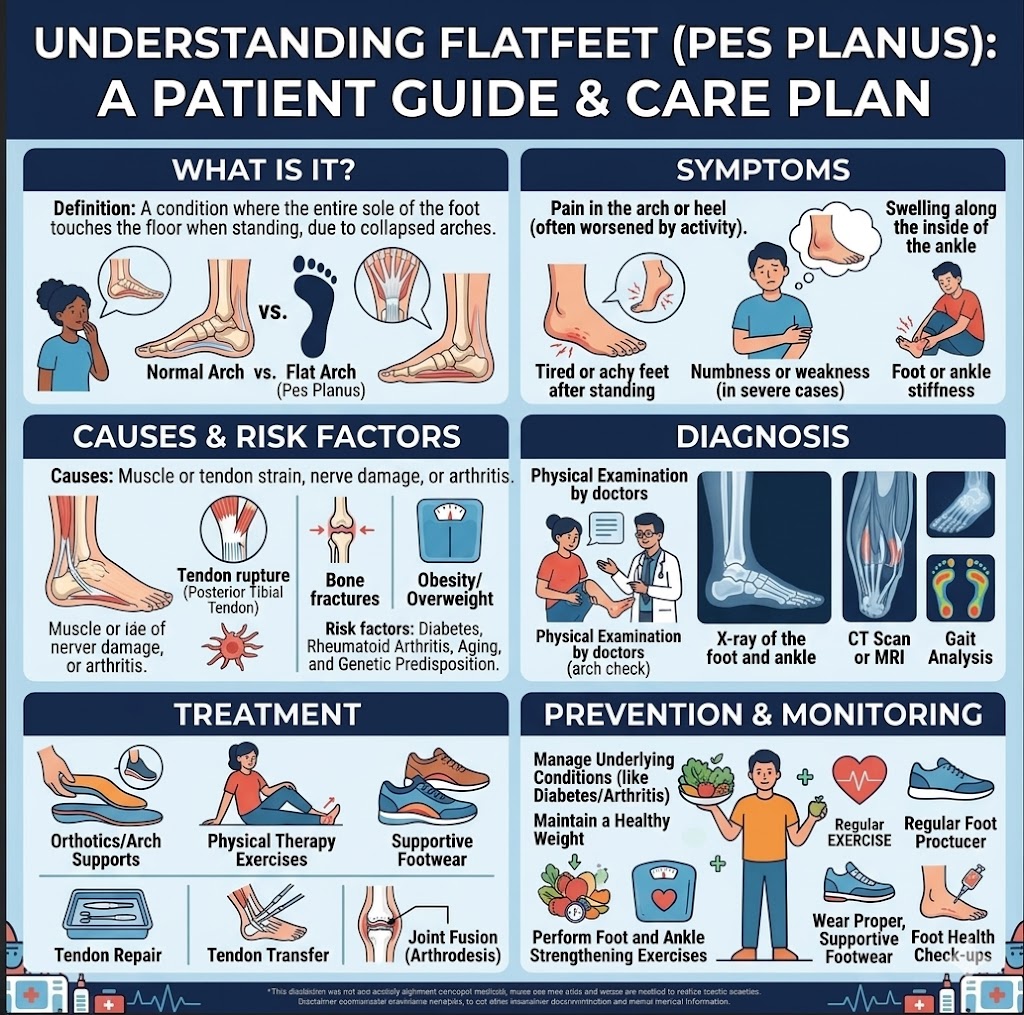
Flatfeet is a common condition where the natural arches on the inside of your feet flatten out when you stand up. This causes the entire sole of the foot to touch the floor and the feet to point slightly outward. While often present from childhood if arches don't develop, it can also emerge later in life due to injury or age-related wear and tear. Most people with flatfeet experience no pain and require no treatment. However, if it causes pain or limits daily activities, medical evaluation is recommended.
Understanding the Condition
Flatfeet: A Guide to Understanding and Managing Flat Arches
Understanding the Condition
Common Symptoms
Foot Pain: Pain, particularly in the heel or arch area of the foot.
Activity-Related Worsening: Pain that tends to increase with physical activity.
Ankle Swelling: Swelling that may occur along the inside of the ankle.
Consultation Guide
Which Specialist to Meet
Before your visit, make a detailed list of your symptoms, including when they started, what makes them better or worse, and how they affect your daily life. Gather any relevant medical history, including past foot or ankle injuries. Wear comfortable shoes and clothing that allow the doctor to easily examine your feet and ankles.
Book a doctor visit near me
Supportive Footwear and Orthotics: Wearing shoes with good arch support or using custom-made or over-the-counter arch supports (orthotics) can help distribute pressure more evenly across the foot and provide cushioning. (Duration: Ongoing for consistent symptom relief and support.)
Rest and Ice: Resting your feet and applying ice packs can help reduce pain and inflammation, especially after activities that worsen symptoms. (Duration: As needed for pain relief, typically 15-20 minutes several times a day.)
Stretching Exercises: Performing gentle stretches for the Achilles tendon and calf muscles can improve flexibility and relieve tension that may contribute to flatfoot pain. (Duration: Daily, ongoing for sustained flexibility.)
Listen to Your Body: Pay close attention to any foot or ankle pain. If symptoms worsen or new issues arise, consult your healthcare provider promptly for evaluation.
Regular Footwear Evaluation: Periodically assess your shoes for wear and tear, replacing them when they lose their support. Consider consulting a specialist for custom orthotics if needed to ensure proper ongoing support.
Activity Modification: If certain activities consistently trigger pain or discomfort, modify them or incorporate additional supportive measures (like orthotics or braces) to protect your feet and prevent exacerbation of symptoms.
Consultation Guide
Flatfeet is a common condition where the natural arches on the inside of your feet flatten out when you stand up. This causes the entire sole of the foot to touch the floor and the feet to point slightly outward. While often present from childhood if arches don't develop, it can also emerge later in life due to injury or age-related wear and tear. Most people with flatfeet experience no pain and require no treatment. However, if it causes pain or limits daily activities, medical evaluation is recommended.
Diagnostic Procedures
You should consider seeing a foot and ankle specialist, such as a podiatrist (a doctor specializing in foot health) or an orthopedic surgeon (a doctor specializing in bones, joints, and tendons). These specialists can accurately diagnose your condition and recommend appropriate treatment.
Preparations Before Your Visit
Your doctor will visually examine your feet and ankles while you stand, sit, and walk. They will check the range of motion in your foot joints and assess the strength of your foot and ankle muscles. They might ask you to stand on your tiptoes to observe if an arch forms.
What to Expect
The doctor will observe your feet and how you walk. They may press on different areas of your foot to check for tenderness or swelling. You might be asked to perform simple movements like standing on one foot or walking a short distance. This is a quick and painless process.
An X-ray is a quick, painless imaging test that uses a small amount of radiation to create pictures of the bones inside your body. It helps doctors see the structure and alignment of your foot bones and check for any abnormalities, such as arthritis or bone deformities that might contribute to flatfeet. Dense materials like bone appear white, while softer tissues appear in shades of gray.
What to Expect
You will be asked to remove any jewelry or metal objects from the area being examined. You will lie or sit on an X-ray table, and a technician will position your foot carefully to capture different angles. You may need to hold still for a few seconds during each image capture. The procedure is typically very fast, painless, and exposes you to minimal radiation.
Treatment Options
Medications
Over-the-Counter Pain Relievers: Non-prescription medications, such as anti-inflammatory drugs, can help reduce pain and inflammation. (Duration: As directed, typically short-term for acute pain episodes.)
Therapies
Physical Therapy: A physical therapist can provide specific exercises to strengthen the muscles that support your arch, improve ankle stability, and correct walking patterns. They may also use other techniques like massage or ultrasound. (Duration: Several weeks to months, depending on the severity and individual progress.)
Surgical Procedures
Tendon Repair or Reconstruction: For cases where a tendon (especially the posterior tibial tendon) is severely damaged or torn, surgery may involve repairing or reconstructing the affected tendon. (Duration: Recovery can take several months, often followed by extensive physical therapy for full rehabilitation.)
Prevention & Long-Term Wellbeing
Bone Reshaping (Osteotomy): In some instances, bones in the foot might be cut and reshaped to improve the arch and alignment, correcting structural deformities. (Duration: Recovery typically involves several months, followed by rehabilitation to regain strength and mobility.)
Joint Fusion (Arthrodesis): For severe cases, particularly those with significant arthritis or deformity, certain foot joints might be fused together to create stability and correct the arch permanently. (Duration: Long recovery period, often 3-6 months non-weight-bearing, with full recovery potentially up to a year.)
Prevention
Maintain a Healthy Weight: Excess body weight places increased stress on your feet and arches, which can contribute to flattening and associated pain. Maintaining a healthy weight reduces this strain.
Wear Supportive Footwear: Choose shoes that provide adequate arch support and cushioning, especially if you spend a lot of time on your feet or engage in physical activity. Avoid prolonged use of flat, unsupportive shoes.
Regular Exercise and Stretching: Incorporate exercises that strengthen foot and ankle muscles and stretches that maintain flexibility in your calves and Achilles tendon. This helps support the natural arch.
Long-Term Monitoring
Tags & Topics
Notice an error or need an update?
Help us keep medical information accurate. Report incorrect info or suggest an edit.


