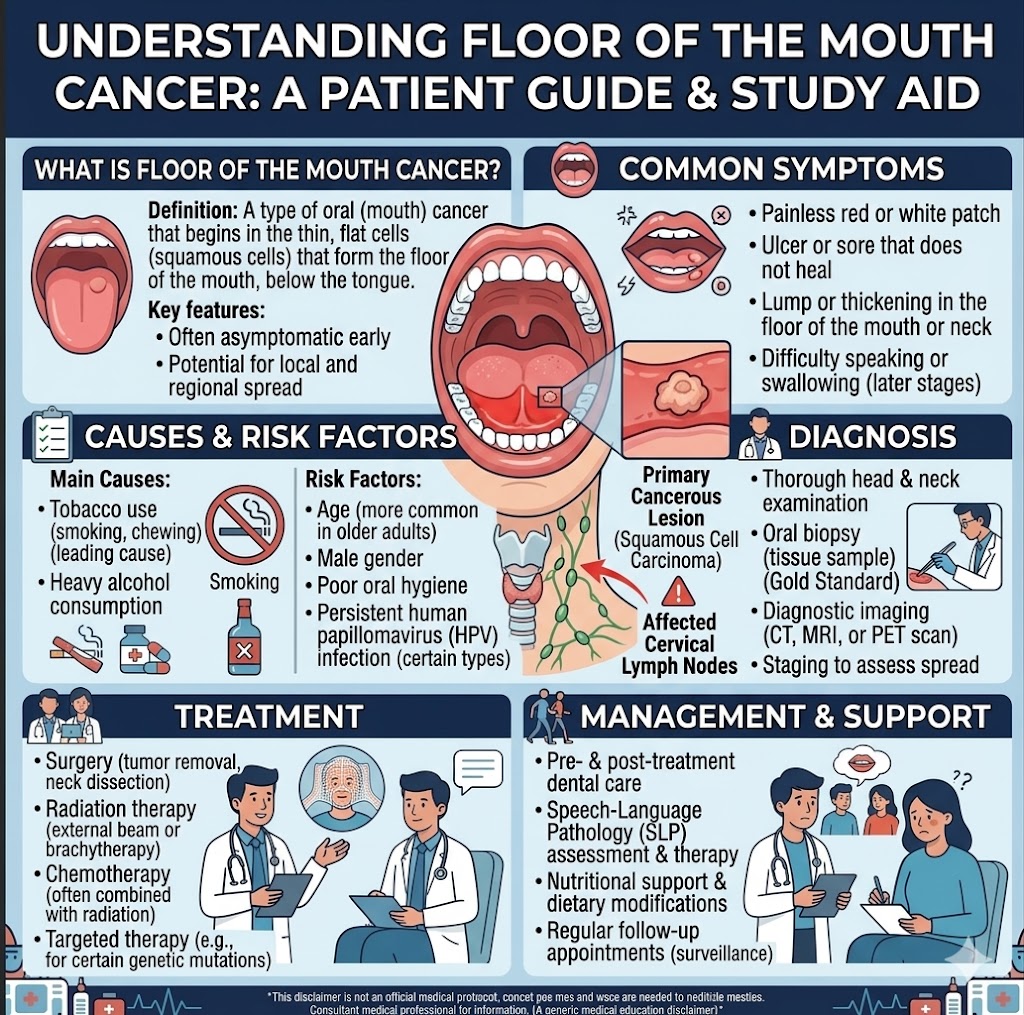
Floor of the mouth cancer is a type of cancer that begins with uncontrolled cell growth under the tongue. It most commonly starts in the thin, flat cells lining the inside of the mouth, known as squamous cells, leading to a diagnosis of squamous cell carcinoma. This cancer causes noticeable changes in the tissue under the tongue, such as persistent lumps or sores. Treatment typically involves a combination of surgery, radiation, and chemotherapy.
Understanding the Condition
Floor of the Mouth Cancer: A Patient's Guide
Understanding the Condition
Common Symptoms
Mouth Pain: Discomfort or aching in the mouth area, especially under the tongue.
Sores That Won't Heal: Open sores or ulcers in the mouth that persist for more than a few weeks.
Difficulty Moving the Tongue: Challenges with normal tongue movements, impacting speech or eating.
Before your appointment, gather information about your medical history, including any previous diagnoses, medications you're taking, and known allergies. Be prepared to discuss your symptoms in detail, including when they started, how often they occur, and if anything makes them better or worse. Write down any questions you have for the doctor. If you use tobacco or alcohol, be ready to discuss your habits.
Book a doctor visit near me
Palliative Care: Specialized medical care focused on providing relief from the symptoms and stress of a serious illness. The goal is to improve quality of life for both the patient and the family. It's offered alongside other treatments. (Duration: Ongoing, provided for as long as needed throughout the illness journey, starting at any stage of cancer.)
Undergo Regular Dental and Health Check-ups: Schedule routine visits with your dentist and doctor. They can perform oral screenings to look for any early signs of cancer or precancerous changes, even if you don't have symptoms.
Long-Term Monitoring and Support
Self-Monitoring and Symptom Awareness: Be vigilant about any new or persistent changes in your mouth, under your tongue, or in your neck. Promptly report any concerns, such as new lumps, sores that don't heal, or persistent pain, to your healthcare provider.
Consultation Guide
Floor of the mouth cancer is a type of cancer that begins with uncontrolled cell growth under the tongue. It most commonly starts in the thin, flat cells lining the inside of the mouth, known as squamous cells, leading to a diagnosis of squamous cell carcinoma. This cancer causes noticeable changes in the tissue under the tongue, such as persistent lumps or sores. Treatment typically involves a combination of surgery, radiation, and chemotherapy.
Loose Teeth: Teeth that feel unstable or begin to loosen without a clear dental cause.
Pain with Swallowing: Discomfort or difficulty experienced when trying to swallow food or liquids.
Diagnostic Procedures
Physical Exam and Oral Screening
A healthcare professional will visually inspect your mouth, tongue, and throat, and carefully feel your neck and under your jaw for any lumps, sores, or abnormal areas.
What to Expect
During this quick and generally painless exam, the doctor will ask you to open your mouth wide so they can look inside. They will use their fingers to gently feel for any unusual textures, growths, or tenderness in your mouth, under your tongue, and around your neck.
If a suspicious area is found, a small tissue sample will be removed from the affected area under the tongue and sent to a lab for microscopic examination. This is the only definitive way to diagnose cancer.
What to Expect
The doctor will first numb the area with a local anesthetic. You might feel a brief sting or pressure. Then, a small piece of tissue will be carefully removed. You may experience some mild soreness or discomfort at the biopsy site for a few days afterward, which can usually be managed with over-the-counter pain relievers.
CT Scan (Computed Tomography Scan)
A CT scan uses specialized X-ray equipment and computer processing to create detailed cross-sectional images (slices) of bones, blood vessels, and soft tissues inside the body. It helps determine the size and exact location of a tumor and if it has spread to nearby areas.
What to Expect
You will lie still on a narrow table that slides into a large, donut-shaped machine. You might hear humming or clicking noises. Sometimes, a contrast dye is injected into a vein to make certain structures show up more clearly; you might feel a warm flush or a metallic taste in your mouth. It's important to remain still during the scan, which typically takes 10-30 minutes.
PET Scan (Positron Emission Tomography Scan)
A PET scan is an imaging test that helps reveal the metabolic activity of tissues and organs. It uses a small amount of a radioactive tracer, which cancer cells tend to absorb more actively than healthy cells, making them show up as bright spots. Often combined with a CT scan (PET-CT) for more detailed anatomical information.
What to Expect
Before the scan, a small amount of a radioactive sugar-like substance (tracer) will be injected into a vein, usually in your arm. You'll then wait for about an hour for the tracer to distribute throughout your body. After that, you'll lie on a narrow table that slides into a large scanner for about 30 minutes. You must remain very still to ensure clear images. The radiation exposure is minimal and quickly leaves your body.
Nutritional Support (e.g., Tube Feeding): If difficulty eating or swallowing prevents adequate nutrient intake, a feeding tube might be used to deliver liquid nutrition directly to the stomach or small intestine. This ensures the body receives essential nutrients for strength and recovery. (Duration: As needed; can be short-term during acute treatment phases or long-term for ongoing difficulties.)
Treatment Options
Surgical Procedures
Tumor Removal (Glossectomy/Floor of Mouth Resection): Surgery involves carefully removing the cancerous tumor and some surrounding healthy tissue to ensure all cancer cells are eliminated. Depending on the extent of the cancer, nearby lymph nodes in the neck may also be removed (neck dissection) to check for spread. (Duration: A single procedure, followed by a recovery period that varies based on the surgery's complexity, typically weeks to months.)
External Beam Radiation Therapy: This treatment uses high-energy beams, similar to X-rays, precisely aimed at the tumor to destroy cancer cells and shrink tumors. It's often delivered from a machine outside the body. (Duration: Typically given five days a week for several weeks, often 5-7 weeks.)
Brachytherapy (Internal Radiation): A type of radiation therapy where a small, solid radioactive source is temporarily or permanently placed directly into or very close to the tumor. This delivers a high dose of radiation directly to the cancer while minimizing exposure to surrounding healthy tissues. (Duration: Can range from a few minutes to several days, depending on the type and dosage. Sometimes a single treatment, or multiple over days.)
Systemic Chemotherapy: Chemotherapy uses powerful drugs to kill fast-growing cancer cells throughout the body. It can be given intravenously (through a vein) or orally (pills). It's often used in combination with radiation or surgery, or as the primary treatment for advanced cancer. (Duration: Administered in cycles, which can range from weekly to every few weeks, for a total duration of several months, depending on the cancer type and response.)
Photodynamic Therapy (PDT): A two-stage treatment where a light-sensitive medication is applied or injected into the body. After a certain time, a special light, usually from a laser, is directed at the cancerous area to activate the medication, which then destroys the cancer cells. (Duration: Typically involves a single session for light application after drug administration, but may require repeat treatments over time.)
Cancer Rehabilitation: This care helps people with cancer maintain or regain their physical function and manage side effects from cancer and its treatments. It may include physical therapy, speech therapy, occupational therapy, and nutritional counseling. (Duration: Varies greatly based on individual needs, can be short-term or ongoing for many months or years, starting before, during, or after treatment.)
Regular Follow-up Appointments: After treatment, consistent follow-up visits with your oncology team are crucial for monitoring recovery, managing side effects, detecting any recurrence early, and screening for new cancers.
Prevention & Long-Term Wellbeing
Unexplained Weight Loss: Significant loss of body weight without intentional dieting or changes in activity.
Neck Swelling: A new or growing lump or swelling in the neck area that may or may not be painful.
White Patches: Persistent white patches inside the mouth that cannot be scraped off.
- Consultation Guide
Which Specialist to Meet
Initially, you should consult your general practitioner or a dentist for an initial assessment. If cancer is suspected, you will likely be referred to specialists such as an Oral and Maxillofacial Surgeon, a Head and Neck Surgeon, a Medical Oncologist (for chemotherapy), and a Radiation Oncologist (for radiation therapy). Other specialists like speech therapists or dietitians may also be involved in your care.
Preparations Before Your Visit
Prevention
Avoid Tobacco Products: Refrain from using all forms of tobacco, including cigarettes, cigars, pipes, chewing tobacco, and snuff, as they significantly increase the risk. If you currently use tobacco, seek professional help to quit.
Limit Alcohol Consumption: If you choose to drink alcohol, do so in moderation. For healthy adults, this typically means up to one drink per day for women and up to two drinks per day for men. Combining alcohol and tobacco greatly increases risk.
Consider the HPV Vaccine: Discuss with your doctor whether the Human Papillomavirus (HPV) vaccine is appropriate for you. This vaccine can protect against certain HPV strains linked to various cancers, including some oral cancers.
Maintain a Healthy Lifestyle: Continue to avoid tobacco and limit alcohol. Focus on a balanced diet rich in fruits and vegetables, and maintain regular physical activity to support overall health and well-being.
Tags & Topics
Notice an error or need an update?
Help us keep medical information accurate. Report incorrect info or suggest an edit.


