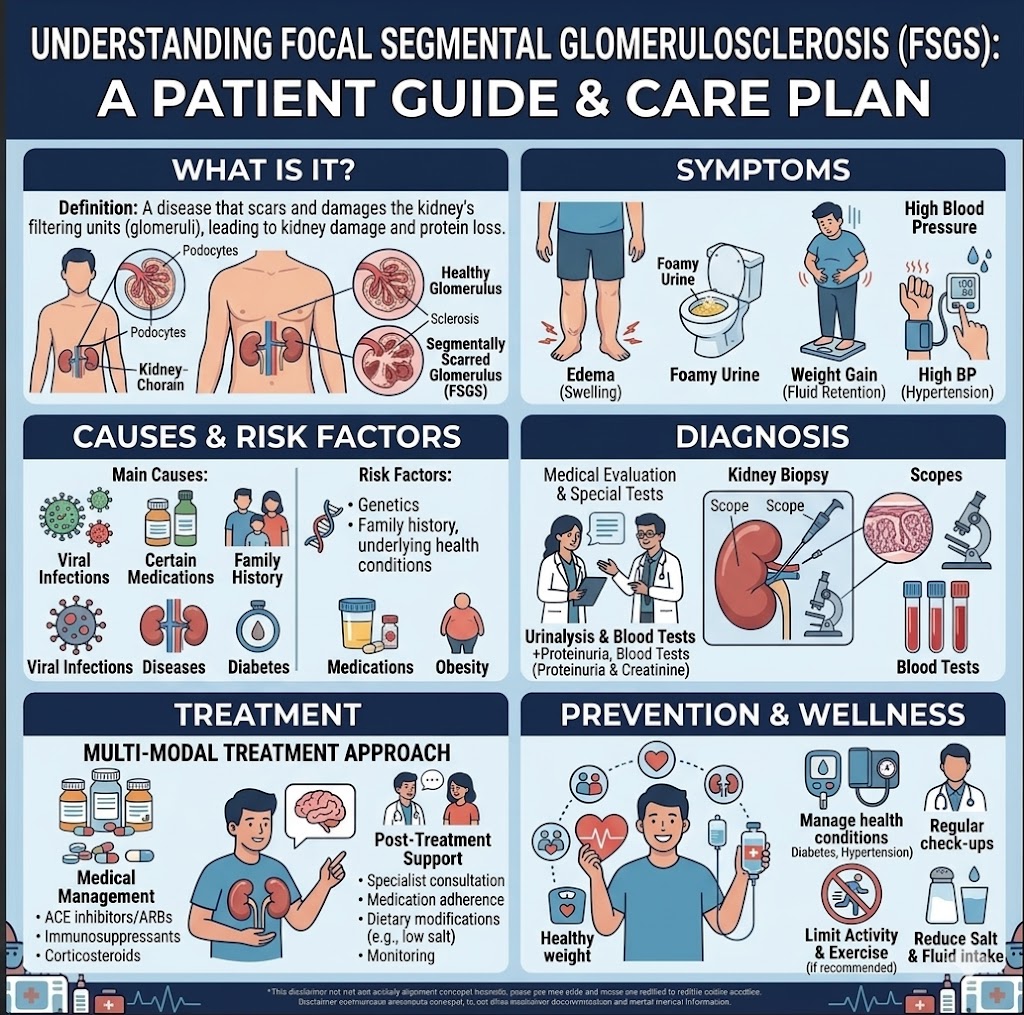
Focal Segmental Glomerulosclerosis (FSGS) is a rare but serious kidney disease that causes scarring in the glomeruli—the tiny, delicate filters in your kidneys that clean waste from your blood. When these filters are scarred, they cannot work properly, causing important proteins to leak out of your blood and into your urine. Over time, this scarring can lead to permanent kidney damage or kidney failure. FSGS can be 'primary' (meaning it happens on its own without a known cause), 'secondary' (triggered by another condition like obesity, infection, or diabetes), 'genetic' (passed down through families), or 'unknown'. Treatment depends on the specific type you have and focuses on protecting your kidney function.
Understanding the Condition
Understanding Focal Segmental Glomerulosclerosis (FSGS)
Understanding the Condition
Common Symptoms
Swelling (Edema): Noticeable fluid retention and swelling, most commonly in your legs, ankles, feet, and hands, as well as puffiness around your eyes.
Foamy Urine: Urine that looks unusually bubbly or foamy, which is a key sign that large amounts of protein are leaking into your waste.
To prepare for your visit, make a list of all your symptoms and when they started. Bring a complete list of all medications, over-the-counter drugs, vitamins, and supplements you take. Gather your personal medical history, particularly any history of diabetes, high blood pressure, or auto-immune diseases, and find out if anyone in your family has ever had kidney issues. Write down your top questions to ask the doctor during your appointment.
Book a doctor visit near me
Consultation Guide
Focal Segmental Glomerulosclerosis (FSGS) is a rare but serious kidney disease that causes scarring in the glomeruli—the tiny, delicate filters in your kidneys that clean waste from your blood. When these filters are scarred, they cannot work properly, causing important proteins to leak out of your blood and into your urine. Over time, this scarring can lead to permanent kidney damage or kidney failure. FSGS can be 'primary' (meaning it happens on its own without a known cause), 'secondary' (triggered by another condition like obesity, infection, or diabetes), 'genetic' (passed down through families), or 'unknown'. Treatment depends on the specific type you have and focuses on protecting your kidney function.
Rapid Weight Gain: An unexpected, rapid increase in body weight caused by the buildup of excess fluid in your tissues.
High Blood Pressure (Hypertension): Elevated blood pressure levels that develop or worsen as a direct result of kidney damage.
Consultation Guide
Which Specialist to Meet
A healthcare professional will insert a small needle into a vein in your arm to draw a tube of blood. This is a quick procedure that may cause a mild, brief pinch.
A lab test used to look for specific altered genes that are known to cause genetic or familial forms of FSGS.
Diagnostic Procedures
You should meet with a Nephrologist, a medical doctor who specializes in diagnosing and treating kidney diseases.
Preparations Before Your Visit
Urinalysis (Urine Test)
A simple lab test used to detect high levels of protein (proteinuria) and red blood cells in your urine, which are key indicators of kidney filter damage.
What to Expect
You will be asked to collect a small, clean-catch sample of your urine in a sterile cup during your clinic visit. For some diagnostics, your doctor may ask you to collect all your urine over a 24-hour period at home.
Blood tests measure the levels of waste products like creatinine and urea nitrogen in your blood. Elevated levels show that your kidneys are not filtering waste efficiently. They also check your blood protein levels.
What to Expect
This is the only definitive way to diagnose FSGS. A tiny sample of kidney tissue is removed and examined under a microscope to look for characteristic scarring.
What to Expect
You will lie on your stomach, and the doctor will numb the skin on your back with a local anesthetic. Using ultrasound or CT guidance, a thin, specialized biopsy needle is inserted through your skin and into your kidney to retrieve a tiny tissue sample. You will need to lie still for several hours afterward to ensure there is no internal bleeding.
What to Expect
This requires a simple blood draw or a saliva swab. The sample is sent to a specialized laboratory, and results may take several weeks to return.
Treatment Options
Medications
Blood Pressure Regulators: Medications such as ACE inhibitors or Angiotensin II Receptor Blockers (ARBs) are prescribed to lower overall blood pressure and reduce the amount of protein leaking into your urine, protecting kidney filters from further wear and tear. (Duration: Typically lifelong or long-term daily management.)
Immunosuppressive Drugs: Medicines (like corticosteroids or other immune-calming drugs) that suppress your body's immune response to stop it from attacking and inflaming the kidney filters. (Duration: Often prescribed as a daily course lasting from 3 to 6 months, then gradually tapered off based on your response.)
Water Pills (Diuretics): These drugs help your kidneys flush excess water and salt out of your body, reducing swelling in your legs and eyes and helping control blood pressure. (Duration: Taken daily or as needed, depending on fluid retention levels.)
Cholesterol-Lowering Medications: Medications to control high blood cholesterol levels, which commonly rise in response to protein loss in the urine. (Duration: Long-term daily use.)
Advanced Procedures and Surgical Treatments
Plasmapheresis: A filtering therapy where the liquid part of your blood (plasma) is separated from your blood cells, cleaned of harmful proteins or antibodies, and then returned to your body. (Duration: Several sessions over a period of weeks, often used if FSGS recurs after a kidney transplant.)
Dialysis: An ongoing medical therapy that uses a machine to filter waste products, excess salts, and fluid from your blood when your kidneys are no longer able to do so. (Duration: Typically performed multiple times a week indefinitely, or until a suitable kidney transplant is available.)
Kidney Transplant: A major surgery to replace your damaged kidney with a healthy kidney from a living or deceased donor. (Duration: A one-time surgical procedure, followed by a lifetime of daily anti-rejection medications and regular monitoring.)
Stay Up-to-Date on Vaccines: Get annual flu shots and recommended pneumonia vaccines, as kidney disease and immunosuppressive medications weaken your immune system's defense.
Prevention & Long-Term Wellbeing
Dietary Adjustments
Adopt a Low-Sodium Diet: Limit your daily salt intake to help manage blood pressure, reduce swelling, and prevent fluid retention.
Monitor Protein Intake: Work with a renal dietitian to consume the right balance of high-quality protein; eating too much protein can overwork compromised kidneys.
Eat a Heart-Healthy Diet: Focus on low-fat, low-cholesterol foods to protect your cardiovascular system, as kidney disease increases the risk of heart complications.
Lifestyle and Long-Term Protection
Daily Blood Pressure Checks: Track your blood pressure at home every day and keep a log for your healthcare provider to ensure it stays within target limits.
Avoid NSAID Pain Relievers: Avoid common over-the-counter pain relievers like ibuprofen or naproxen, as these can be highly toxic to compromised kidneys.
Tags & Topics
Notice an error or need an update?
Help us keep medical information accurate. Report incorrect info or suggest an edit.


