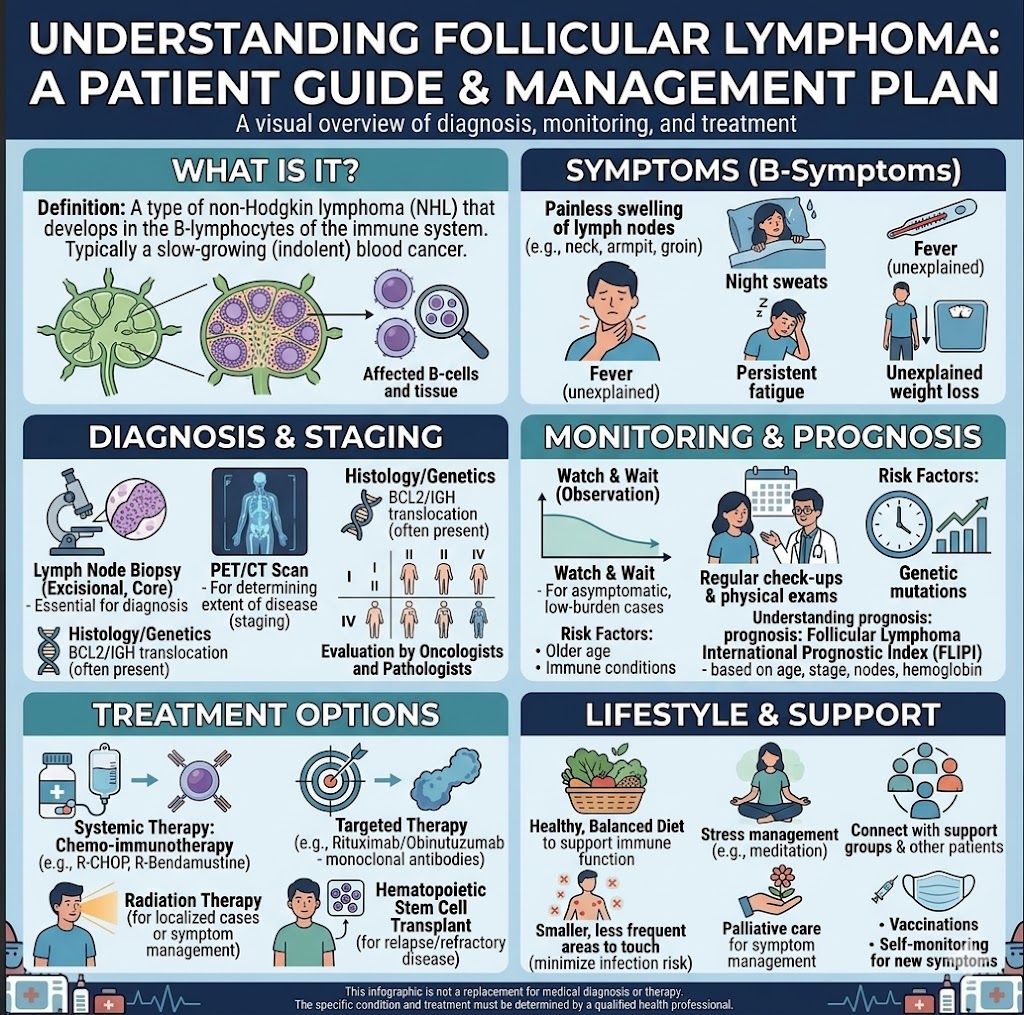
Follicular lymphoma is a type of non-Hodgkin lymphoma, a cancer affecting the lymphatic system. This system, part of the body's immune defense, includes lymph nodes, vessels, and organs like the spleen. It begins when certain immune cells (B cells) within the lymph nodes change and grow uncontrollably. These cancerous cells often form clusters resembling normal groupings, giving the disease its name. Typically, follicular lymphoma grows slowly and may not cause symptoms until it has spread to areas like lymph nodes, bone marrow, and other organs.
Understanding the Condition
Follicular Lymphoma: Understanding a Slow-Growing Blood Cancer
Understanding the Condition
Follicular lymphoma is a type of non-Hodgkin lymphoma, a cancer affecting the lymphatic system. This system, part of the body's immune defense, includes lymph nodes, vessels, and organs like the spleen. It begins when certain immune cells (B cells) within the lymph nodes change and grow uncontrollably. These cancerous cells often form clusters resembling normal groupings, giving the disease its name. Typically, follicular lymphoma grows slowly and may not cause symptoms until it has spread to areas like lymph nodes, bone marrow, and other organs.
Common Symptoms
Painless Swelling: Enlargement of lymph nodes in the neck, armpit, or groin, usually without pain.
Night Sweats: Excessive sweating during sleep.
Before your appointment, compile a detailed list of your symptoms, including when they started and how they have changed. Note any family history of lymphoma or other cancers. Bring a list of all current medications, vitamins, and supplements. Prepare a list of questions for your doctor.
Book a doctor visit near me
Watchful Waiting: For slow-growing lymphoma without symptoms, doctors may monitor the condition closely with regular check-ups and scans, delaying active treatment until necessary. (Duration: Ongoing, with regular monitoring over months to years.)
Radiation Therapy: Uses high-energy beams, typically X-rays, aimed at specific affected areas to kill cancer cells or shrink tumors. (Duration: Usually given over several weeks, with short daily sessions.)
Early Detection Awareness: No known prevention, but recognizing symptoms and seeking prompt medical attention is vital for early diagnosis and better management.
Diagnostic Procedures
You should consult with a hematologist-oncologist, a doctor specializing in blood disorders and cancer, for diagnosis and treatment.
Preparations Before Your Visit
Bone Marrow Biopsy and Aspiration
This procedure collects liquid (aspiration) and solid (biopsy) bone marrow samples from inside large bones. These samples are examined to check for cancer cells and determine if the lymphoma has spread to the bone marrow.
What to Expect
You will lie on your stomach or side. After numbing the hip bone area, a thin needle collects liquid marrow (brief sharp pain/pressure). A slightly larger needle then takes a solid sample (pressure sensation). The procedure takes 15-30 minutes, followed by pressure on the site.
CT Scan (Computed Tomography Scan)
A CT scan uses X-rays and computer processing to create detailed cross-sectional images of your body. It helps doctors identify areas where lymphoma may be present or has spread, such as enlarged lymph nodes or affected organs.
What to Expect
You lie on a table that slides into a large, donut-shaped machine. You may need to hold your breath briefly. A contrast dye might be injected to enhance images, causing a warm sensation. The scan is painless and takes 10-30 minutes.
PET Scan (Positron Emission Tomography Scan)
What to Expect
After tracer injection, you rest for about 60 minutes for absorption. Then, you lie still on a narrow table that slides into the scanner for 20-30 minutes. The scan is painless.
Treatment Options
A PET scan uses a small amount of radioactive tracer, injected into a vein, which highlights areas of high metabolic activity, like cancer cells. Often combined with a CT scan (PET-CT), it helps pinpoint the exact location and extent of the lymphoma, distinguish active cancer, and assess treatment response.
Therapies and Procedures
Chemotherapy: Medications that target and kill fast-growing cells, including cancer cells. Given orally or intravenously, they circulate throughout the body. (Duration: Administered in cycles, typically over several months.)
Immunotherapy: Utilizes the body's immune system to fight cancer. Includes agents like monoclonal antibodies that help immune cells recognize and attack lymphoma cells. (Duration: Varies, often over several months to a year or more.)
Targeted Therapy: Medications that specifically block pathways or vulnerabilities unique to cancer cells, hindering their growth and spread while sparing healthy cells. (Duration: Can be continuous or in cycles, often for extended periods.)
CAR-T Cell Therapy (Chimeric Antigen Receptor T-cell Therapy): Patient's own immune T cells are collected, genetically modified in a lab to target lymphoma cells, multiplied, and then re-infused. (Duration: Cell collection/modification takes weeks. Infusion is one-time, with monitoring for several months to a year.)
Biological Therapy: Broader term for treatments derived from living organisms that enhance the body's natural defenses to fight cancer, including various immunotherapies and targeted therapies. (Duration: Highly variable, depending on the specific agent.)
Managing Treatment Side Effects: Collaborate with your care team to address long-term effects like fatigue, bone density issues, or infection risk.
Prevention & Long-Term Wellbeing
Unexplained Weight Loss: Losing weight without changes in diet or exercise.
Early Fullness: Feeling full quickly after eating, possibly due to an enlarged spleen.
- Consultation Guide
Which Specialist to Meet
Prevention
Genetic Discussions: If you have a strong family history, discuss with a doctor, though direct prevention methods aren't available.
Long-Term Monitoring and Management
Regular Follow-Up: Essential for monitoring disease status, detecting recurrence, or identifying transformation to a faster-growing lymphoma. Includes consistent doctor visits and scans.
Healthy Lifestyle: Maintain a balanced diet, exercise as advised, ensure adequate sleep, and manage stress for overall health and resilience.
Infection Protection: Discuss recommended vaccinations and practice good hygiene to reduce infection risk, especially with a weakened immune system.
Emotional Support: Utilize support groups or professionals to cope with the emotional challenges of living with cancer.
Tags & Topics
Notice an error or need an update?
Help us keep medical information accurate. Report incorrect info or suggest an edit.


