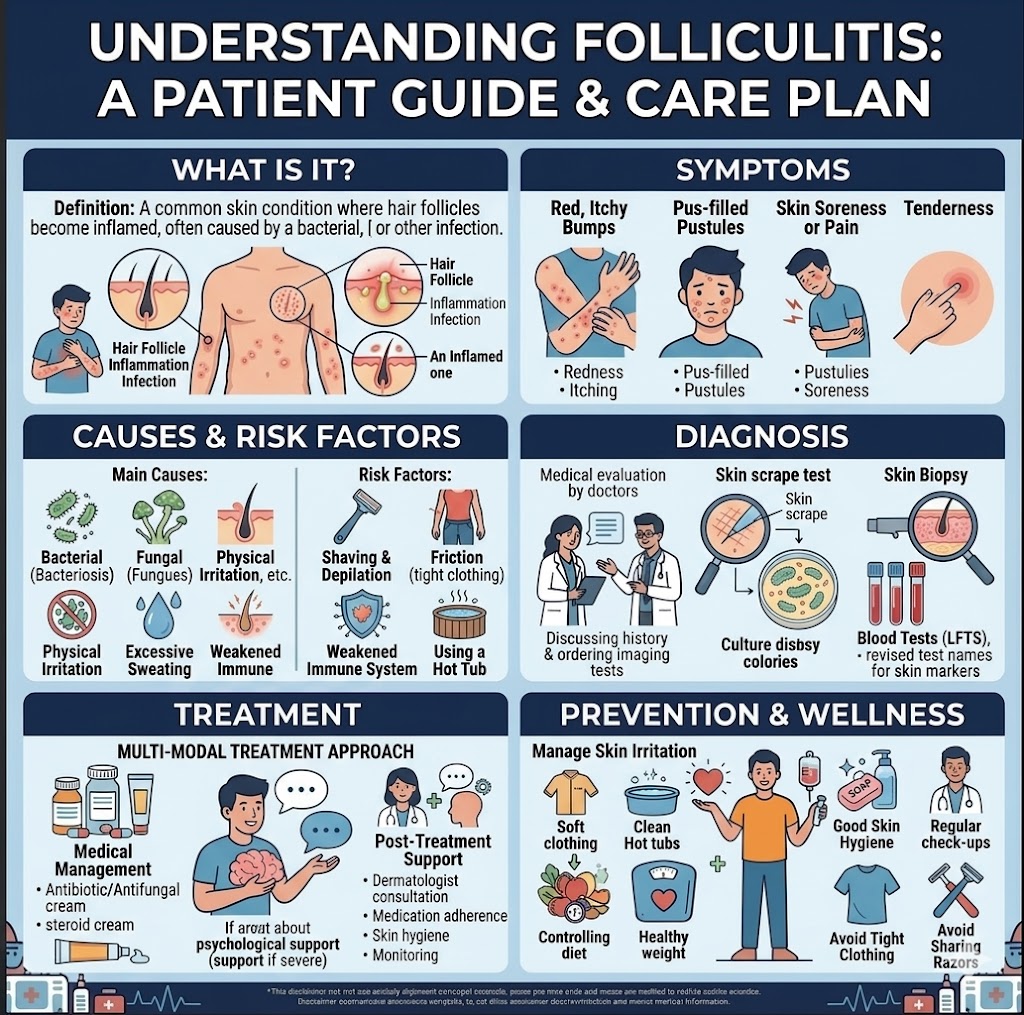
Folliculitis is a common skin condition where hair follicles—tiny pockets in your skin where hairs grow—become inflamed. It typically appears as small, red bumps or pus-filled pimples around individual hairs. Often caused by bacterial infections, it can also stem from fungi, viruses, or shaving irritation. While mild cases often heal with basic care, severe or repeated infections can be itchy, sore, and potentially lead to permanent hair loss and scarring if untreated.
Understanding the Condition
Folliculitis: Understanding and Managing Inflamed Hair Follicles
Understanding the Condition
Common Symptoms
Red Bumps or Pimples: Small, red, or white-headed bumps resembling acne, appearing around hair follicles.
Pus-Filled Blisters: Bumps that may develop into pus-filled blisters, which can then crust over.
Itchiness: Persistent or intermittent itching in affected areas.
Soreness/Tenderness: Pain or discomfort in the inflamed skin.
Burning Sensation: A feeling of warmth or burning.
Hot Tub Rash: Round, itchy bumps, possibly turning into small pus-filled blisters, typically 1-2 days post-hot tub use. Often worse where swimsuits hold water.
Razor Bumps (Pseudofolliculitis Barbae): Inflamed bumps from shaved hairs, especially curly ones, curving back into the skin. Common on face/neck after shaving.
Carbuncles: Severe cases forming a cluster of painful, pus-filled boils, indicating a deep, connected infection.
Consultation Guide
Which Specialist to Meet
Begin with your primary care physician. For persistent, severe, or recurrent cases, consult a dermatologist (skin specialist).
Preparations Before Your Visit
Document your symptoms (onset, duration), potential triggers (e.g., new products, hot tub exposure), and any tried remedies. List all medications/supplements. Prepare questions.
Book a doctor visit near me
Warm Compresses and Gentle Cleansing: Applying warm, moist compresses several times daily soothes irritation and aids drainage. Gently wash with antibacterial soap. (Duration: Daily until symptoms resolve (days to a week).)
Anti-inflammatory Agents: Topical or oral medications to reduce redness, swelling, and itching, particularly for non-infectious causes. (Duration: As needed for symptoms (days to weeks).)
Incision and Drainage: For large, painful, pus-filled lesions (e.g., carbuncles), a small cut drains pus, relieving pain and aiding healing. (Duration: One-time; wound care for 1-2 weeks.)
Laser Hair Removal: For chronic or recurrent folliculitis (e.g., razor bumps), laser hair removal reduces hair growth, preventing future irritation. (Duration: Multiple sessions (e.g., 4-6) over several months.)
Consultation Guide
Folliculitis is a common skin condition where hair follicles—tiny pockets in your skin where hairs grow—become inflamed. It typically appears as small, red bumps or pus-filled pimples around individual hairs. Often caused by bacterial infections, it can also stem from fungi, viruses, or shaving irritation. While mild cases often heal with basic care, severe or repeated infections can be itchy, sore, and potentially lead to permanent hair loss and scarring if untreated.
A small skin sample is removed for microscopic lab examination. This confirms diagnosis, rules out other conditions, or identifies unusual causes.
Diagnostic Procedures
A healthcare provider visually inspects your skin and discusses your medical history to diagnose folliculitis.
What to Expect
The doctor will examine the affected areas of your skin. This is typically a quick and non-invasive visual assessment.
A sterile swab collects fluid or skin cells from a bump. Lab identifies the specific microorganism causing the infection.
What to Expect
The procedure is quick and generally painless; you might feel slight pressure as the swab is collected. No special preparation is needed; resume normal activities immediately.
What to Expect
Preparation: Site cleaned, local anesthetic injected to numb (brief sting/burning). Shave Biopsy: Outermost skin scraped with scalpel; usually no stitches. Punch Biopsy: Hollow tool removes deeper, circular skin sample. Stitches might be needed. Excisional Biopsy: Scalpel removes lump/irregular area with surrounding healthy skin. Stitches required. Post-procedure: Bandaged site with wound care instructions. Expect mild soreness, bleeding, or bruising.
Treatment Options
Home Remedies and Self-Care
Medications
Topical Antimicrobials: Creams or lotions applied directly to the skin to combat bacterial or fungal infections. (Duration: Typically once or twice daily for 7-14 days.)
Oral Antimicrobials: Pills taken by mouth for widespread, severe, or persistent infections, clearing infection systemically. (Duration: Typically 7-28 days.)
Adhere to Treatment Plan: For chronic folliculitis, strictly follow medical advice to minimize flare-ups.
Prevention & Long-Term Wellbeing
Prevention
Maintain Good Hygiene: Wash skin regularly with mild soap, especially after sweating. Avoid harsh scrubbing.
Shave Carefully: Soften skin with warm water before shaving. Use a clean, sharp razor, shave with hair growth. Consider electric razors or creams.
Avoid Irritants: Limit tight clothing; choose breathable fabrics. Avoid oily cosmetics.
Use Clean Hot Tubs: Ensure hot tubs are properly maintained. Shower immediately after using public hot tubs.
Manage Underlying Health Conditions: Work with your doctor to manage conditions (e.g., diabetes) that increase infection susceptibility.
Long-Term Monitoring
Monitor for Recurrence: Watch for early signs of recurrence; address new bumps promptly with self-care or doctor consultation.
Tags & Topics
Notice an error or need an update?
Help us keep medical information accurate. Report incorrect info or suggest an edit.


